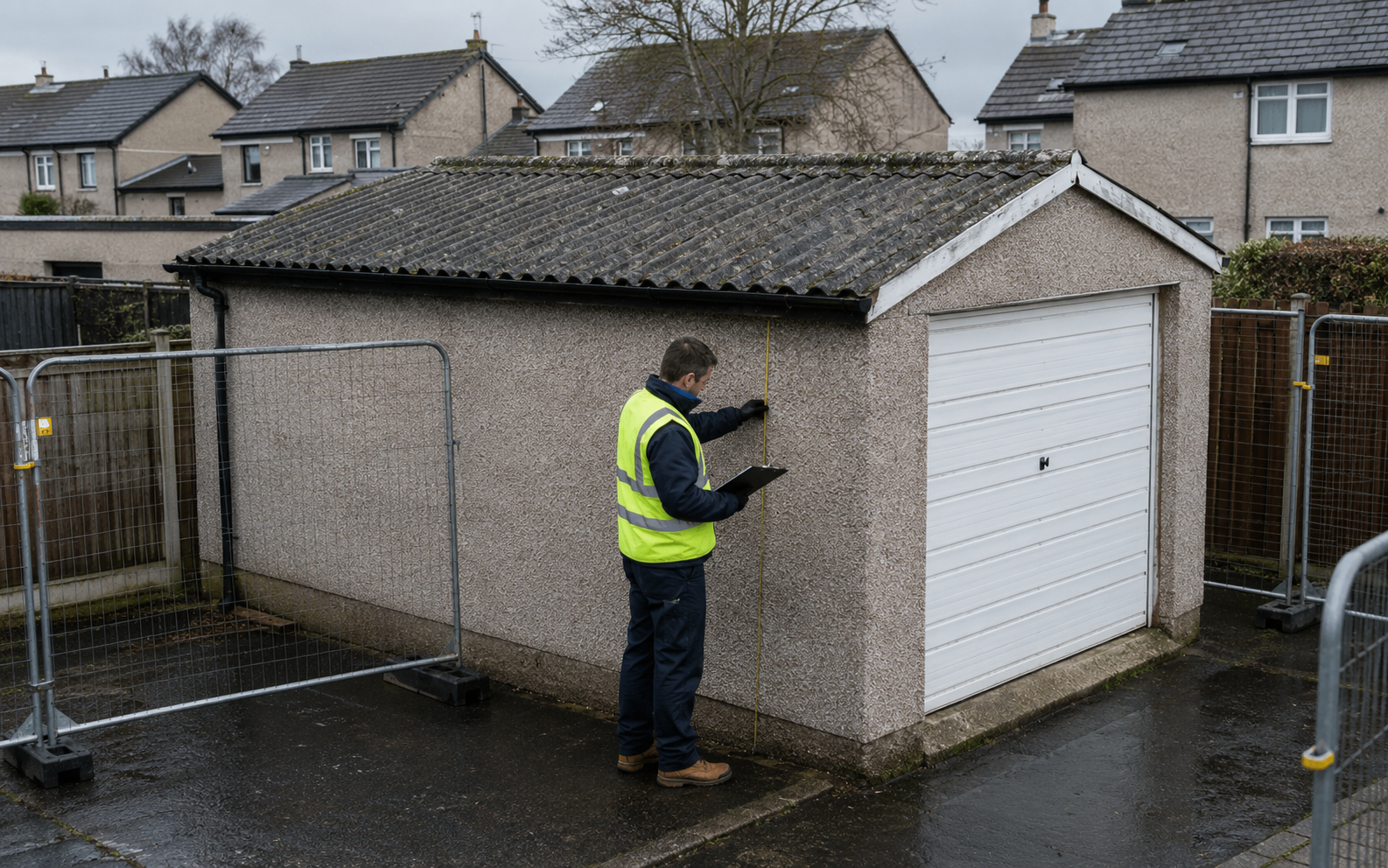
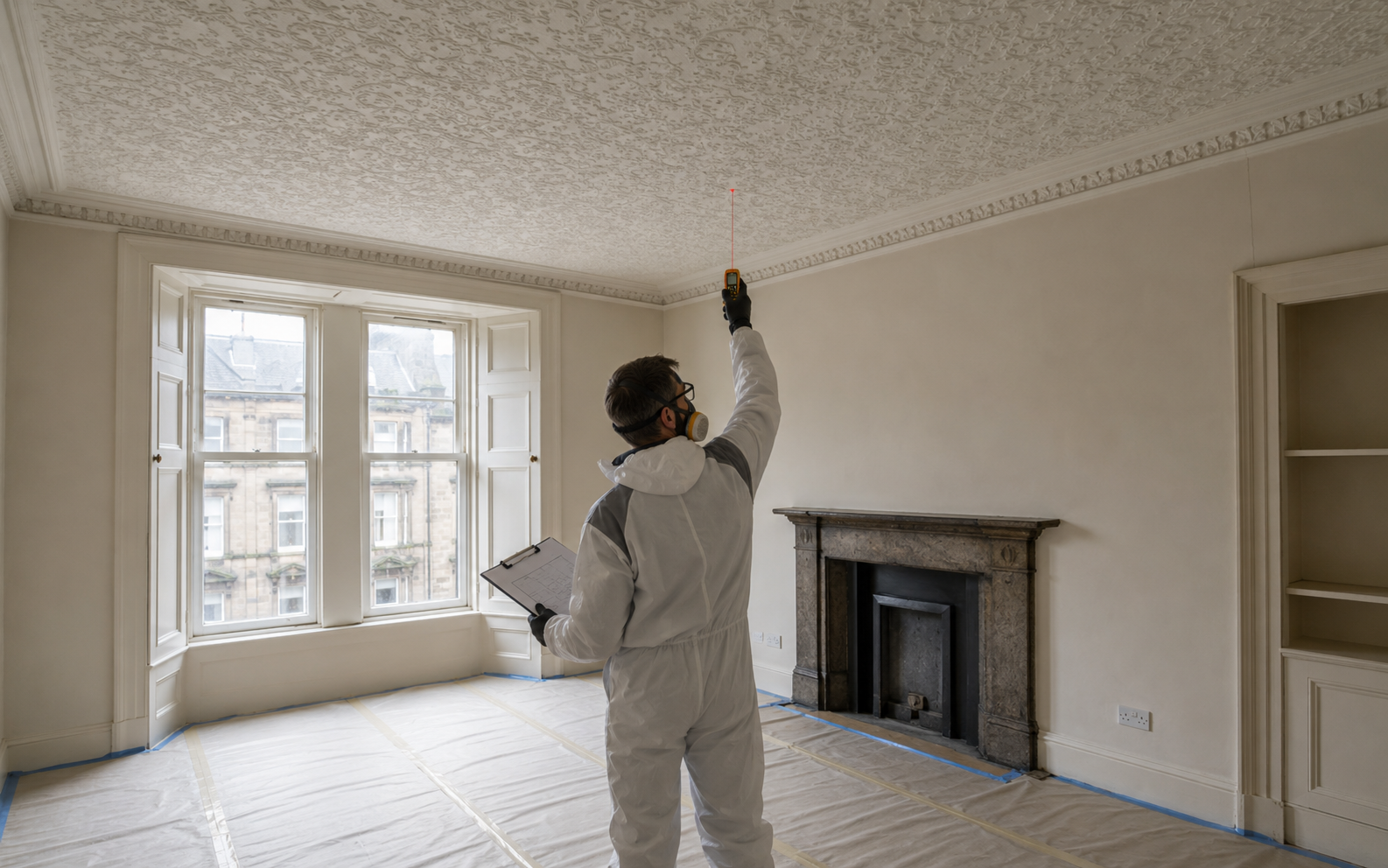
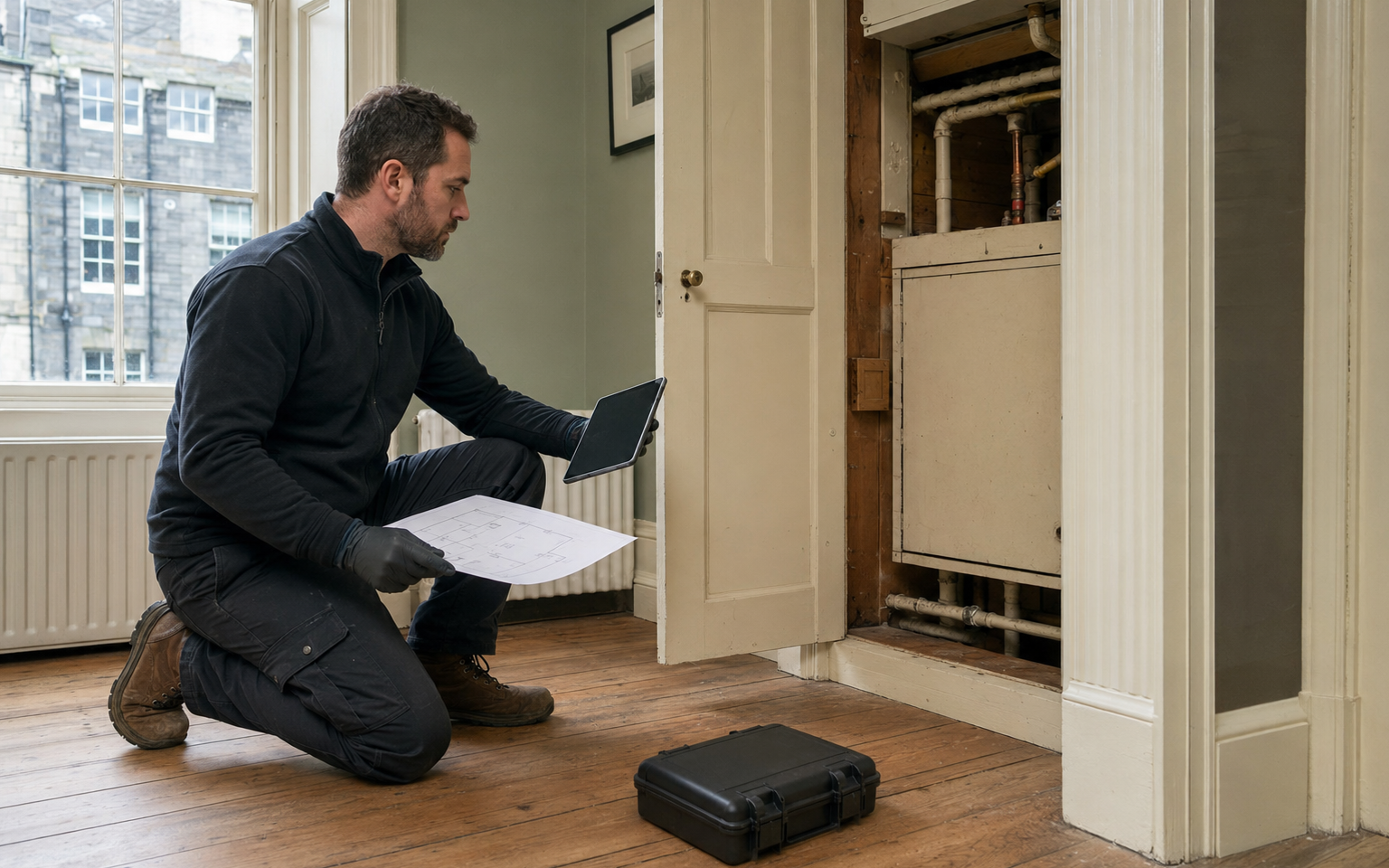
Licensed removal: Higher-risk work done by a contractor with an HSE licence.
Clearance: Safety checks done before a work area is used again.
The physical removal may be the shortest part of the timeline. Survey results, design, legal notice where required, sealed work area set-up, independent final safety check and repair and finishing work all sit around it.
- Survey or test
- Quote and site visit
- Work legal work type
Stop. Do not touch, drill, break or clean the suspect material.
Keep back. Keep people and pets away. Do not sweep or use a household vacuum.
Get advice. Call a trained professional and explain what you found and what happened.
The physical removal may be the shortest part of the timeline. Survey results, design, legal notice where required, sealed work area set-up, independent final safety check and repair and finishing work all sit around it.
A simple garage roof may take one day. Higher-risk licensed work can take several days or weeks. This includes planning and final safety checks. Ask for a timeline that covers the whole job.
What happens before the team arrives
The material must be identified, the task put into a legal work type and the plan of work prepared. Access, utilities, people using the building and waste routes need resolving. Licensable work may require formal legal notice and testing arrangements.
Late survey changes create late timeline changes. Freeze the refurbishment scope and give accurate information before agreeing a start date.
- Survey or test
- Quote and site visit
- Work legal work type
- Plan and legal notice
- Access and independent tester booking
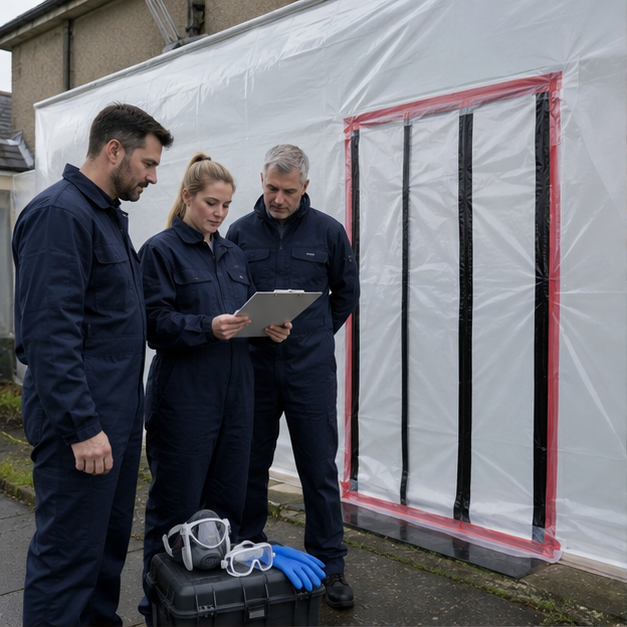
Set-up and controlled removal
Lower-risk external cement work may need a defined exclusion zone and low-breakage controls. Higher-risk internal work can require sealed work area construction, an air system that keeps dust inside, specialist cleaning and more detailed testing.
An occupied building can be phased to maintain safe routes, but that usually adds interfaces and time. A vacant work area is often simpler.
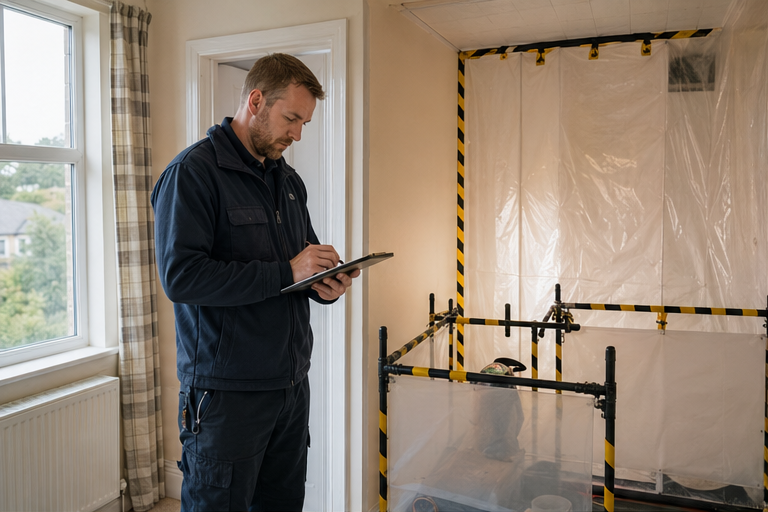
Cleaning and final safety check cannot be rushed
The team cleans and checks the work area. Some jobs need an independent final safety check. A UKAS-approved testing firm carries it out and gives the certificate.
The area should not be treated as ready merely because visible material has gone. Handover is a defined stage.
Build a realistic project sequence
Put asbestos work before the trades that would otherwise disturb the material. Allow time for report review, unexpected concealed findings and repair and finishing work. Keep demolition or renovation teams away until formal handover.
Ask who owns each dependency: client access, surveyor, removal contractor, independent tester, waste carrier and follow-on trade. A named responsibility prevents lost days.
Frequently asked questions
Questions people ask next.
Can work start immediately after a positive test?+
Sometimes, but the contractor still needs to classify and plan the work. Licensed tasks may have legal notice rules.
How long does a garage roof take?+
A straightforward roof may take a day, though size, access, weather and wider demolition can extend it.
When can other trades enter?+
Only after the removal contractor and any required independent final safety check process have completed the handover.