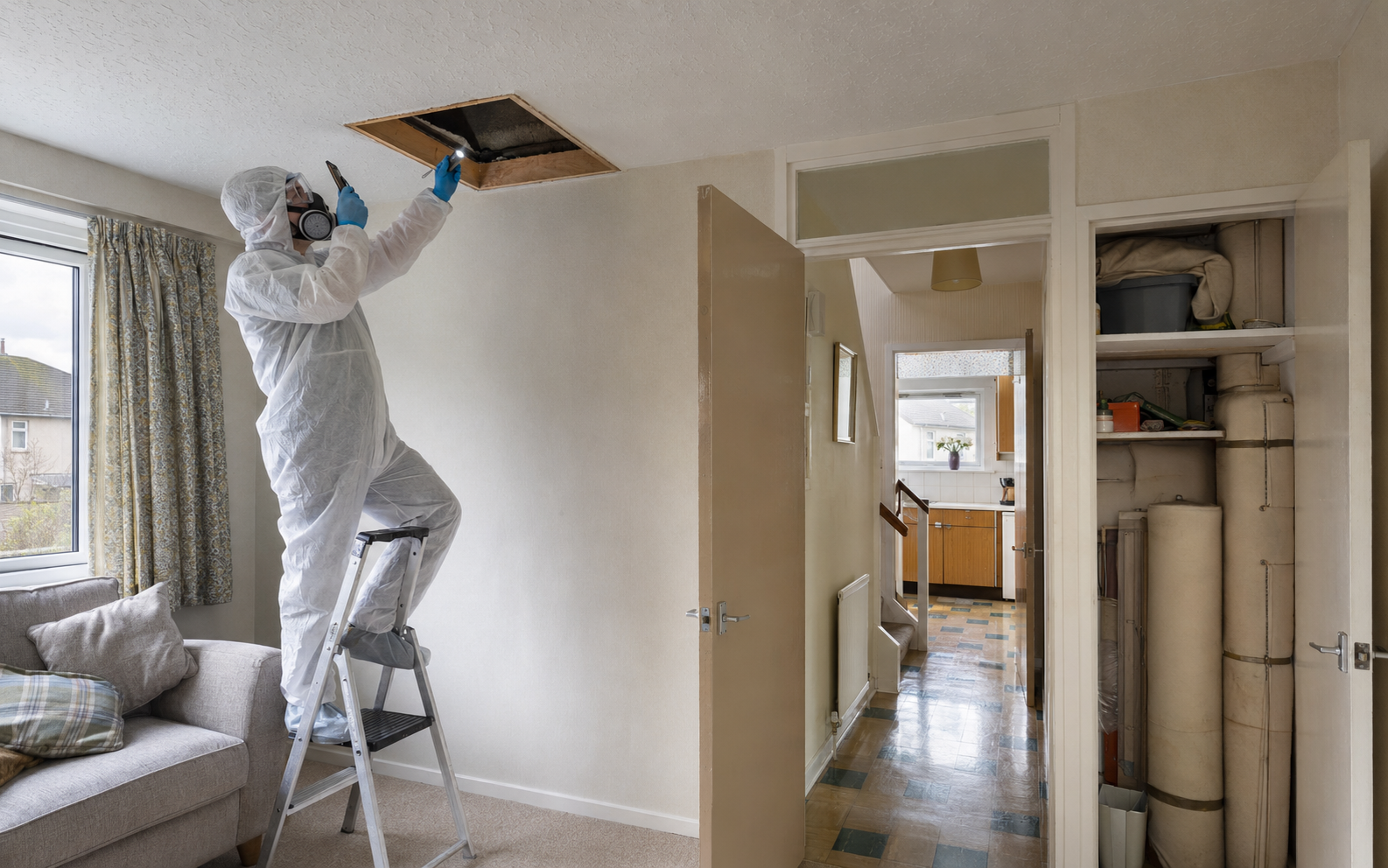
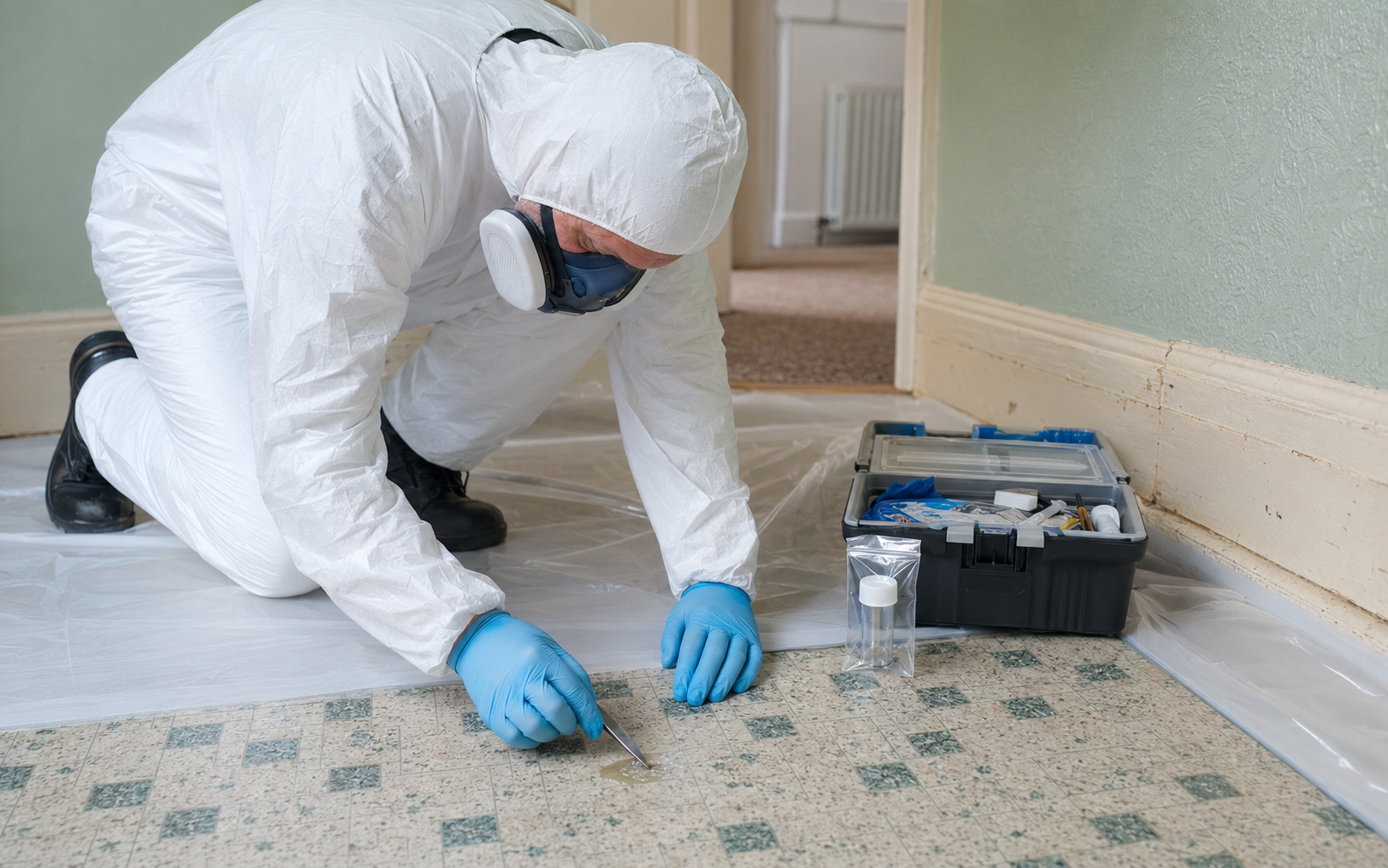
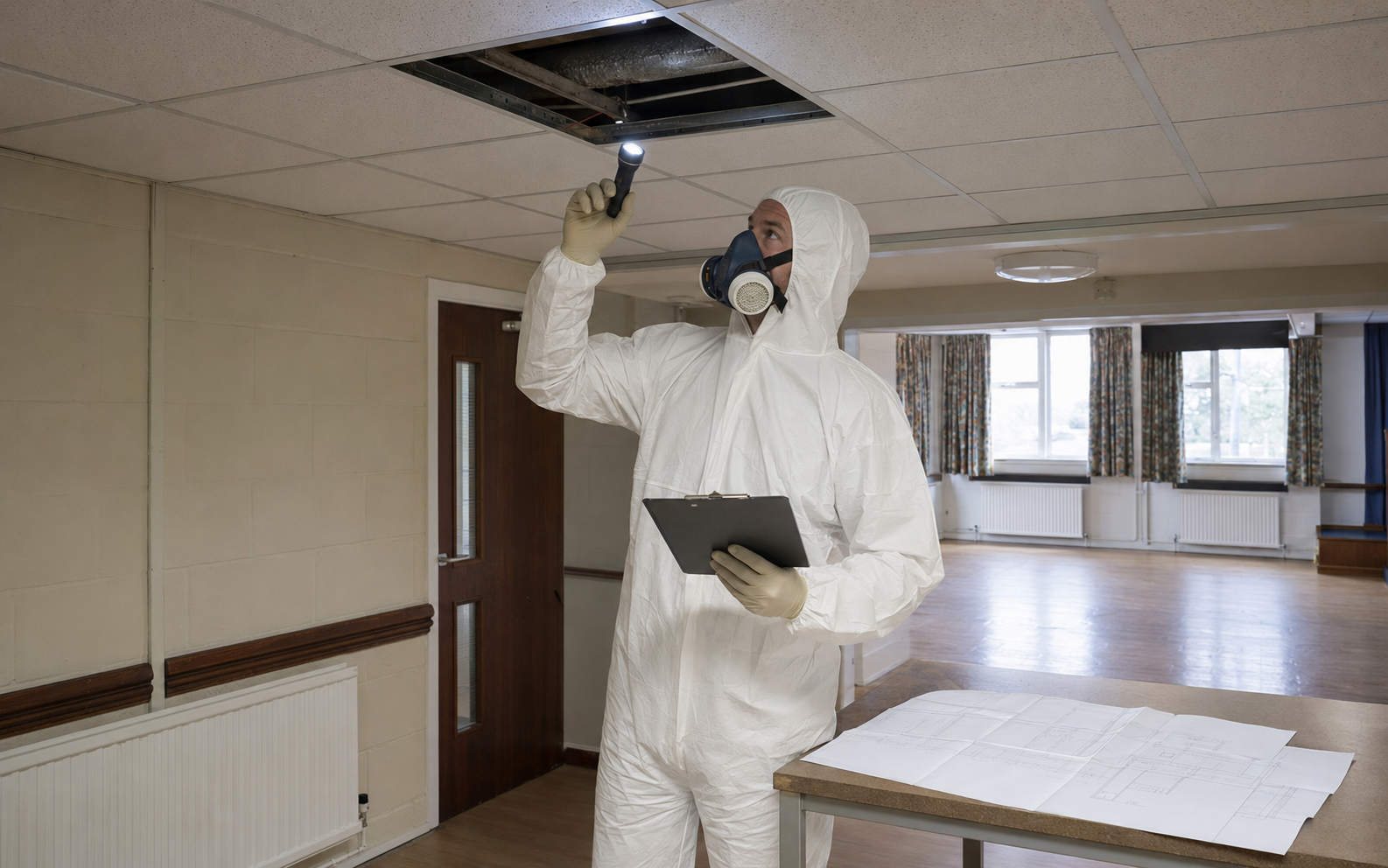
Refurbishment survey: A survey that opens hidden areas before building work.
Encapsulation: Sealing sound asbestos so it can stay safely in place.
People often want a photo to give them a quick yes or no. Colour and texture cannot confirm asbestos. Many safe products look the same. Some asbestos is also hidden behind walls, floors or other finishes.
- Textured ceilings and walls
- Garage and shed cement sheets
- Old floor tiles and black adhesive
Stop. Do not touch, drill, break or clean the suspect material.
Keep back. Keep people and pets away. Do not sweep or use a household vacuum.
Get advice. Call a trained professional and explain what you found and what happened.
People often want a photo to give them a quick yes or no. Colour and texture cannot confirm asbestos. Many safe products look the same. Some asbestos is also hidden behind walls, floors or other finishes.
You cannot confirm asbestos by sight. Treat unknown material in a pre-2000 building as suspect until it is checked. Do not scrape it. Do not snap, sand or drill it.
Clues that mean you should check
Common examples include grey cement sheets, textured ceilings, old floor tiles and pipe insulation. Looks alone do not prove asbestos. The age, place and use give useful clues. Soft pipe insulation is often riskier than a solid garage sheet.
Look for product labels, old plans, an asbestos register or previous survey before arranging fresh sampling. A good surveyor combines what can be seen with building history and construction knowledge instead of making a confident guess from one photo.
- Textured ceilings and walls
- Garage and shed cement sheets
- Old floor tiles and black adhesive
- Soffits, service risers and fire-protection boards
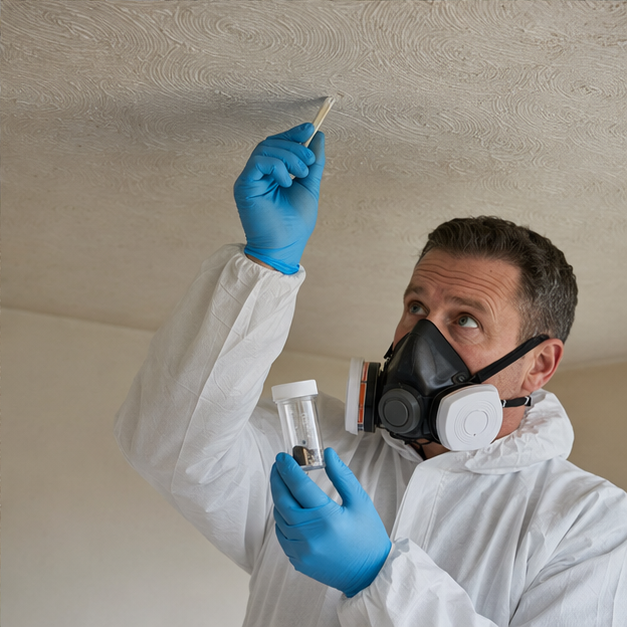
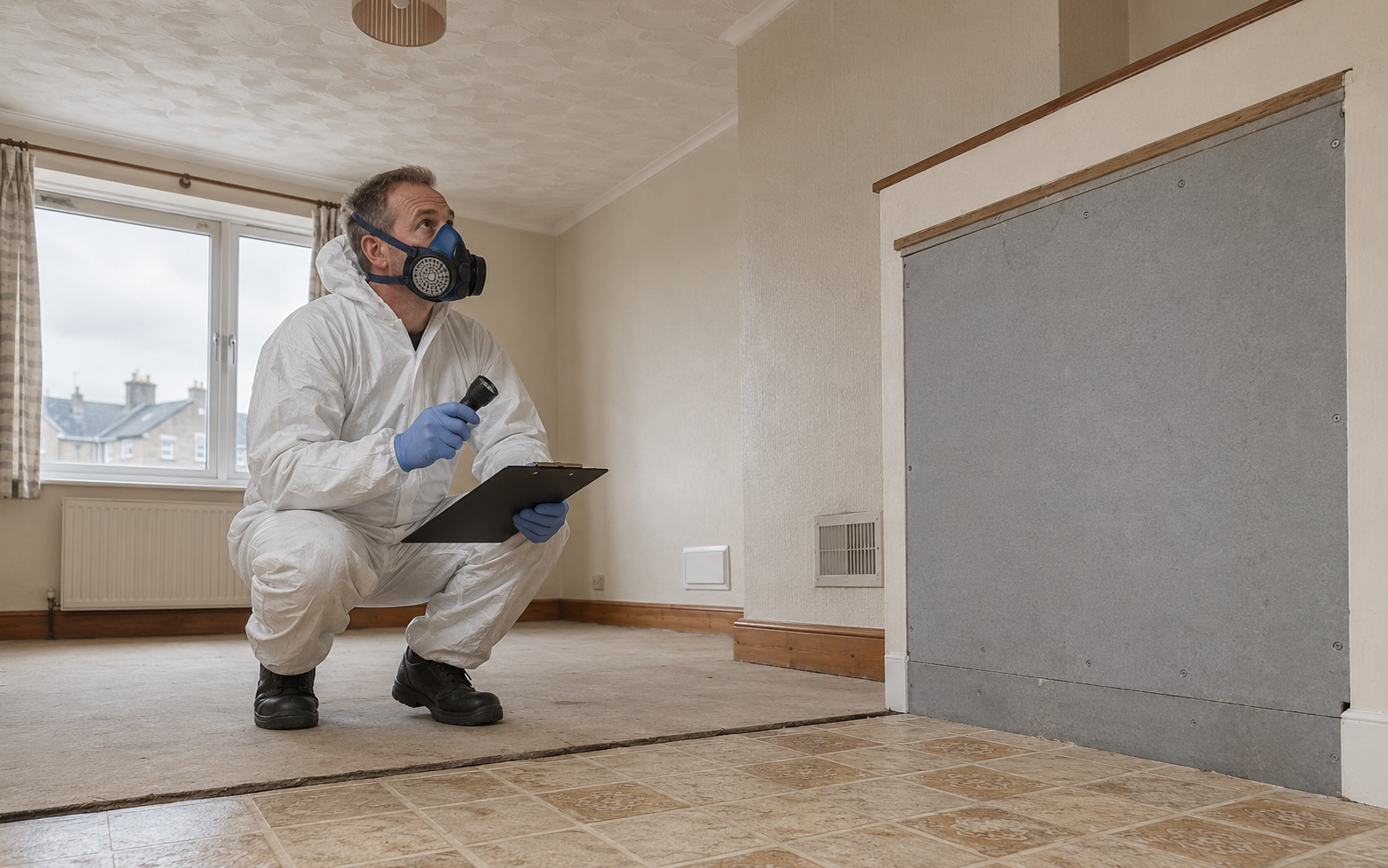
What a photo can—and cannot—tell a contractor
Clear photos help with a first check. They can show condition, access, size and visible damage. They cannot confirm asbestos or show a hidden layer. A remote view is only a first opinion, not a lab result.
Take a wide photo showing the room or structure and a closer image without touching the material. Include the property age, the room, approximate dimensions and what you intend to do next. That information makes an initial conversation much more productive.
The safest next step
Leave the material alone, prevent accidental disturbance and decide whether you need a targeted sample or a broader survey. A single suspect ceiling may call for sampling. A renovation affecting several rooms usually needs a refurbishment survey. Damaged debris or a recent accidental release needs a different, more urgent response.
Once the material is identified, the options may include leaving it managed in place, encapsulation or controlled removal. Identification is useful because it prevents both unnecessary alarm and unsafe work.
Frequently asked questions
Questions people ask next.
Is all grey corrugated roofing asbestos?+
No. Fibre-cement and other non-asbestos products can look similar. Building age and sampling may be needed for confirmation.
What colour is asbestos?+
Asbestos fibres were historically described as white, brown or blue, but finished building products cannot be safely identified by colour.
Can an app identify asbestos?+
An image or app may flag a suspect product, but it cannot replace representative sampling and lab analysis.