Exposure: Contact with asbestos fibres, often by breathing them in.
Decontamination: A deep clean that removes asbestos dust and fibres.
Finding suspect asbestos during DIY can be frightening. Stop the work and keep people away. Do not carry dust or broken pieces into clean rooms.
- Stop the task
- Restrict access
- Do not dry-sweep
Stop. Do not touch, drill, break or clean the suspect material.
Keep back. Keep people and pets away. Do not sweep or use a household vacuum.
Get advice. Call a trained professional and explain what you found and what happened.
Finding suspect asbestos during DIY can be frightening. Stop the work and keep people away. Do not carry dust or broken pieces into clean rooms.
Stop work. Keep people away. Close the area only if you can avoid the dust or debris. Do not sweep. Do not use a home vacuum. Call a trained asbestos professional.
The first few minutes
Put the tools down. Do not drill, break or clean the material. Ask others to leave by the shortest safe route. Keep children, pets and workers out.
Do not carry broken pieces through the building. Do not shake dusty clothes. At work, follow the emergency plan and tell the person in charge now.
- Stop the task
- Restrict access
- Do not dry-sweep
- Do not use a household vacuum
- Record what happened
- Seek trained advice
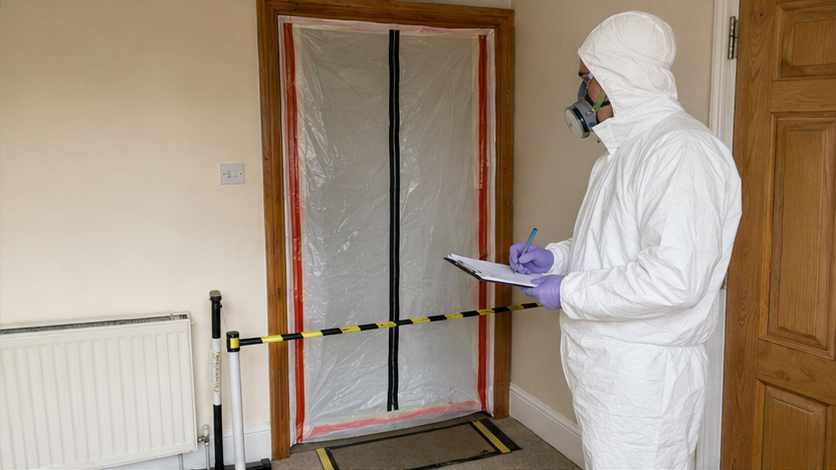
Information that helps the response team
Say what was damaged, which tool you used and how long the work lasted. Give the room, open windows or fans, and the names of people nearby. Take photos only from outside the closed area.
Old survey or test records may help. If the material is unknown, a trained person may need to take a small sample.
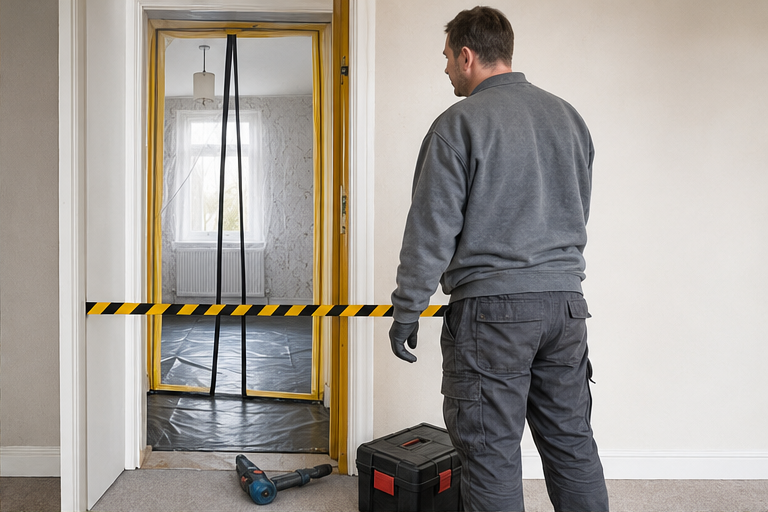
Why ordinary cleaning can make the problem worse
Brushing, blowing or using a home vacuum can spread fine dust. A trained team will choose the right safety kit, cleaning method and waste route.
You cannot judge the number of fibres from the size of the broken pieces. A proper check will show if you need a small clean-up or wider work.
Site safety and health advice are different
Your first job is to stop more contact with the dust. A contractor cannot judge health effects from a short phone call.
For health concerns, read NHS advice and speak to a healthcare professional. Write down the date, material and what happened.
Frequently asked questions
Questions people ask next.
Should I open the windows?+
No. Moving air could spread fibres. Keep the area closed until a trained person gives advice.
Can I bag the debris myself?+
No. Leave it in place and keep people away. Wait for advice on safe handling and packing.
Who should I call?+
Call an asbestos professional about the building. Speak to a healthcare professional about your health.