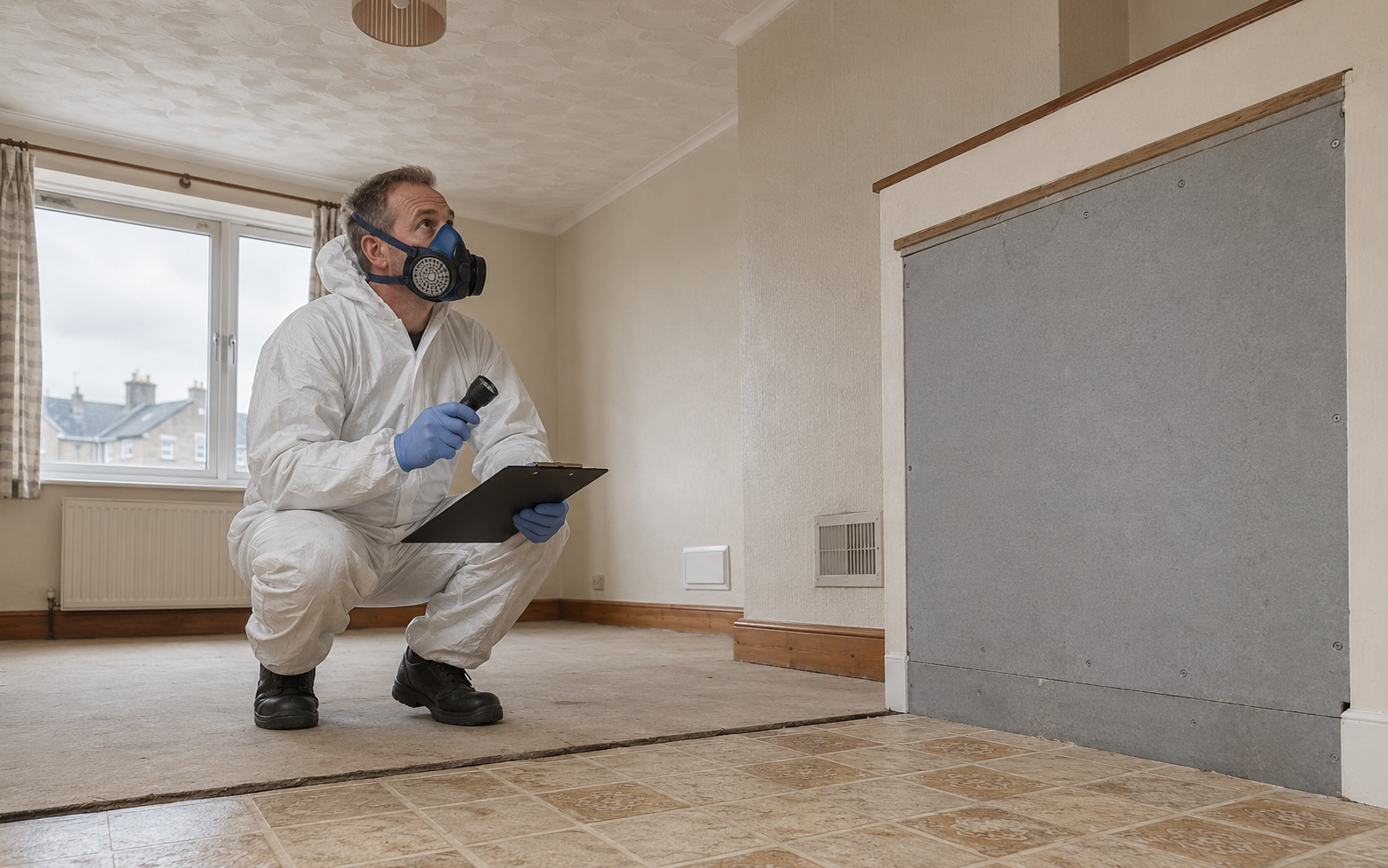
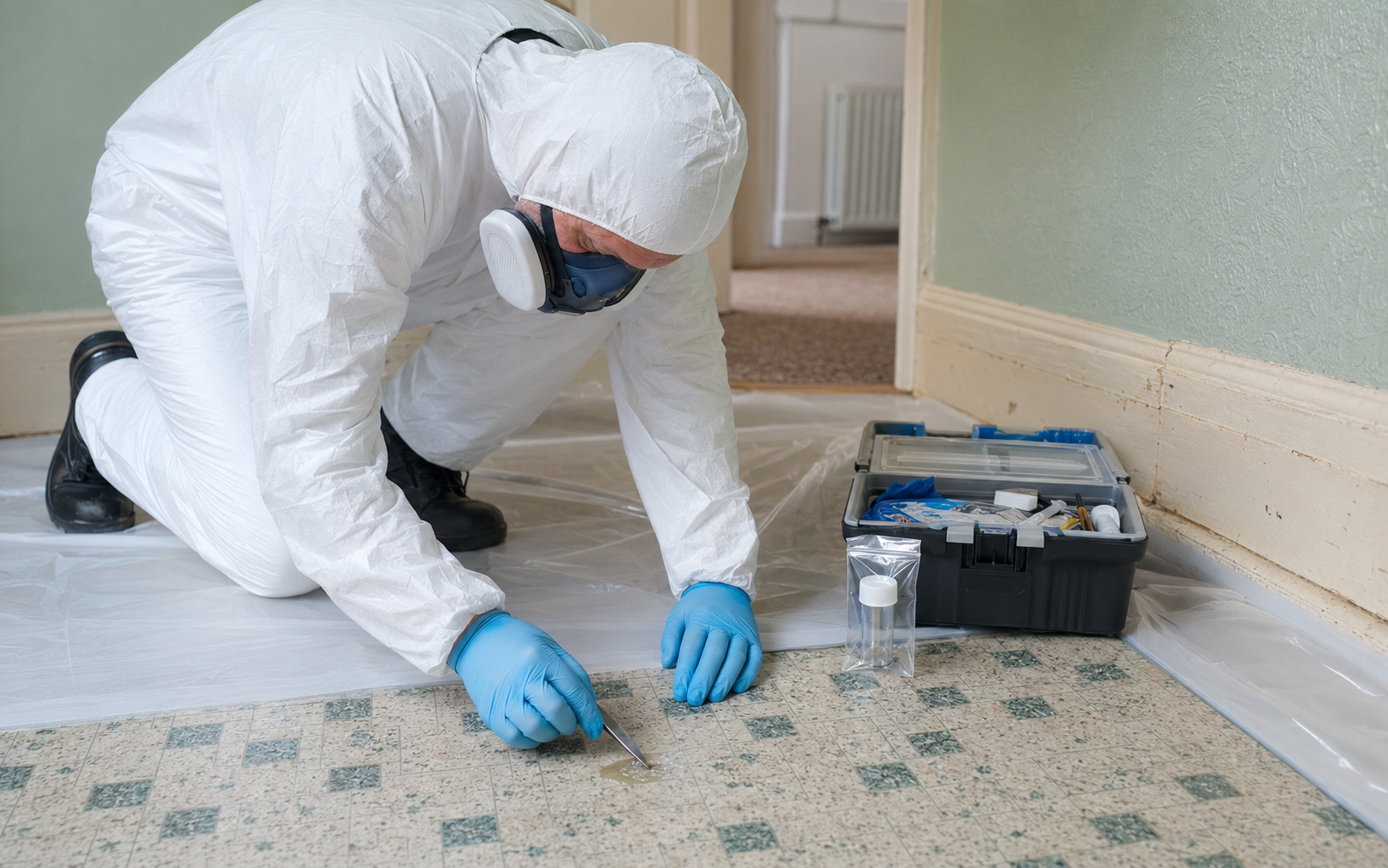
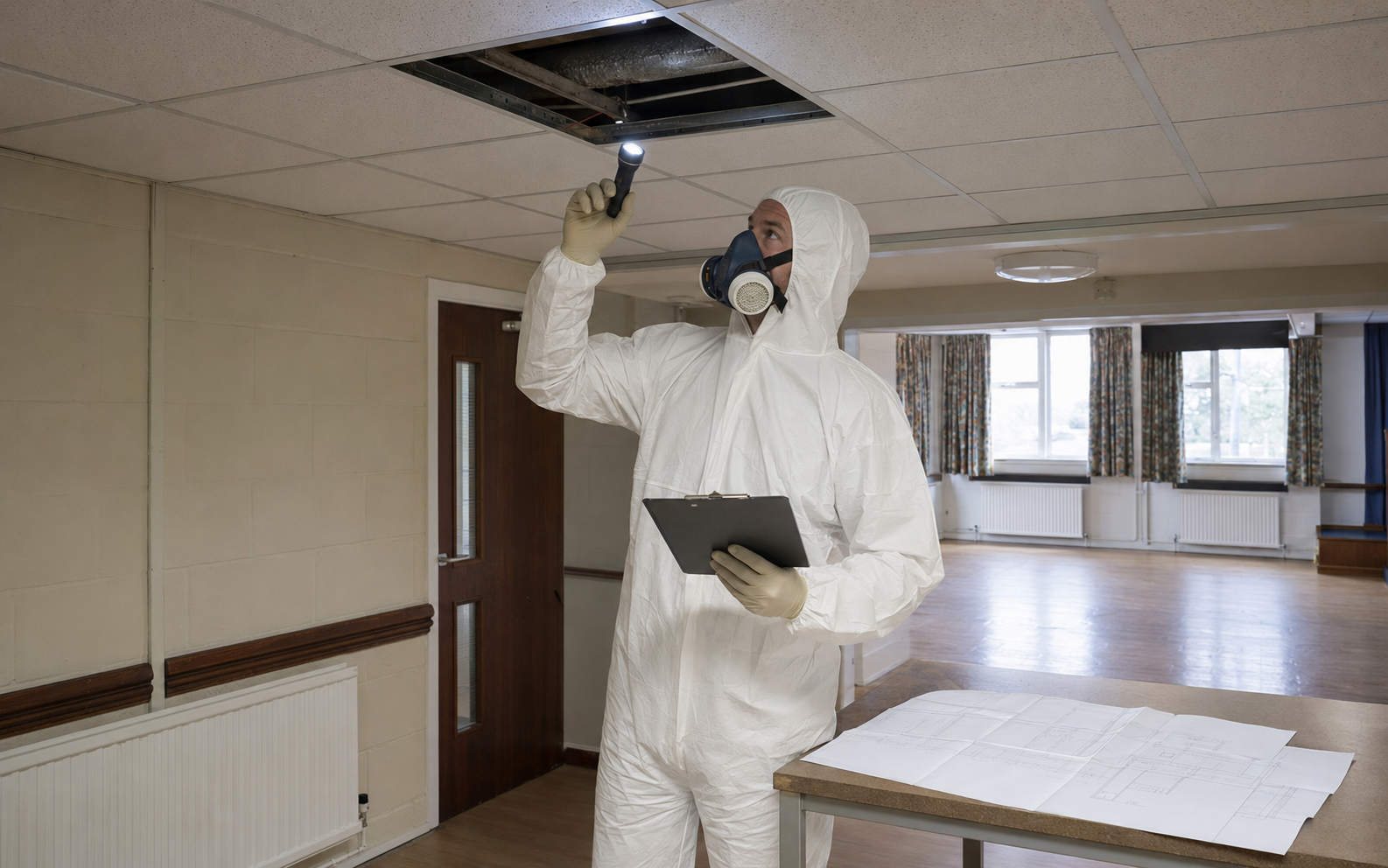
Refurbishment survey: A survey that opens hidden areas before building work.
Encapsulation: Sealing sound asbestos so it can stay safely in place.
Many people link asbestos with factories. Yet it can also be found in Scottish homes. Builders used it for fire safety, warmth and strength. Knowing common places helps you plan the right survey.
- Textured ceiling or wall coatings
- Panels around heaters and service cupboards
- Older fire doors and door-lining details
Stop. Do not touch, drill, break or clean the suspect material.
Keep back. Keep people and pets away. Do not sweep or use a household vacuum.
Get advice. Call a trained professional and explain what you found and what happened.
Many people link asbestos with factories. Yet it can also be found in Scottish homes. Builders used it for fire safety, warmth and strength. Knowing common places helps you plan the right survey.
Pre-2000 homes may contain asbestos in many places. These include ceilings, floor tiles, roofs, soffits, tanks, cupboards, boards, flues and boiler insulation.
Living rooms, halls and bedrooms
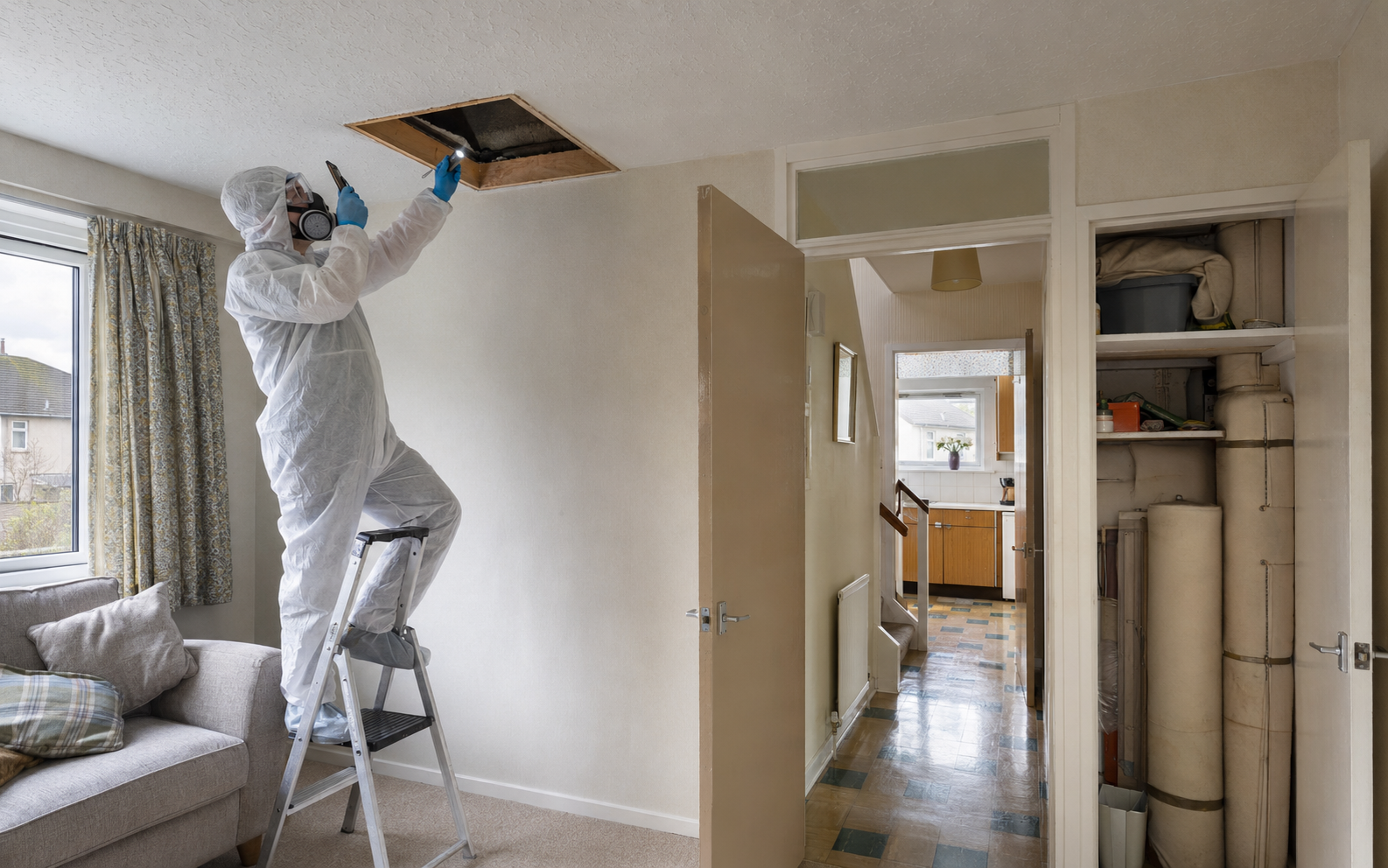
Textured coatings are a common concern in homes. They may be on ceilings, walls or beams, often under newer paint. Asbestos board may also sit near heaters, inside cupboards or around pipes.
A coating does not prove asbestos is present. A smooth ceiling does not prove it is safe. New boards can hide old layers. The survey must cover the work you plan.
- Textured ceiling or wall coatings
- Panels around heaters and service cupboards
- Older fire doors and door-lining details
- Backing boards behind electrical equipment
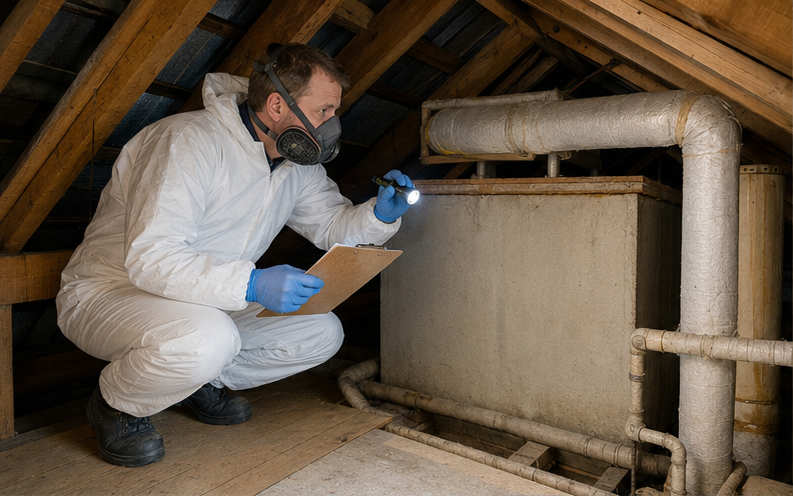
Kitchens, bathrooms and utility spaces
Builders used heat and water-resistant products near boilers, cupboards, baths, sinks and pipes. Old floor tiles and black glue may sit under modern flooring. Cement flues and water tanks may also remain.
Removing a kitchen or bathroom can uncover hidden layers. Check the full work area before trades remove units, cut walls or lift floors.
Roofs, soffits, garages and outbuildings
Asbestos cement is common on garages, sheds, carports and lean-tos. Flat sheets may line walls. Soffits, gutters and downpipes may also contain it. Sound cement is lower risk than soft insulation. Cutting or breaking it can still release fibres.
Photos and sizes can help price simple roof work. Full garage removal must also cover the walls, frame, wiring, contents and other waste.
Tell the surveyor which rooms to check
List every room or building affected by the work. Include routes for new pipes, cables and fans. Say which finishes, ceilings or walls will be opened.
The report should name the material, place, amount and condition. It should also say what to do next. You can then get a removal quote or manage sound material in place.
Frequently asked questions
Questions people ask next.
Is asbestos common in 1970s houses?+
Many asbestos products were used in the 1970s. You still need proof or a survey for each home.
Can asbestos be under laminate flooring?+
Yes. Modern floors may cover older plastic tiles or black glue. Both may contain asbestos.
Is asbestos only found inside?+
No. Cement roofs, wall sheets, soffits, flues, gutters and water goods may be external.