Clearance: Independent checks before a controlled work area returns to normal use.
Encapsulation: A suitable protective system that seals sound asbestos in place.
A positive result confirms asbestos in the sample. It does not always mean the whole property is unsafe or that every asbestos product must be removed at once.
- Match the result to the exact material and location.
- Keep the area undisturbed until the risk is checked.
- Choose management, sealing or removal based on evidence.
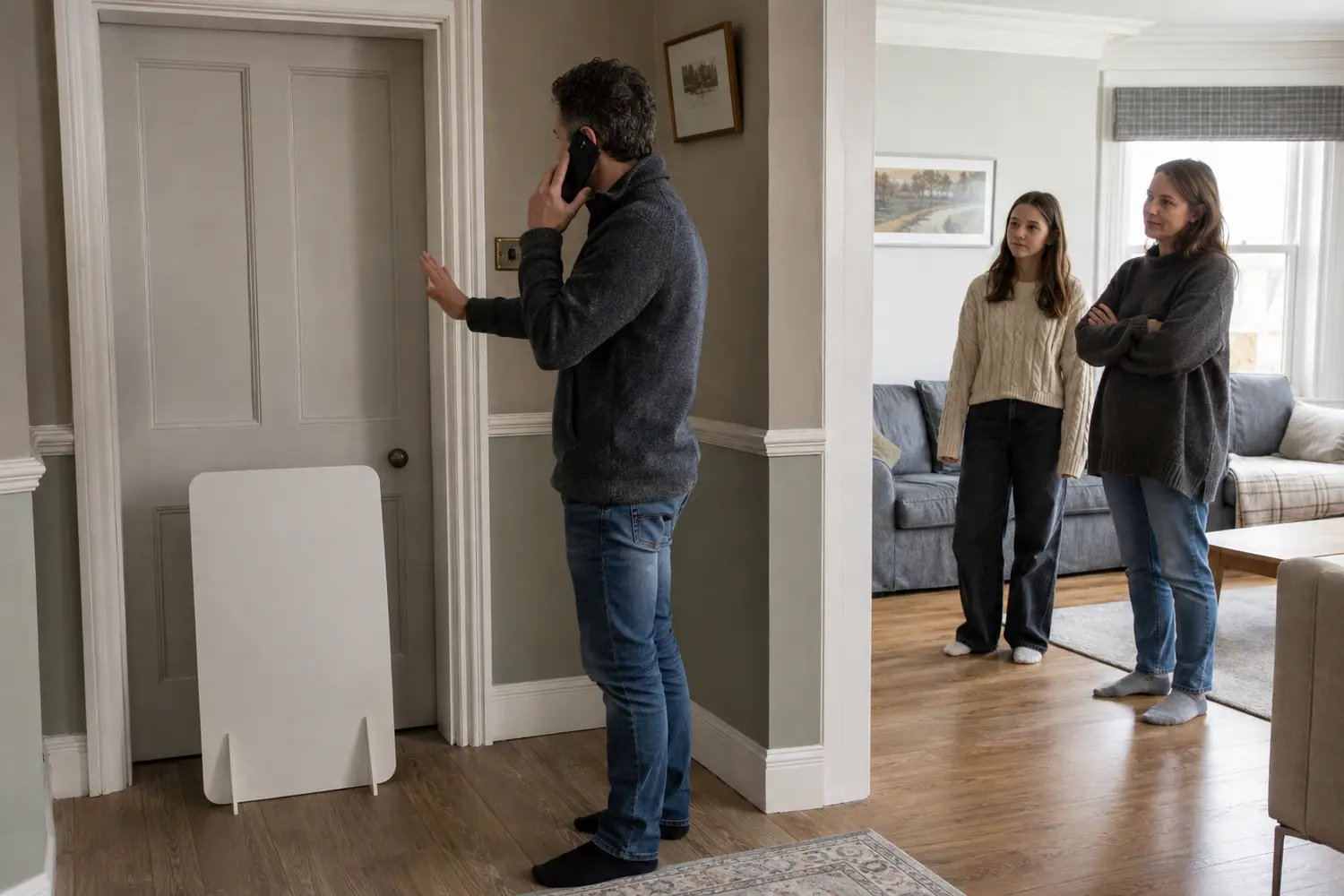
Stop. Do not touch, drill, break or clean the suspect material.
Keep back. Keep people and pets away. Do not sweep or use a household vacuum.
Get advice. Call a trained professional and explain what you found and what happened.
A positive result confirms asbestos in the sample. It does not always mean the whole property is unsafe or that every asbestos product must be removed at once.
Stop work that may disturb the material. Confirm the exact sample location and product. Then check its condition, access and future work before choosing management, encapsulation or removal.
Check exactly what the result covers
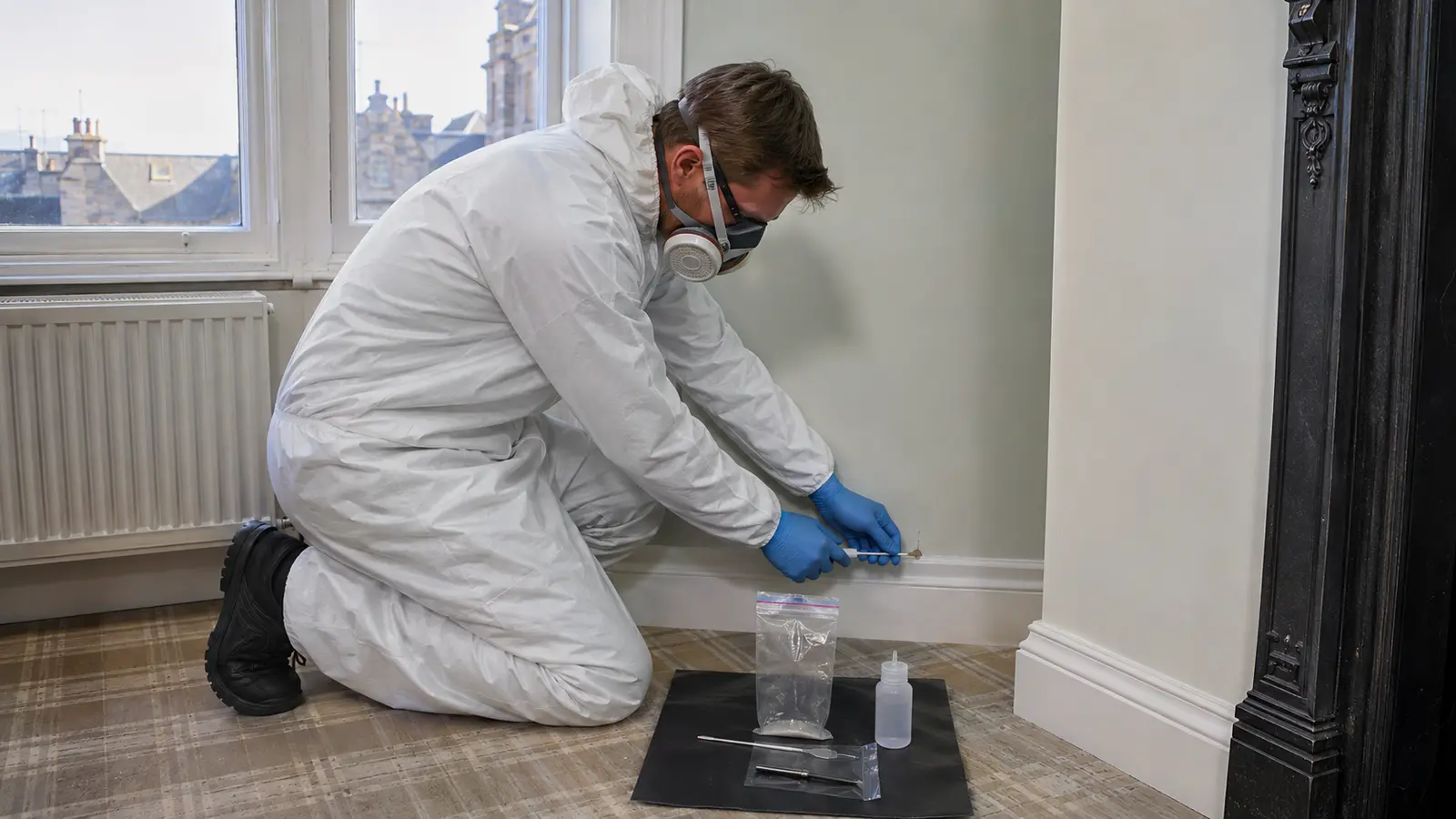
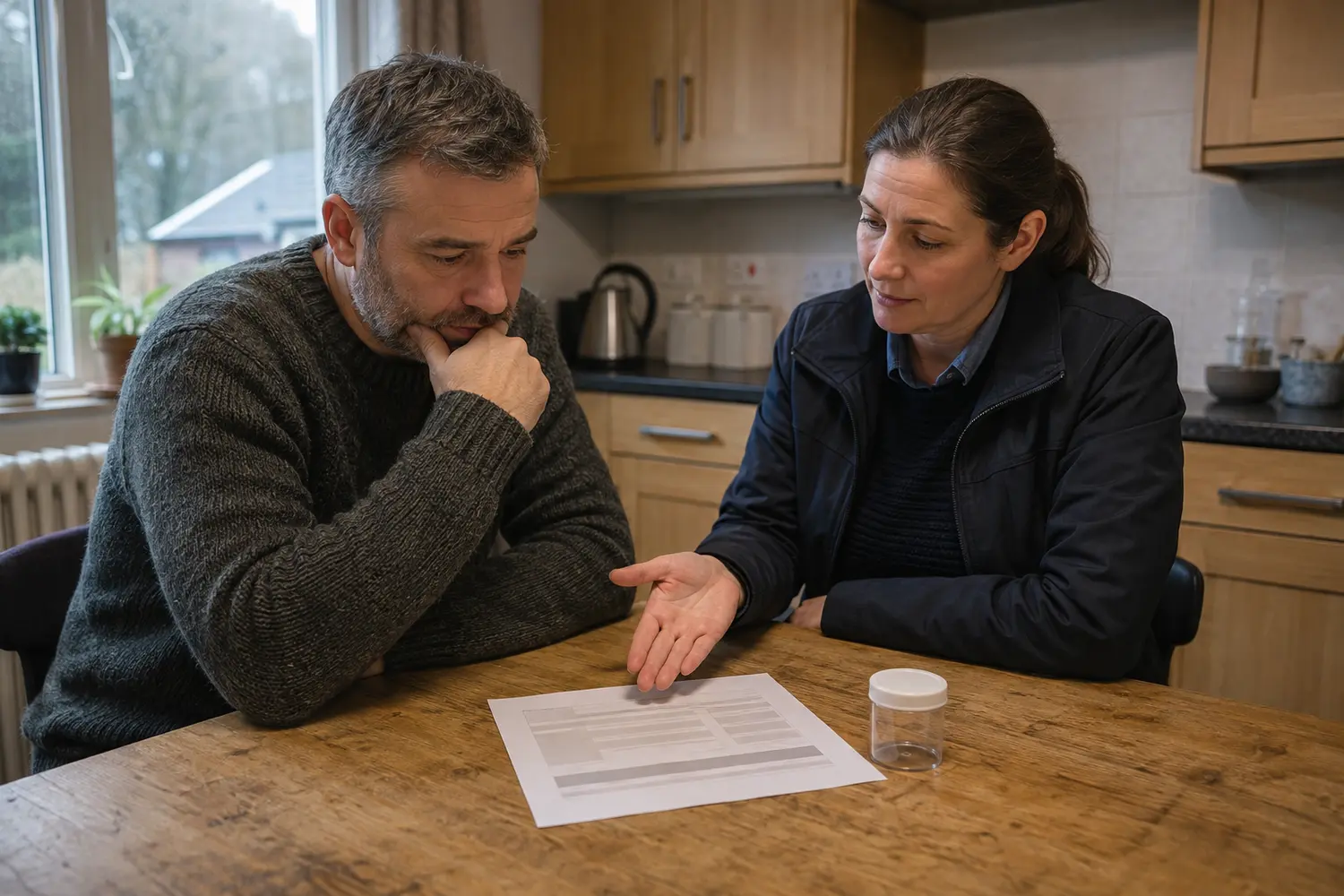
Read the sample number, room, surface and material description. A positive ceiling sample does not confirm every ceiling. A negative tile result does not clear the adhesive below it.
Ask for the lab certificate and sampling report. Photos or marked plans should show where the sample came from.
- Sample number
- Exact location
- Material description
- Lab result and date
Check condition and chance of disturbance
Sound material in a quiet area may be managed. Damaged material in a busy route may need urgent action. Soft insulation and AIB need different controls from solid cement.
Planned drilling, demolition or repair can change a low current risk into a high work risk. Tell the assessor what you intend to do next.
Compare management, encapsulation and removal
Management leaves sound material in place, records it and checks it. Encapsulation adds a protective seal or system. Removal takes the material out under controlled conditions.
The best choice balances safety, building use, cost and future work. Do not remove stable material simply because the word asbestos feels alarming.
Ask for a quote with a clear boundary
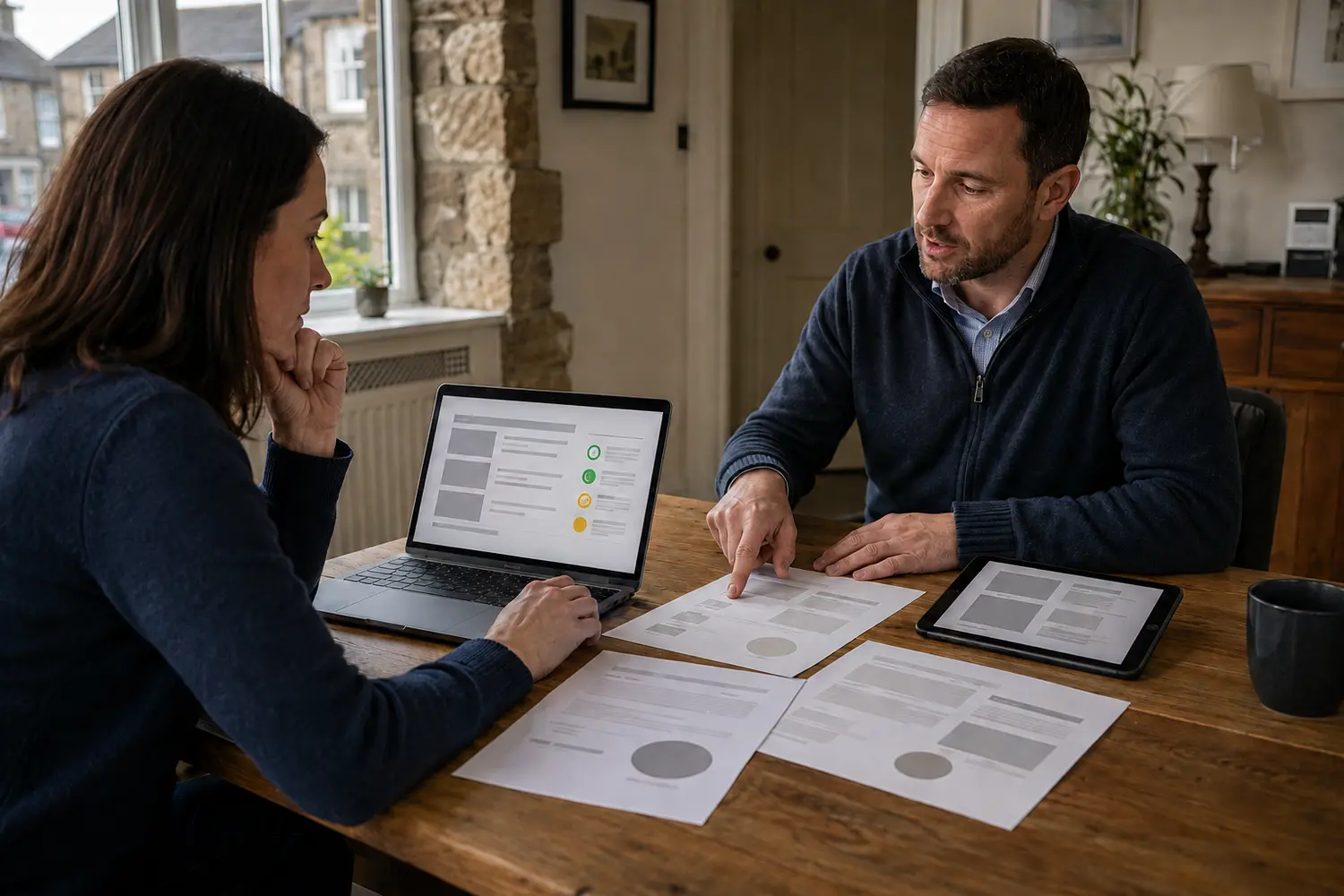
Give the contractor the report, photos, sizes, access and project plan. Ask what preparation, notices, cleaning, final safety check, waste and repair and finishing work are included.
Confirm what will remain after the job. A roof-removal quote may not include the frame, new roof or internal clean unless stated.
Keep and share the final records
Update the property file or asbestos register. Keep the sample report, work plan, final safety check paperwork and waste records that apply.
Tell future trades what remains. A clear record prevents repeat testing and accidental disturbance.
Frequently asked questions
Questions people ask next.
Must positive asbestos be removed?+
No. Sound material may often be managed or sealed if it will not be disturbed.
Can I stay in the property?+
That depends on material condition and disturbance. Keep damaged areas unused and get project-specific advice.
Should I test every room?+
Test or survey every distinct material and area affected by your decision or planned work.
Can a negative result overrule a positive one?+
Only when both records clearly refer to the same material and a trained person resolves the difference.