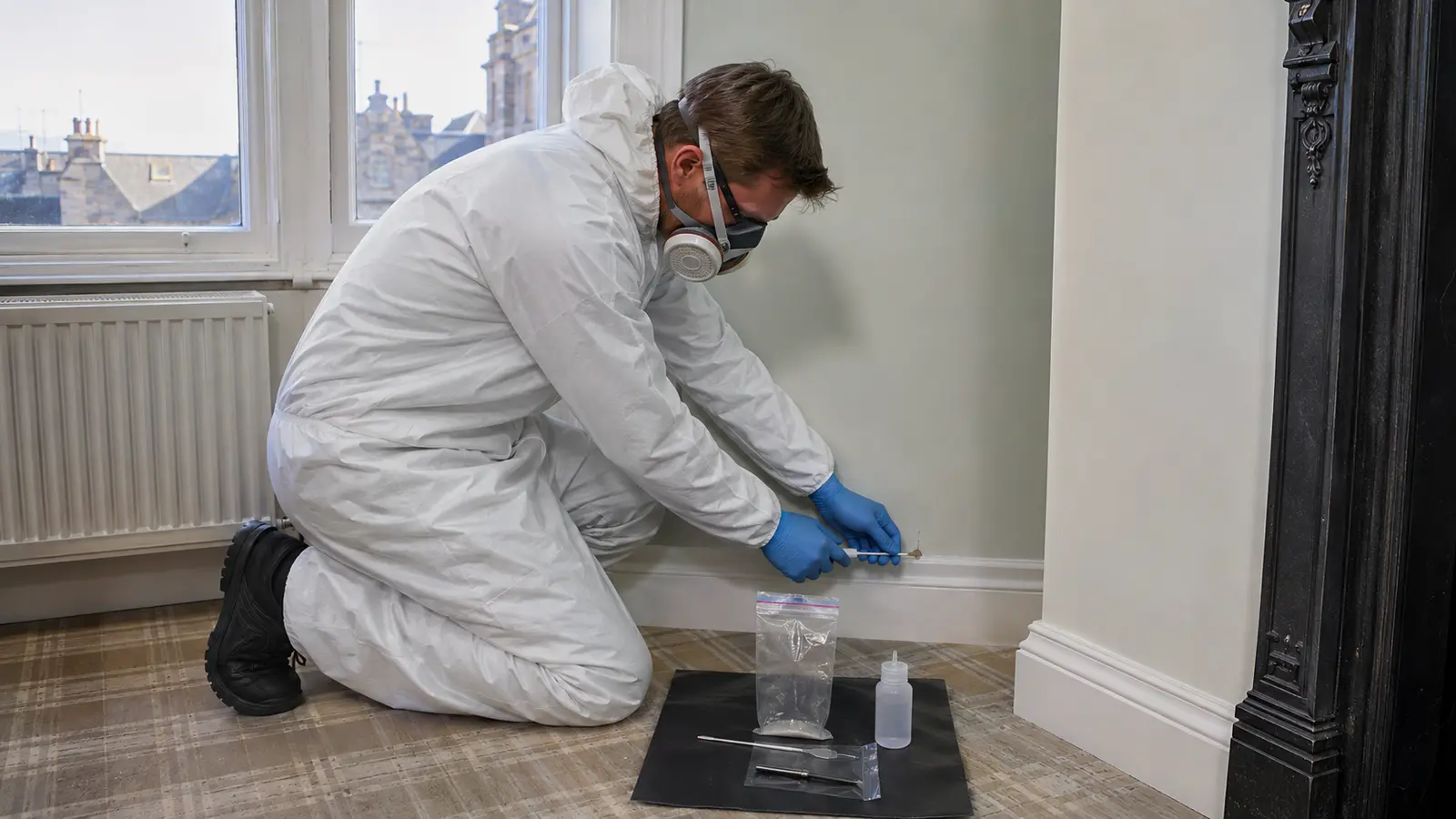
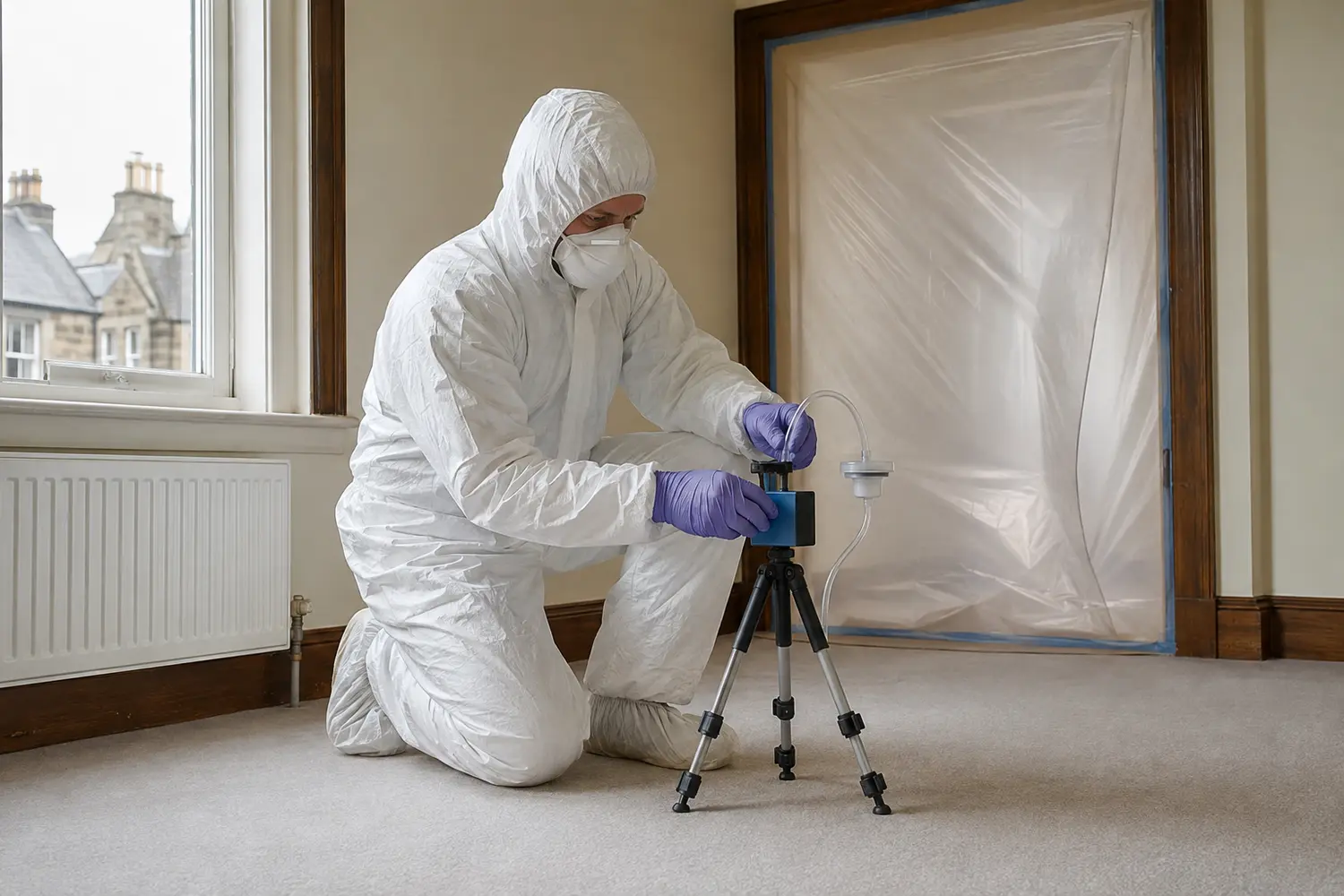
Clearance: Independent checks before a controlled work area returns to normal use.
Encapsulation: A suitable protective system that seals sound asbestos in place.
The safest choice is not always immediate removal. Disturbing a sound product without need can create risk. Leaving damaged or vulnerable material without a plan can also be unsafe.
- Condition and disturbance risk matter more than fear.
- Management needs records, protection and regular checks.
- Remove material when safe long-term control is not realistic.
Stop. Do not touch, drill, break or clean the suspect material.
Keep back. Keep people and pets away. Do not sweep or use a household vacuum.
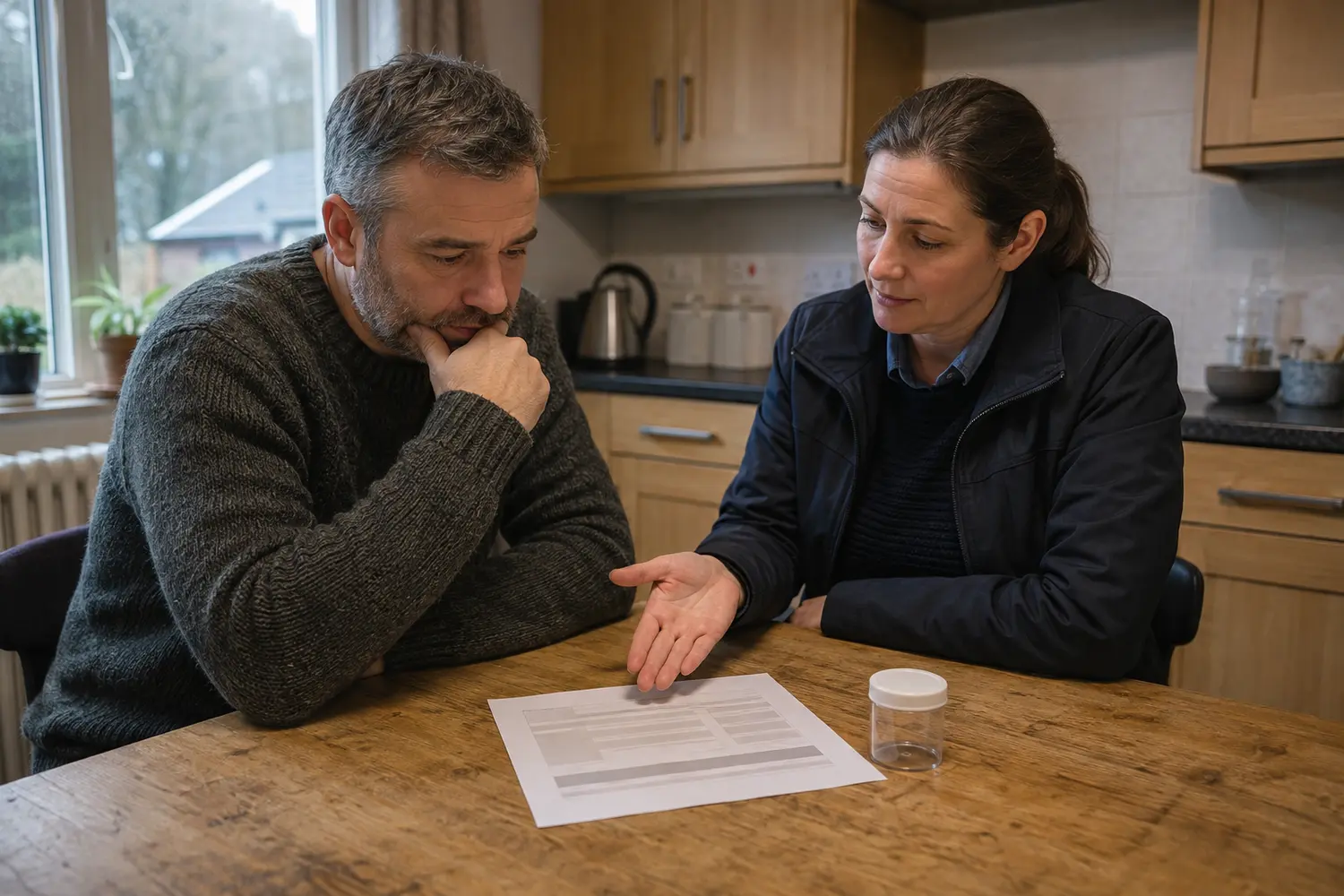
Get advice. Call a trained professional and explain what you found and what happened.
The safest choice is not always immediate removal. Disturbing a sound product without need can create risk. Leaving damaged or vulnerable material without a plan can also be unsafe.
Sound asbestos may stay in place if it is protected, recorded and checked. Removal is more likely when material is damaged, easy to disturb, blocking planned work or difficult to manage reliably.
When management in place may be sensible
Stable material away from normal activity may present little immediate risk. A plan can record it, restrict disturbance and schedule condition checks.
Management works only when people know the material is there. Hidden information and uncontrolled maintenance make it unreliable.
- Material is sound
- Access is controlled
- No detailed work is planned
- Records reach future workers
When encapsulation may add protection
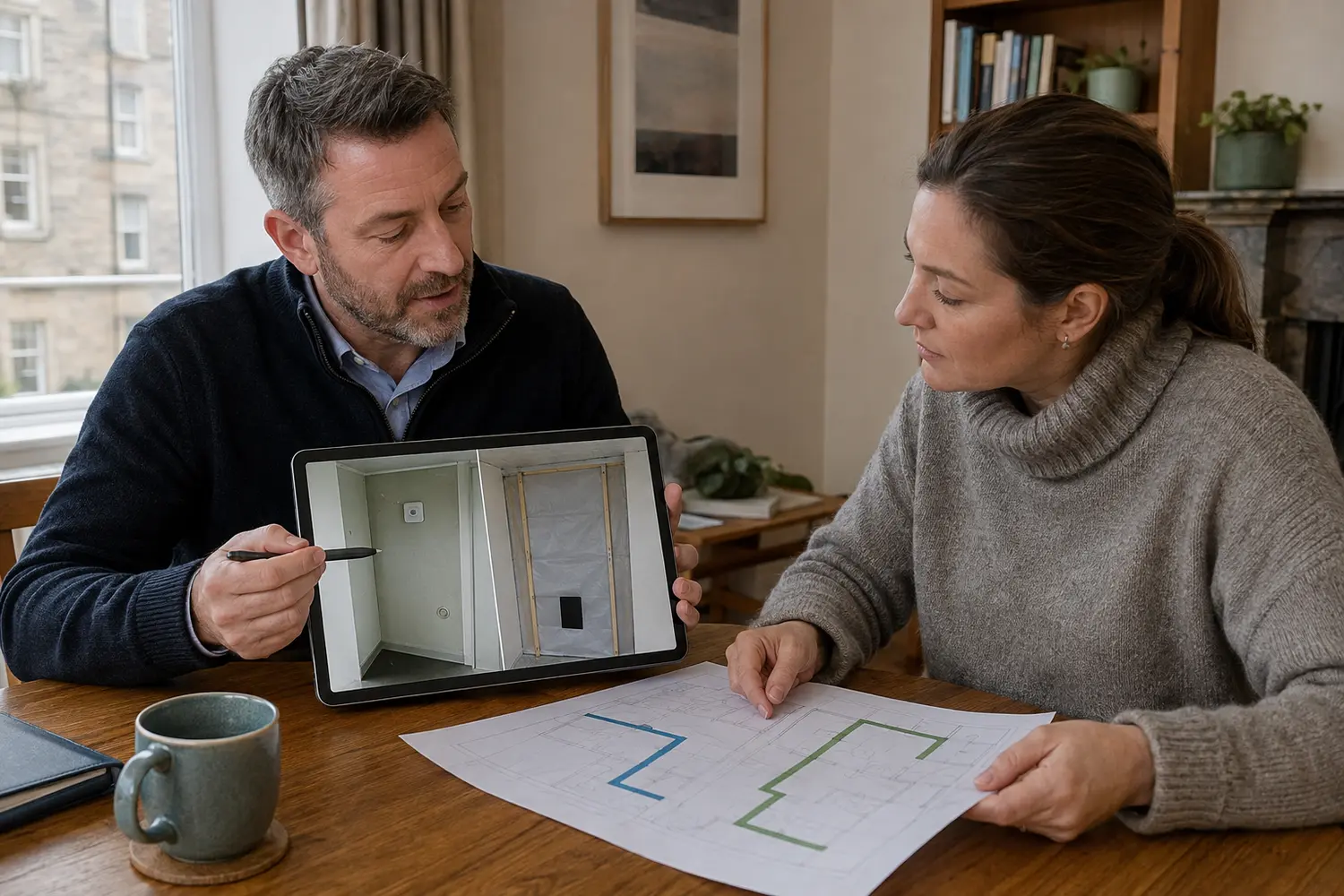
Encapsulation means sealing or enclosing suitable asbestos so fibres are less likely to be released. The system must match the product and building conditions.
It does not make the asbestos disappear. Keep the location in the register and prevent future drilling through the protective layer.
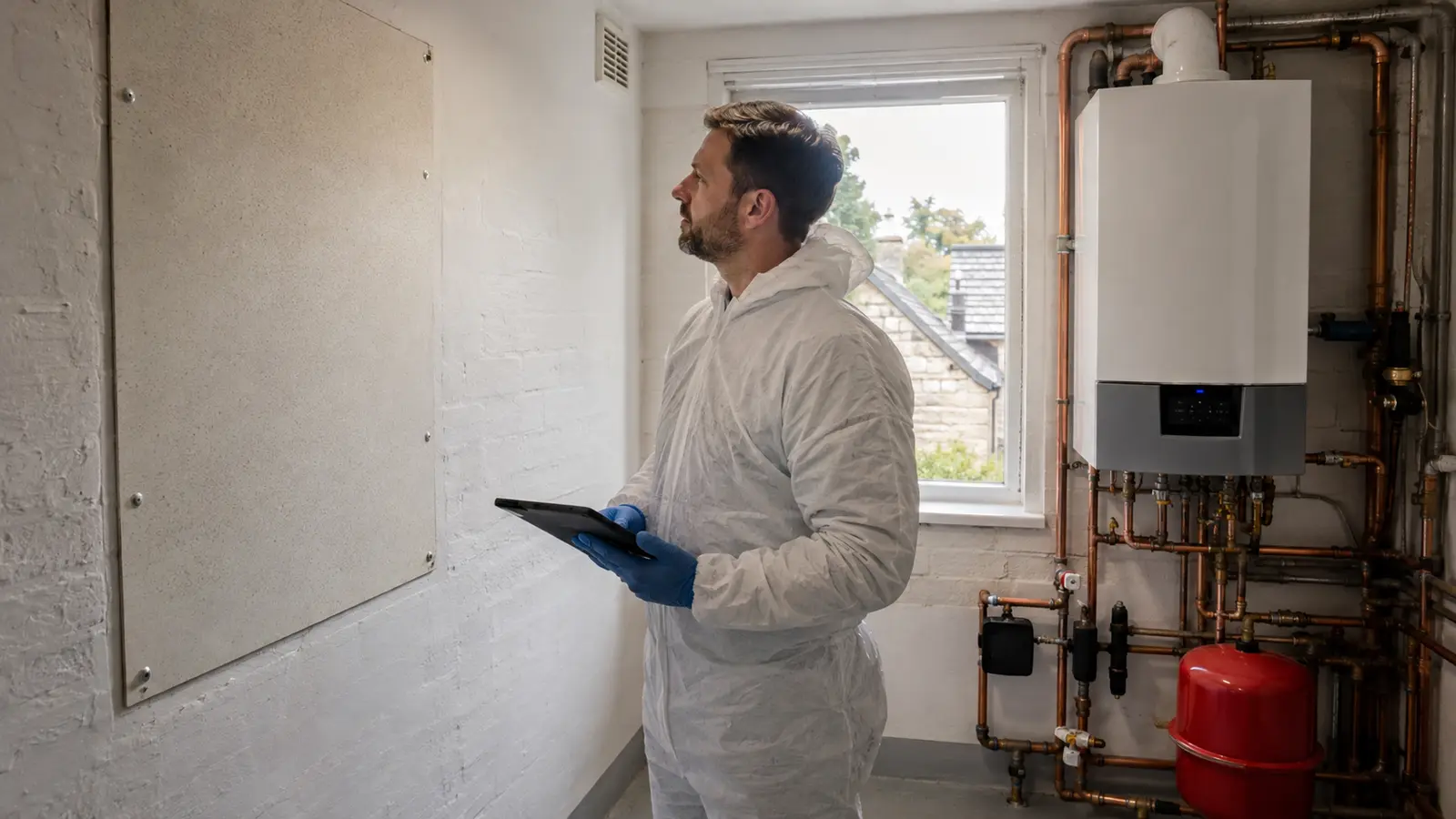
Reasons removal may be the better long-term choice
Removal may suit damaged material, repeated maintenance access, demolition or refurbishment. It may also help when a building cannot protect the material for its remaining life.
The work itself must be planned carefully. Higher-risk materials may need licensed removal and independent final safety check.
Compare the whole-life cost, not only today’s quote
Management needs future checks, labels and controls. Encapsulation may need repair or eventual removal. Removal may include repair and finishing work and temporary closure.
Ask how each option affects future roofs, wiring, heating and sale records. A cheap short-term choice can create repeated costs later.
Write down why the option was chosen
Record the survey, risk factors, decision, work completed and next review date. Include photos and boundaries.
Review after leaks, damage, layout changes or new work. A previous management choice does not cover a changed situation forever.
Frequently asked questions
Questions people ask next.
Is intact asbestos safe?+
Intact material is generally lower risk than damaged material, but it still needs protection from disturbance and a suitable plan.
Does painting count as encapsulation?+
Not always. Use a suitable designed system and a method that does not disturb the material.
Will removal increase property value?+
That depends on the property and buyer. Keep strong records whichever option you choose.
Who decides?+
A trained asbestos professional can check options. The owner or dutyholder makes the building decision within legal duties.