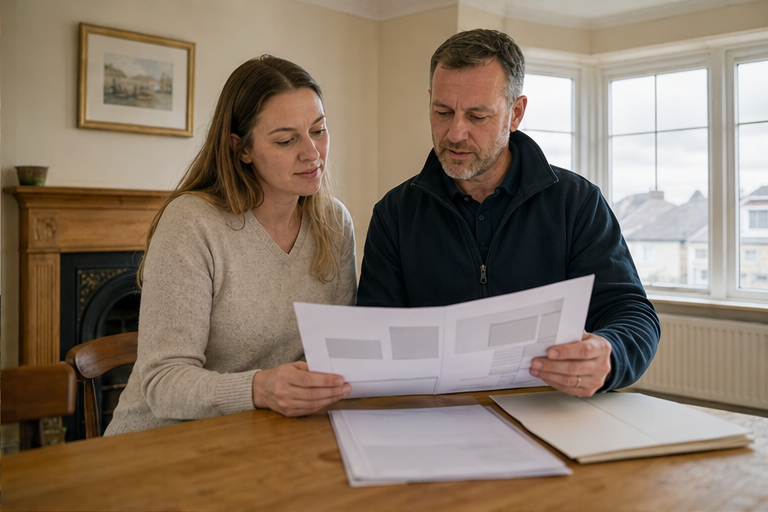
Management survey: A survey that checks asbestos risks during normal use.
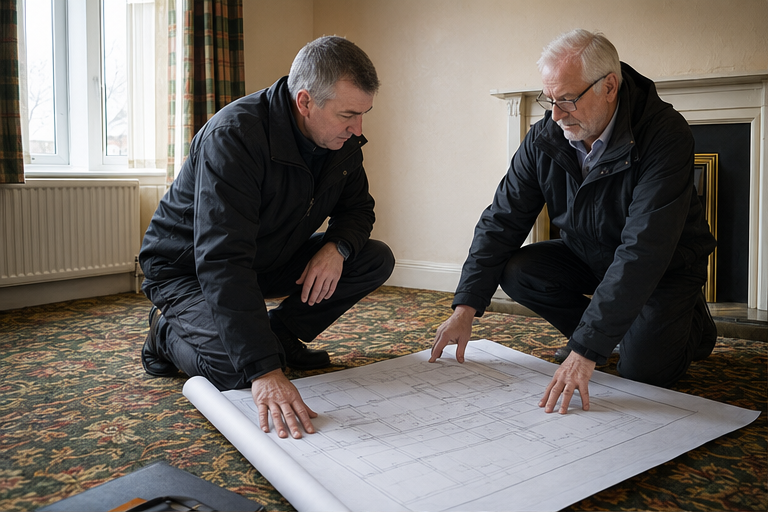
Refurbishment survey: A survey that opens hidden areas before building work.
Buyers are often less concerned by a known, documented material than an unexplained warning with no scope or price. Clear evidence can reduce uncertainty even when removal is not necessary.
- Survey and sample reports
- Removal scope
- Waste paperwork
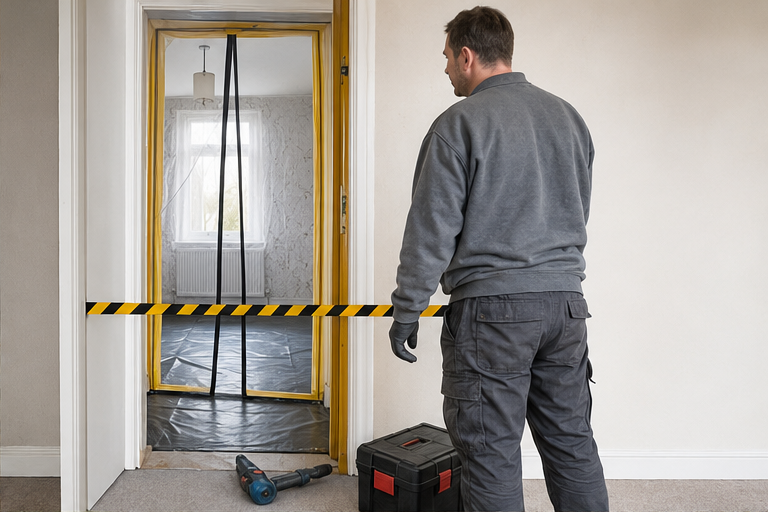
Stop. Do not touch, drill, break or clean the suspect material.
Keep back. Keep people and pets away. Do not sweep or use a household vacuum.
Get advice. Call a trained professional and explain what you found and what happened.
Buyers are often less concerned by a known, documented material than an unexplained warning with no scope or price. Clear evidence can reduce uncertainty even when removal is not necessary.
Gather old surveys and paperwork. Do not hide or disturb suspect material. A test or quote may help if the issue could delay the sale. Take legal advice about what you must tell the buyer.
Start with the property record
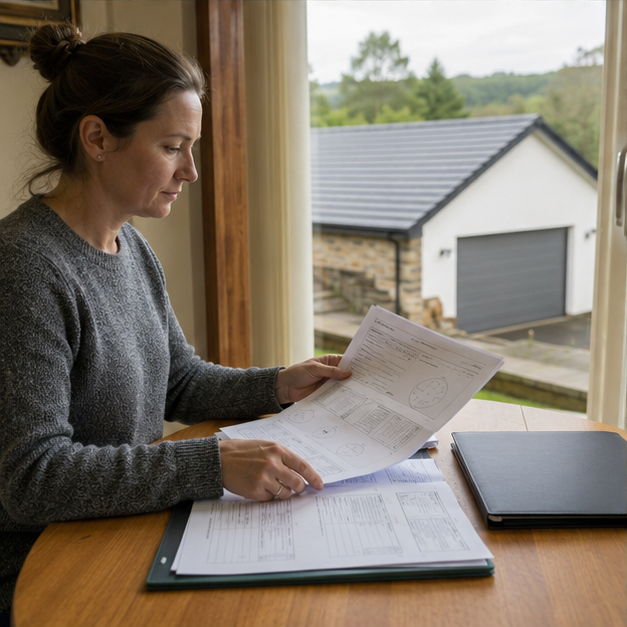
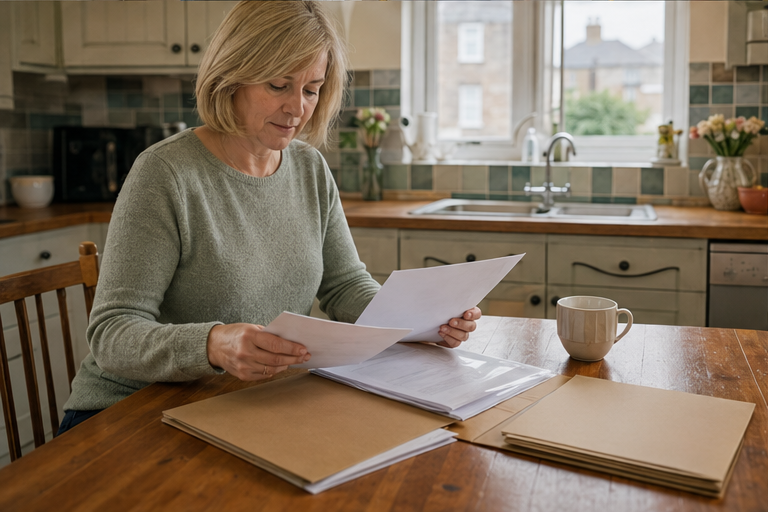
Collect sample results, surveys, invoices, waste notes, final safety check certificates and warranties for replacement work. Match documents to the actual room or structure so a buyer can understand what remains.
If all you have is an old verbal opinion, do not present it as proof. A new targeted check may be more useful.
- Survey and sample reports
- Removal scope
- Waste paperwork
- Final safety check evidence
- Replacement warranty
Decide whether removal adds value
Removing a damaged garage roof or a material blocking planned buyer works may simplify the transaction. Removing every sound old material is not always required and may not produce the same return.
Ask for options: manage in place, encapsulate, remove only the affected item, or complete a wider project. Compare disruption and repair and finishing work as well as price.
Answer the buyer’s real questions
Most buyers want to know whether the material is confirmed, whether it is damaged, what they can safely do and what a defined solution costs. A concise specialist note and quote can answer those questions.
Avoid dramatic claims that the house is ‘asbestos-free’ unless the scope genuinely supports that statement. Surveys have boundaries and exclusions.
Keep technical and legal advice separate
An asbestos contractor can identify and price work. Your solicitor or estate agent should advise on the legal information required in the sale process. Share accurate documents with them rather than editing the wording yourself.
If work is completed before listing, photo the finished area and organise the handover pack. Buyers respond well to a clear sequence of evidence.
Frequently asked questions
Questions people ask next.
Do I have to remove asbestos before selling?+
Not always. The answer depends on condition, legal advice, buyer rules and whether work will disturb it.
Will testing make the sale easier?+
It can turn an uncertain statement into evidence, particularly for a specific coating or garage roof.
Can I advertise the property as asbestos-free?+
Use cautious, accurate language that reflects the actual survey scope and professional advice.