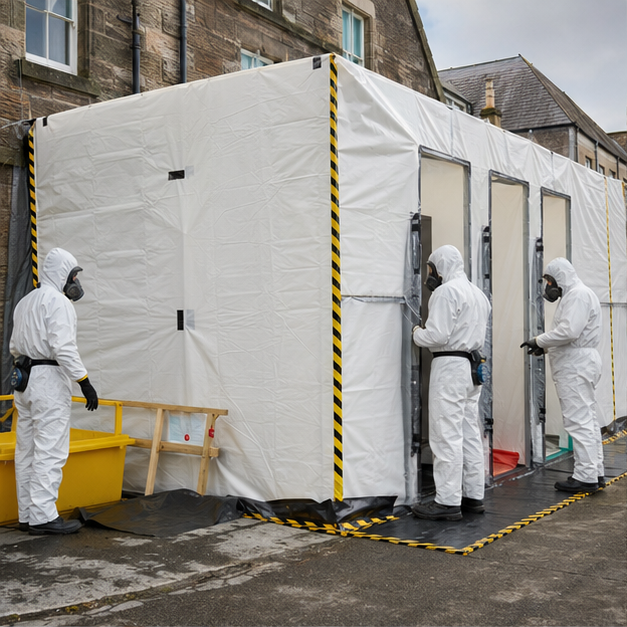
Enclosure: A sealed work area that stops fibres from spreading.
Decontamination: A deep clean that removes asbestos dust and fibres.
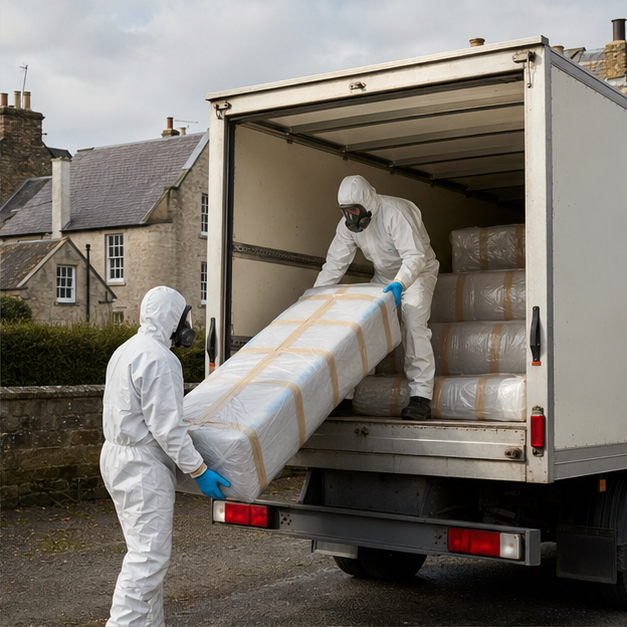
Waste record: The legal paper trail for asbestos waste.
A safe asbestos job follows a clear set of steps. Knowing these steps can reduce worry. You know who does what and when you can use the area again.
- Survey or sample
- Site check
- Material and condition
Stop. Do not touch, drill, break or clean the suspect material.
Keep back. Keep people and pets away. Do not sweep or use a household vacuum.
Get advice. Call a trained professional and explain what you found and what happened.
A safe asbestos job follows a clear set of steps. Knowing these steps can reduce worry. You know who does what and when you can use the area again.
First, identify the material and decide the legal work type. Next, write a plan and close off the area. Then remove the material and clean the space. Move the waste under special waste rules. Complete any final safety checks and give the customer the records.
1. Identify the material and work area
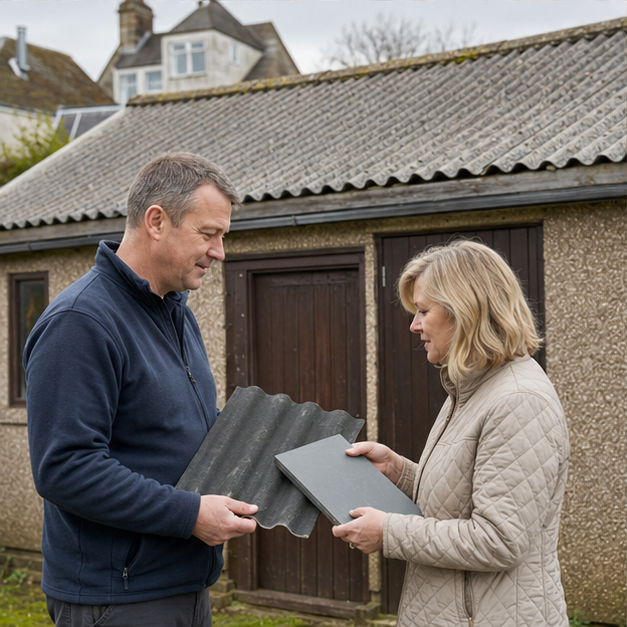
Survey or sampling evidence should connect the material to the exact location and planned work. The contractor reviews condition, extent, access, people using the building and the chance of fibre release.
This stage prevents both under-control and over-control. The method should fit the product and task rather than the word asbestos alone.
- Survey or sample
- Site check
- Material and condition
- Work boundary
- Occupant and neighbour risks
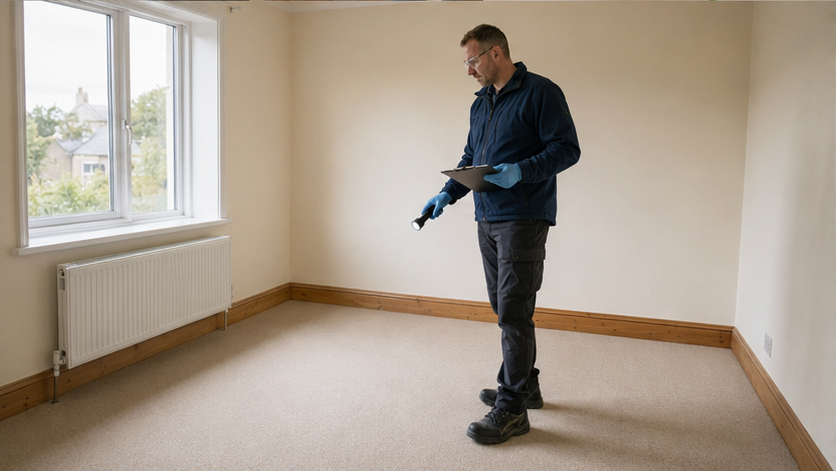
2. Check the legal work type and write a plan
The material and task decide the legal work type. The written plan lists each step, the safety kit and the waste route. It also covers cleaning and emergencies.
Some jobs need an independent testing firm. This firm must be separate from the removal company.
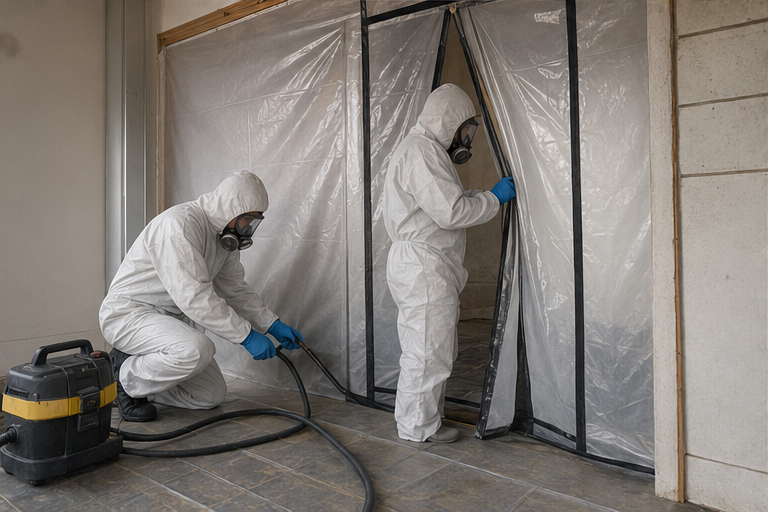
3. Set up the work area and remove the material
Simple outside work may only need a closed safety zone and a wet method. Higher-risk work may need a sealed area and special air control. Workers use the right suits and breathing masks.
Material is removed in a planned order, contained and labelled. The team avoids unnecessary breakage and keeps clean and dirty routes separate.
4. Clean, clear and document the handover
The team cleans and checks the area. Higher-risk licensed work often needs an independent final check. You get a certificate before the space is used again. Waste leaves through a legal route.
You receive the agreed records. Other trades should enter only after every handover check is complete.
Frequently asked questions
Questions people ask next.
Do I need to leave the property?+
It depends on material, location and controls. The contractor should explain occupied and excluded areas before work.
Who carries out the final safety test?+
When needed, a separate UKAS-approved testing firm carries out the final check.
What paperwork should I keep?+
Keep the survey, work plan, waste papers and any final safety certificate.