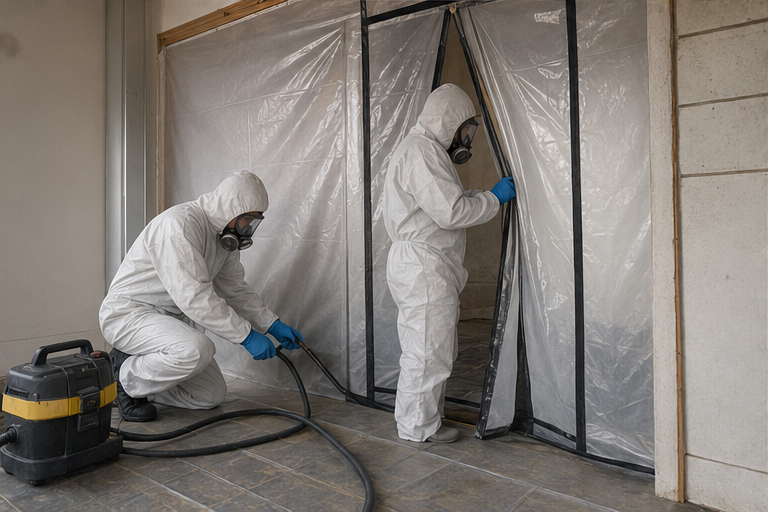
Enclosure: A sealed work area that stops fibres from spreading.
Decontamination: A deep clean that removes asbestos dust and fibres.
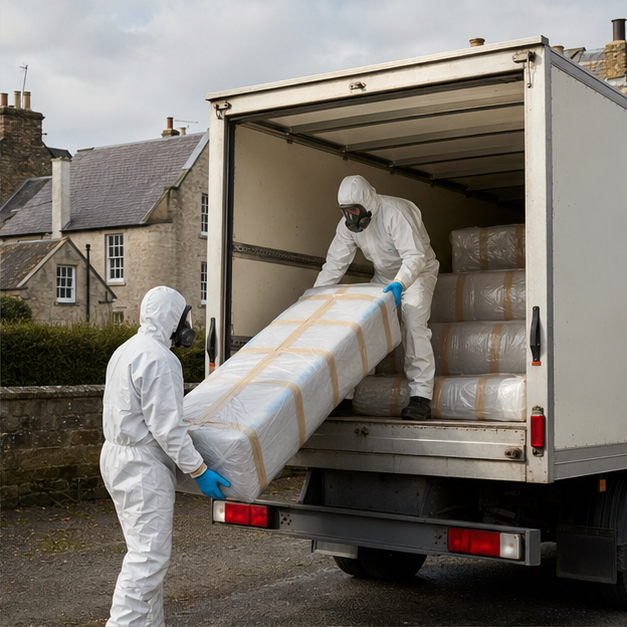
Waste record: The legal paper trail for asbestos waste.
Customers often ask if a company is licensed for asbestos. Not every task needs the same licence. The material, its condition and the task set the legal work type.
- Higher-risk material
- Greater fibre-release potential
- Specialist sealed work area controls
Stop. Do not touch, drill, break or clean the suspect material.
Keep back. Keep people and pets away. Do not sweep or use a household vacuum.
Get advice. Call a trained professional and explain what you found and what happened.
Customers often ask if a company is licensed for asbestos. Not every task needs the same licence. The material, its condition and the task set the legal work type.
Higher-risk work needs an HSE-licensed contractor. Some lower-risk work does not need a licence. It may still need an HSE notice. All asbestos work needs trained people, a risk check and a work plan.
When licensed work is likely
Loose insulation, pipe lagging, sprayed coatings and much AIB work can release fibres easily. These jobs may need a licensed contractor. The condition, time and method also matter.
Licensed work often uses a sealed area, special air control and specialist cleaning. It may also need an independent final safety check.
- Higher-risk material
- Greater fibre-release potential
- Specialist sealed work area controls
- Formal legal notice
- Independent final safety check where required
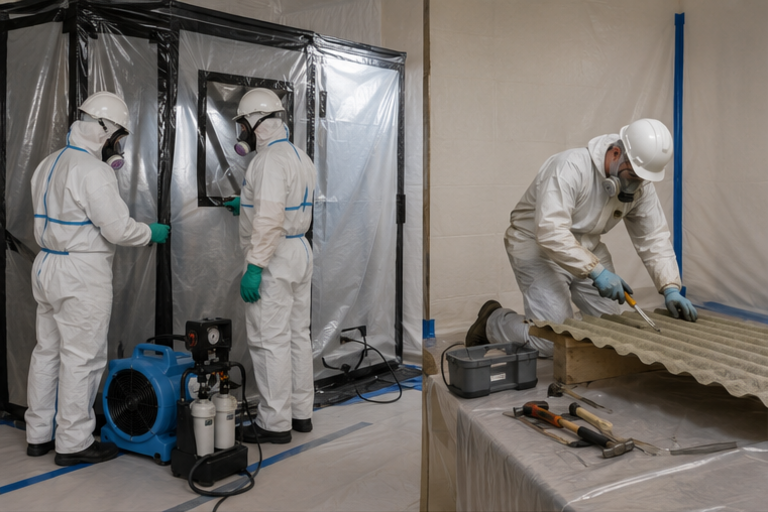
What notifiable non-licensed work means
Some work does not need a licence but must still be reported to HSE. Extra rules also apply to the employer. This is called notifiable non-licensed work, or NNLW. It is not permission for DIY.
The contractor should explain why this work type applies. Ask about the records, health checks and safety steps.
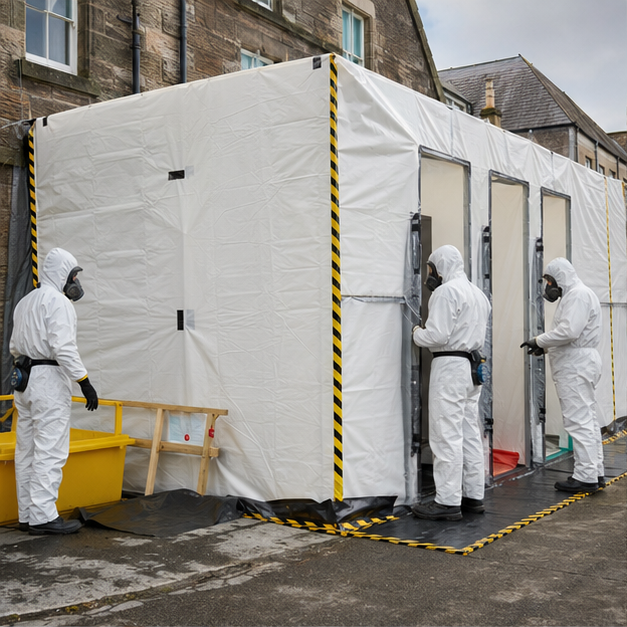
Non-licensed does not mean uncontrolled
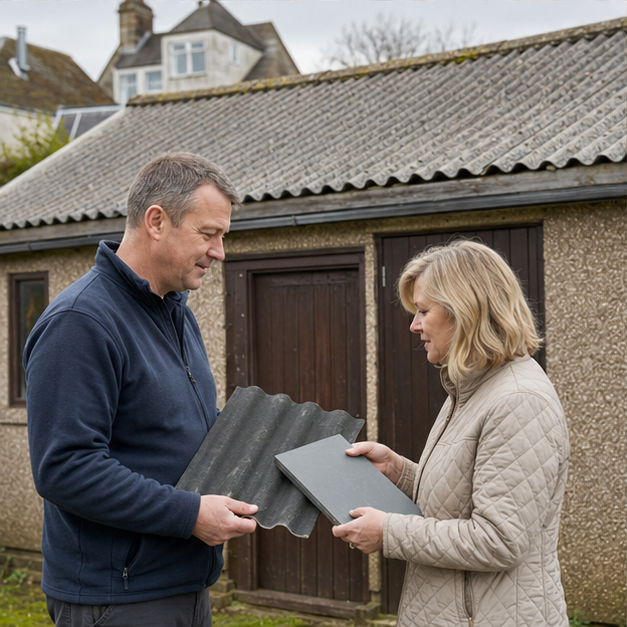
Lower-risk work still needs a risk check, plan, trained workers and the right kit. It also needs safe methods and legal waste disposal. Never smash cement sheets.
Ask how the company will do the work. A badge on a van is not enough proof.
Questions a client should ask
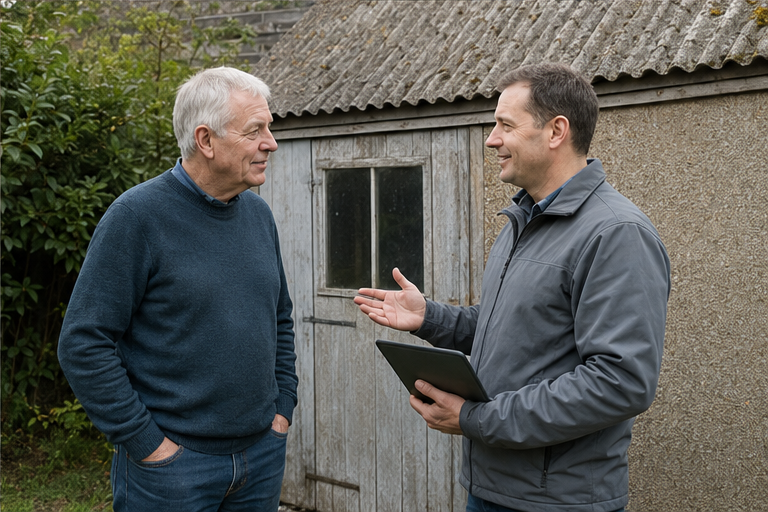
Ask what material was found and which legal work type applies. Ask who will manage the job and which area will close. Check the waste route and whether an independent tester is needed. Ask for the licence number when the law needs one.
A clear answer builds trust. Vague claims that every task is licensed—or that cement needs no controls—should prompt further checking.
Frequently asked questions
Questions people ask next.
Is an HSE licence required for every asbestos job?+
No. The regulations classify work by risk, material and task.
What is NNLW?+
It means notifiable non-licensed work. The job does not need a licence, but it must be reported to HSE. Extra employer rules also apply.
Can one project contain different categories?+
Yes. Different materials or tasks within a wider project may need different approaches.