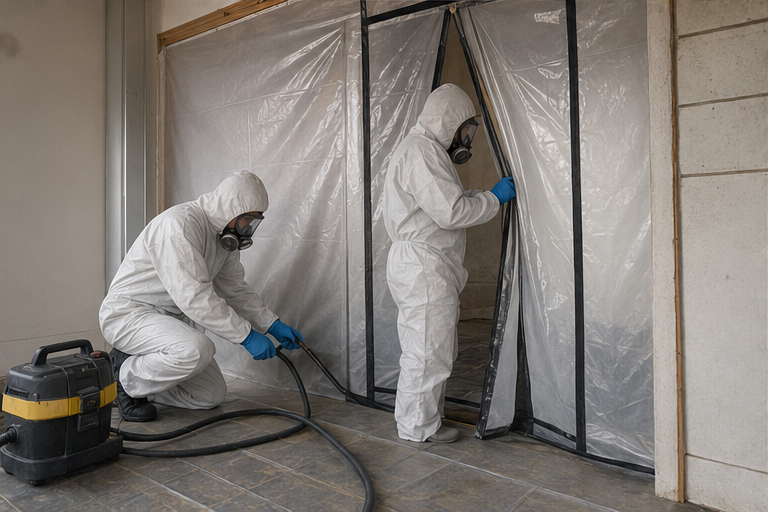
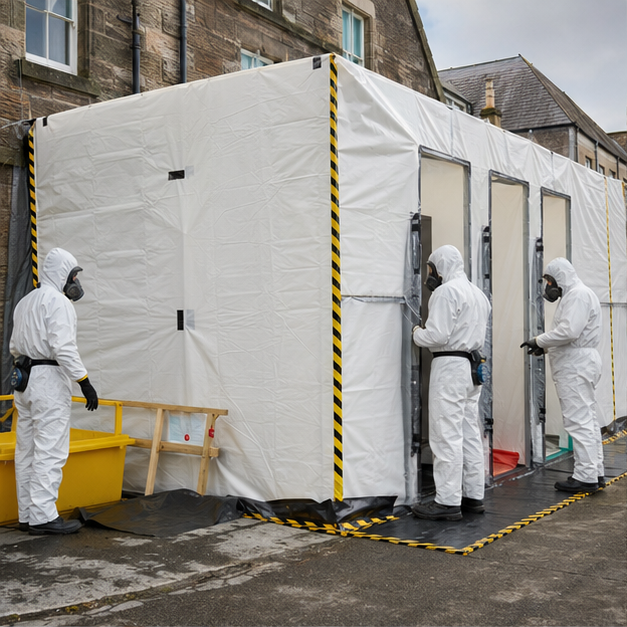
Enclosure: A sealed work area that stops fibres from spreading.
Decontamination: A deep clean that removes asbestos dust and fibres.
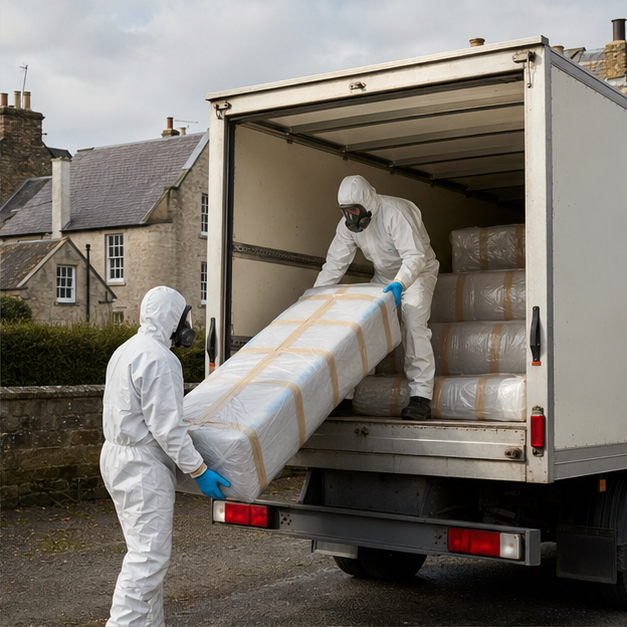
Waste record: The legal paper trail for asbestos waste.
Work that does not need a licence is not always safe for DIY. The material, its condition and the task decide the legal work type. Safety and waste rules still apply.
- Material type
- Condition
- Task and duration
Stop. Do not touch, drill, break or clean the suspect material.
Keep back. Keep people and pets away. Do not sweep or use a household vacuum.
Get advice. Call a trained professional and explain what you found and what happened.
Work that does not need a licence is not always safe for DIY. The material, its condition and the task decide the legal work type. Safety and waste rules still apply.
Higher-risk work needs an HSE-licensed contractor. Some lower-risk work does not need a licence. It still needs trained people, a risk check and safe waste disposal. If you are unsure, do not start.
A licence is only one part of the decision
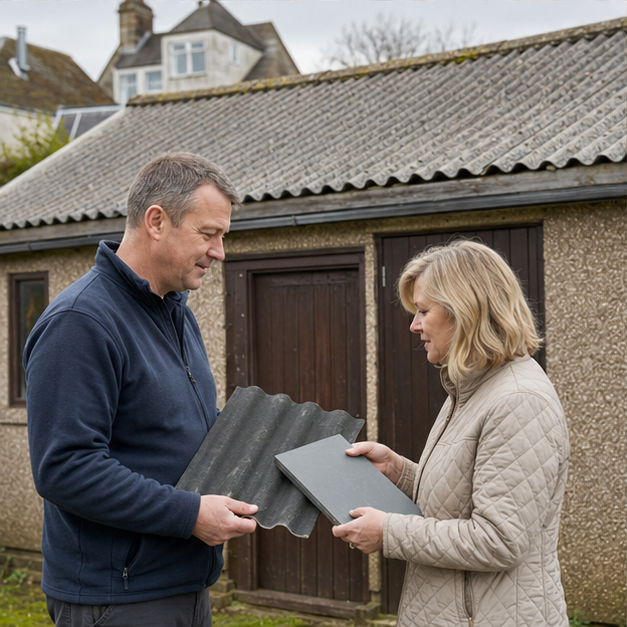
Intact asbestos cement and some textured-coating tasks can fall into lower-risk categories when strict conditions are met. AIB, insulation and sprayed coatings can require much higher controls. Damage or deterioration can change the check.
Do not classify a job from a photo alone. The task—unscrewing an intact sheet versus breaking one—matters as much as the product.
- Material type
- Condition
- Task and duration
- Expected fibre release
- Worker competence
- Waste route
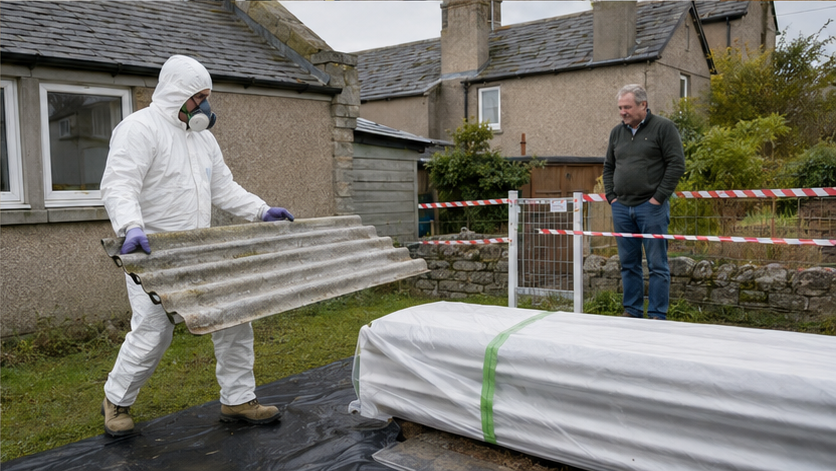
Scotland’s waste rules still apply
Asbestos is special waste in Scotland. It needs safe packing, legal transport and an approved waste site. Local council rules vary. Never use an ordinary skip or general waste bin.
Before any work, confirm exactly where the waste can legally go and what packaging and paperwork are required.
A simple rule for homeowners
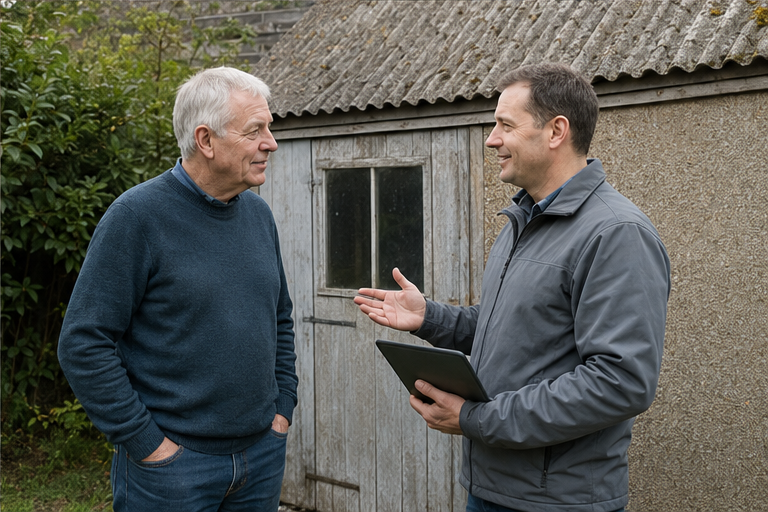
Stop if the material is unknown, damaged, indoors or easy to break. Get specialist help. If several rooms or materials are involved, get a survey.
A professional check can still save money by identifying material that does not need removal or by combining work into one controlled visit.
Frequently asked questions
Questions people ask next.
Is asbestos cement always non-licensed?+
Not always. Condition, task and likely exposure decide legal work type and controls.
Can I put asbestos in a skip?+
Not in ordinary general waste. Confirm an authorised special-waste route.
Does a disposable dust mask make DIY safe?+
No. Respiratory protection is only one part of a complete controlled method.