AIB: Asbestos insulating board. A lighter board that can release fibres more easily than cement.
Encapsulation: Sealing sound asbestos so it can stay managed in place.
Asbestos insulating board, often called AIB, can look like ordinary building board. It was used where heat and fire protection mattered. Guessing from a broken edge is unsafe.
- AIB and non-asbestos boards can look very similar.
- Stop work before drilling, sawing or removing a panel.
- Use a survey or controlled sample to confirm the material.
Stop. Do not touch, drill, break or clean the suspect material.
Keep back. Keep people and pets away. Do not sweep or use a household vacuum.
Get advice. Call a trained professional and explain what you found and what happened.
Asbestos insulating board, often called AIB, can look like ordinary building board. It was used where heat and fire protection mattered. Guessing from a broken edge is unsafe.
Do not cut, drill or snap an unknown board in a pre-2000 building. Check surveys and labels, then arrange controlled sampling. AIB can release more fibres than asbestos cement and often needs tighter controls.
Places where AIB was commonly used
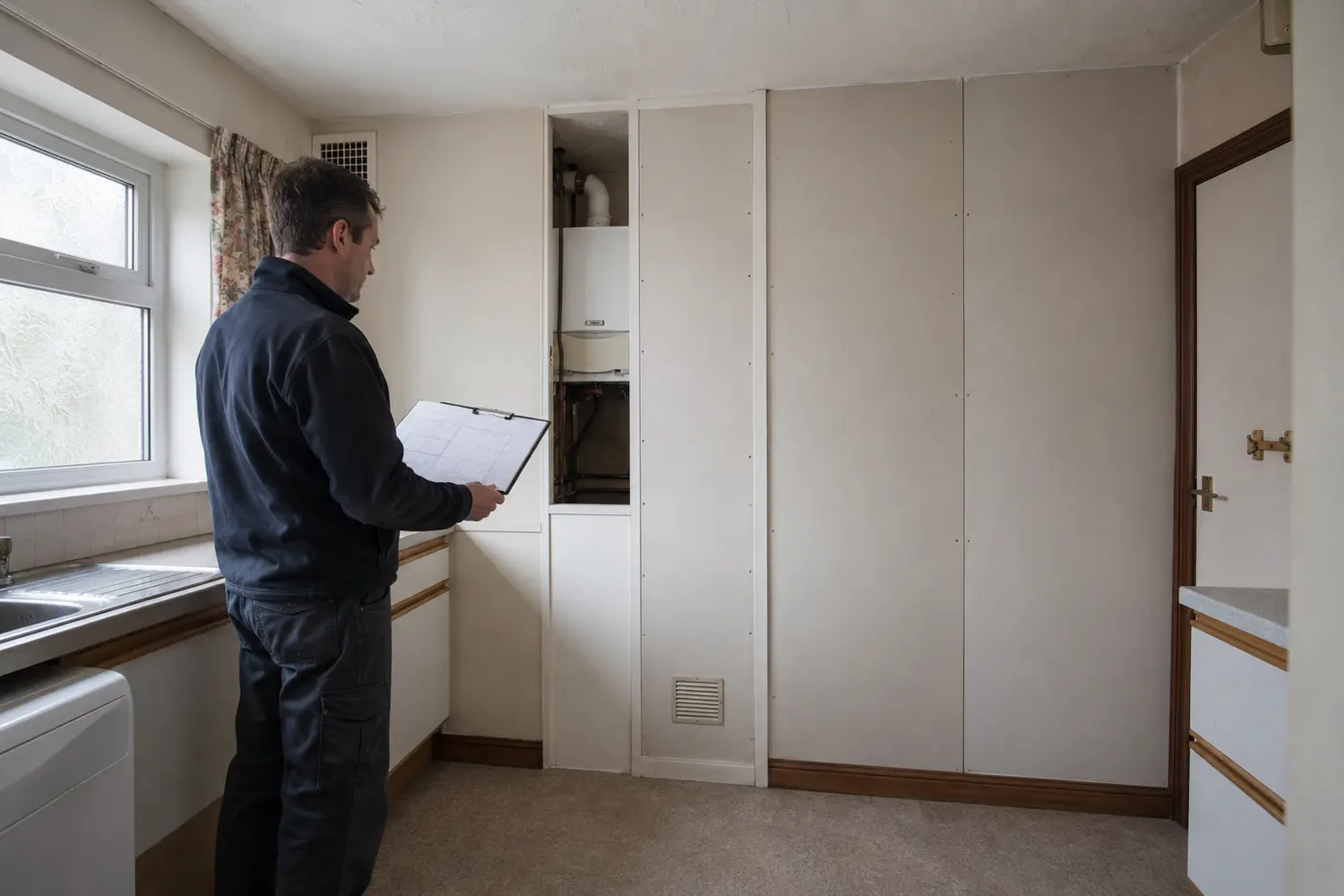
AIB was used in ceiling tiles, partitions, soffits, service risers, fire protection, heater panels and panels around doors. It may also appear inside cupboards or behind finishes.
Its location may raise suspicion, but it does not prove the board contains asbestos. Modern calcium silicate, cement and gypsum products can look similar.
- Ceiling tiles
- Partitions and service risers
- Soffits
- Fire doors and heater panels
AIB is not the same as asbestos cement
AIB was designed as a lighter insulating and fire-protection board. Asbestos cement is usually denser and strongly bound with cement. The legal work category may differ because AIB can release fibres more easily.
Do not use a scratch test or try to judge hardness with a tool. The act of testing by damage may create the very exposure you want to avoid.
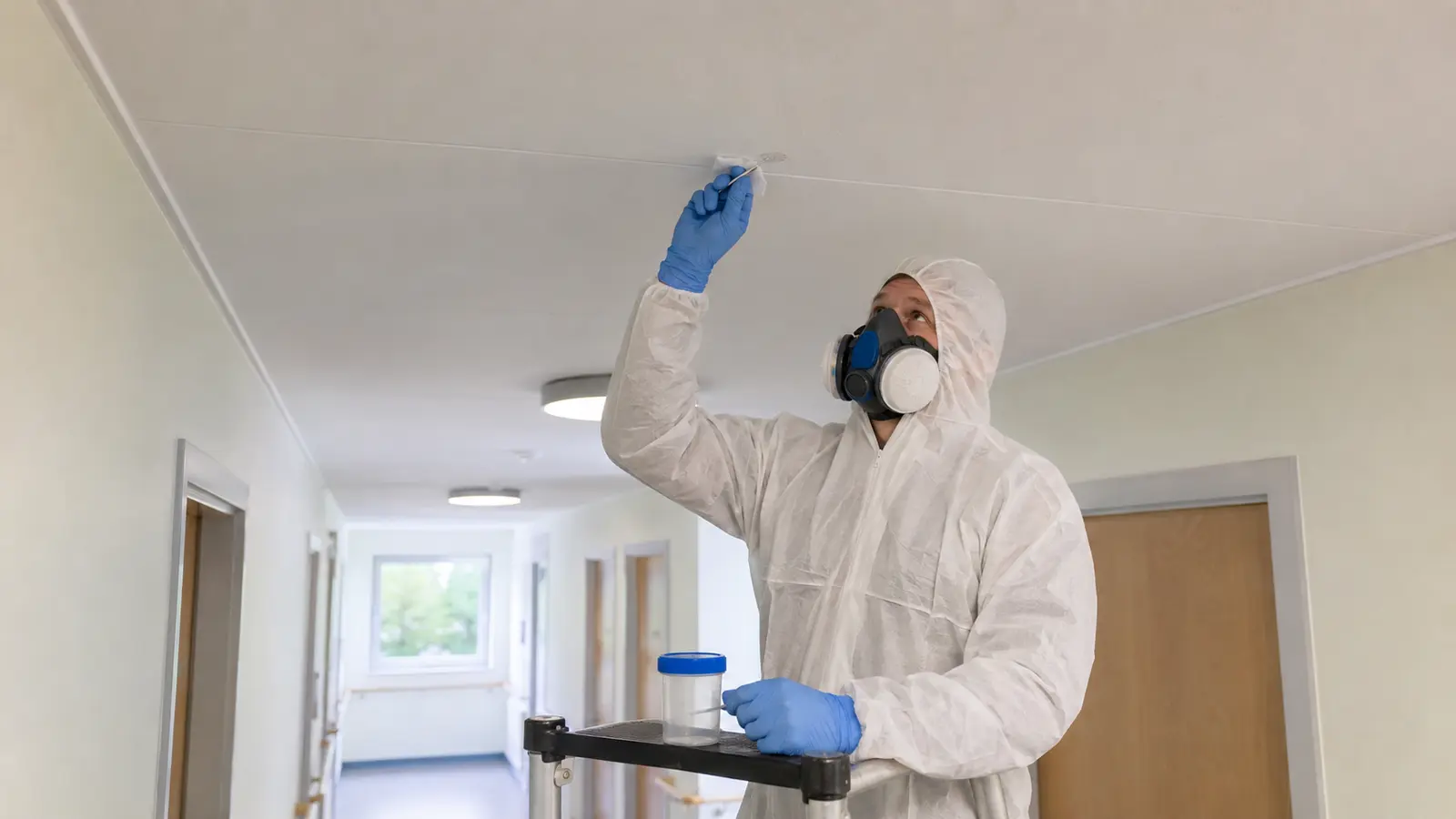
How a surveyor checks an unknown board
The surveyor reviews age, position, construction and existing records. A carefully controlled sample is sent to a suitable lab. The report must link the result to the exact panel and location.
Several panel types may exist in one room. Refurbishment surveys should look behind later finishes and cover every board that planned work may disturb.
Why some AIB work needs a licensed contractor
The material, condition, task and time all affect the work category. Many higher-risk AIB jobs require an HSE-licensed contractor. Short-duration work is not always safe or suitable for DIY.
The plan may include a sealed work area, controlled air, specialist cleaning and independent final safety check. Ask the contractor to explain the legal work type in plain language.
What to do with a damaged or broken board
Stop access and do not sweep fragments. Do not tape or paint the area until a trained person has checked it. A rushed repair can spread debris or hide the source.
After the response, record any board left in place. Give that information to every person who may drill, rewire or refurbish the area.
Frequently asked questions
Questions people ask next.
What colour is AIB?+
Colour cannot confirm AIB. Painted and unpainted boards vary, and many safe products look similar.
Can I remove one small panel myself?+
Do not decide from size alone. The material, task, condition and legal work type must be checked.
Is AIB always licensed work?+
Not every task is put into a legal work type the same way, but many AIB jobs require a licensed contractor. Get trained advice.
Can I board over AIB?+
Encapsulation may be possible if it avoids disturbance and the material is recorded and managed.