AIB: Asbestos insulating board. A lighter board that can release fibres more easily than cement.
Encapsulation: Sealing sound asbestos so it can stay managed in place.
Older pipes and boilers may have soft insulation under paint, cloth, plaster or metal covering. The asbestos may be hidden until a casing is opened.
- Treat soft or broken pipe insulation as high risk.
- Do not remove outer cloth, paint or metal casing.
- Use a suitable survey and licensed contractor where required.
Stop. Do not touch, drill, break or clean the suspect material.
Keep back. Keep people and pets away. Do not sweep or use a household vacuum.
Get advice. Call a trained professional and explain what you found and what happened.
Older pipes and boilers may have soft insulation under paint, cloth, plaster or metal covering. The asbestos may be hidden until a casing is opened.
Do not touch soft or damaged pipe insulation. Keep people away and arrange a survey. Work on asbestos lagging normally needs an HSE-licensed contractor because fibres can be released easily.
Where pipe lagging may be found
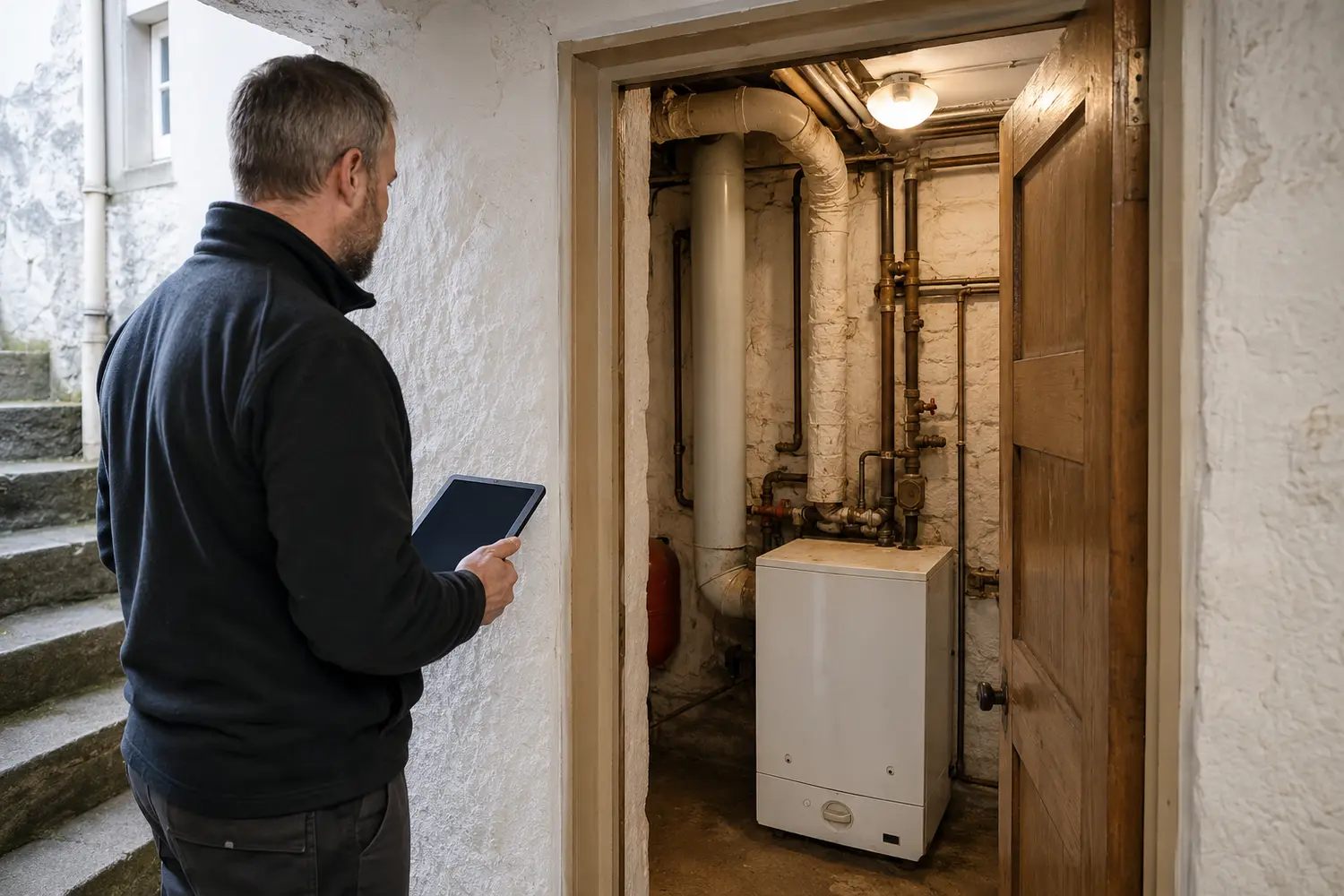
Look in boiler rooms, plant rooms, basements, service risers, ceiling voids and older industrial spaces. Lagging may cover straight pipes, bends, joints, valves and boiler surfaces.
Home homes can also contain old heating insulation, especially around former boiler systems. Later repairs may leave short hidden sections behind new pipework.
- Boiler and plant rooms
- Basements and service ducts
- Pipe bends and valves
- Hidden sections above ceilings
Common appearances—and why they do not confirm it
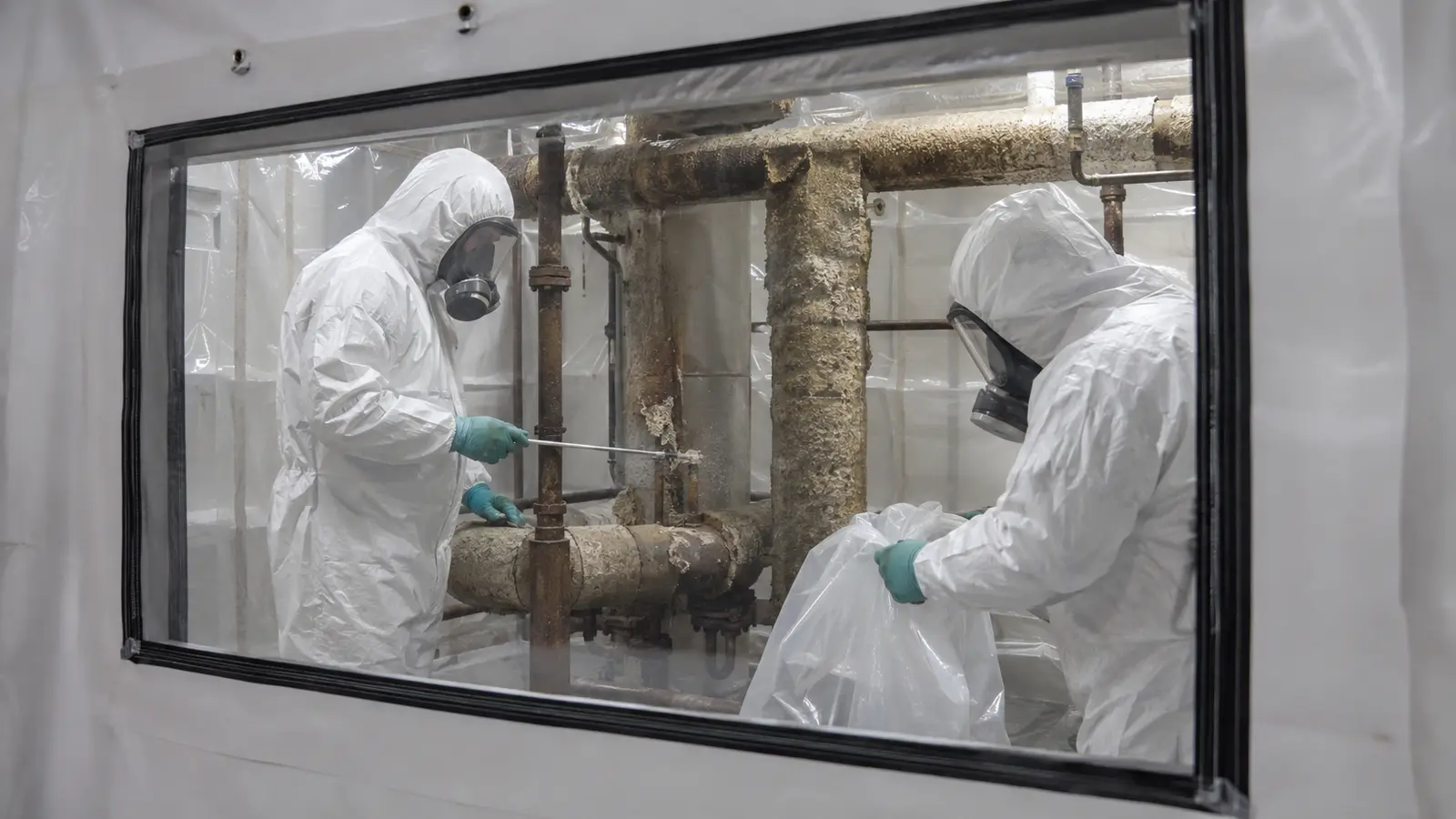
Lagging may look chalky, fibrous, plaster-like or wrapped in cloth. It may be painted or hidden inside metal casing. Modern mineral fibre and other insulation can look similar.
Do not peel back a cover for a better look. The safest evidence comes from records, a suitable survey and controlled sampling where needed.
Why damaged lagging needs urgent control
Lagging can contain a high proportion of asbestos and may crumble easily. Damage from leaks, vibration, maintenance or vandalism can release fibres into a service area.
Keep the area closed and stop air movement or maintenance that may spread debris. Do not ask a general insulation contractor to patch unknown material.
What a controlled removal plan covers
Licensed work may use a sealed area, controlled air system, wet methods, specialist cleaning and worker specialist cleaning. The exact method depends on pipe layout, access and whether the system is live.
Independent testing and formal final safety check may be required before the area is handed back. The plan should also explain how pipes will be reinsulated.
Information to collect before asking for a quote
Give survey results, pipe lengths, diameters, bends, room height, access and photos taken safely. State whether services can be shut down and whether the building remains occupied.
Ask the contractor to separate enabling work, removal, final safety check, waste and repair and finishing work. This makes the quote easier to compare.
Frequently asked questions
Questions people ask next.
Is all old pipe insulation asbestos?+
No. Many safe products look similar. A survey or lab result is needed.
Can I paint damaged lagging?+
Do not touch or coat damaged suspect lagging. Keep the area controlled and get specialist advice.
Does pipe lagging removal need a licence?+
Work on asbestos lagging normally requires an HSE-licensed contractor.
Can the pipes stay in use?+
The contractor must check heat, pressure and shutdown needs before planning work.