AIB: Asbestos insulating board. A lighter board that can release fibres more easily than cement.
Encapsulation: Sealing sound asbestos so it can stay managed in place.
Older roof edges can contain several different suspect products. Gutters and downpipes may be asbestos cement. Soffit boards may be cement or higher-risk AIB. They should not be treated as one material without evidence.
- Soffits may be cement or higher-risk AIB.
- Plan asbestos control and work-at-height safety together.
- Test before fitting new roofline products over old boards.
Stop. Do not touch, drill, break or clean the suspect material.
Keep back. Keep people and pets away. Do not sweep or use a household vacuum.
Get advice. Call a trained professional and explain what you found and what happened.
Older roof edges can contain several different suspect products. Gutters and downpipes may be asbestos cement. Soffit boards may be cement or higher-risk AIB. They should not be treated as one material without evidence.
Do not drill or snap an old soffit, gutter or downpipe. Confirm whether it is cement, AIB or a non-asbestos product. The material, height and access decide the safe work method.
Different roofline products need different answers
Asbestos cement was moulded into gutters, downpipes and sheets. Flat soffit boards may also be cement, but some were made from AIB. Paint and weathering can hide the difference.
The correct identification matters because AIB can release fibres more easily. Do not let a roofline quote assume every grey board is low-risk cement.
- Soffit boards
- Gutters
- Downpipes
- Fascia backing and canopy panels
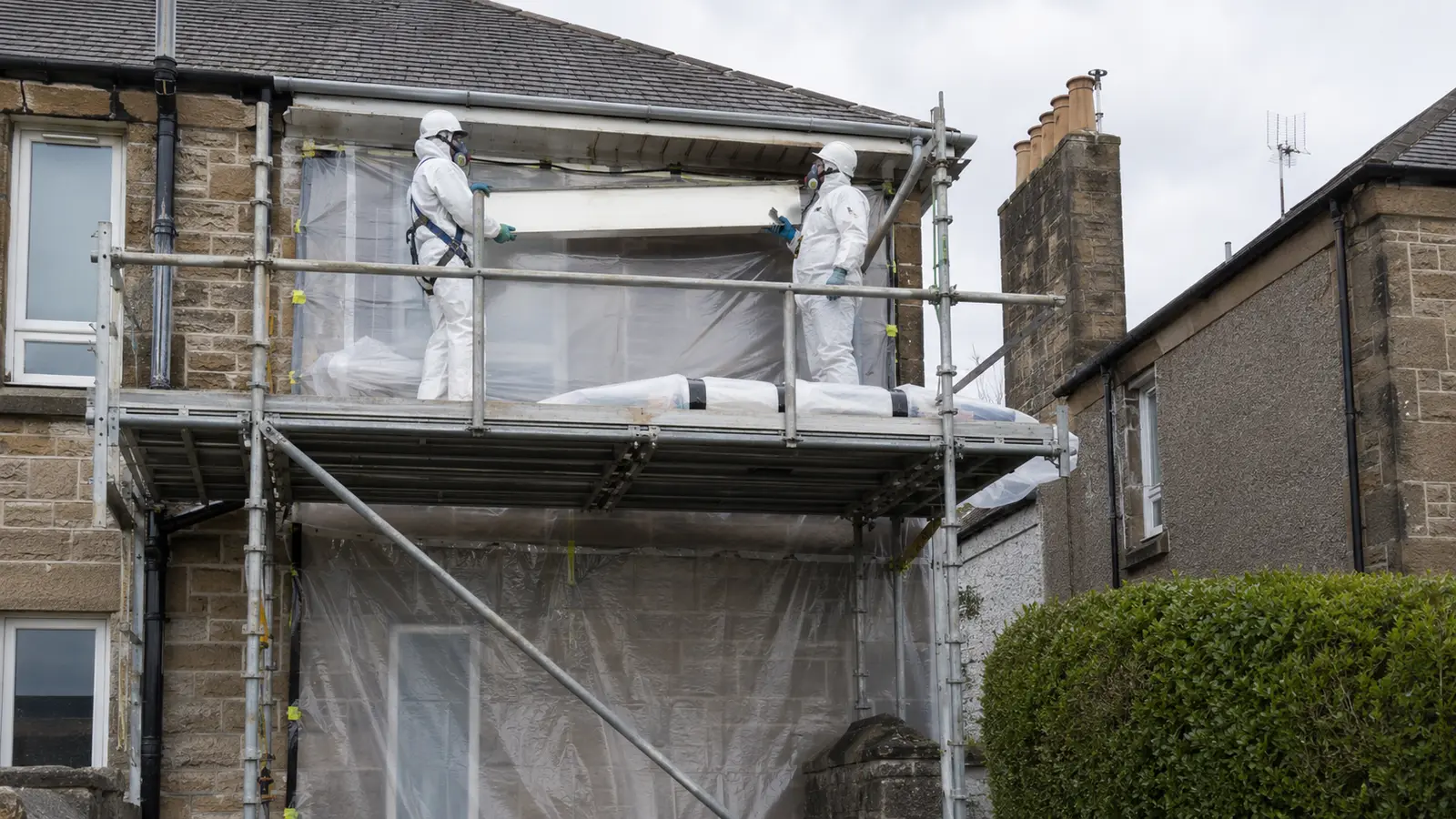
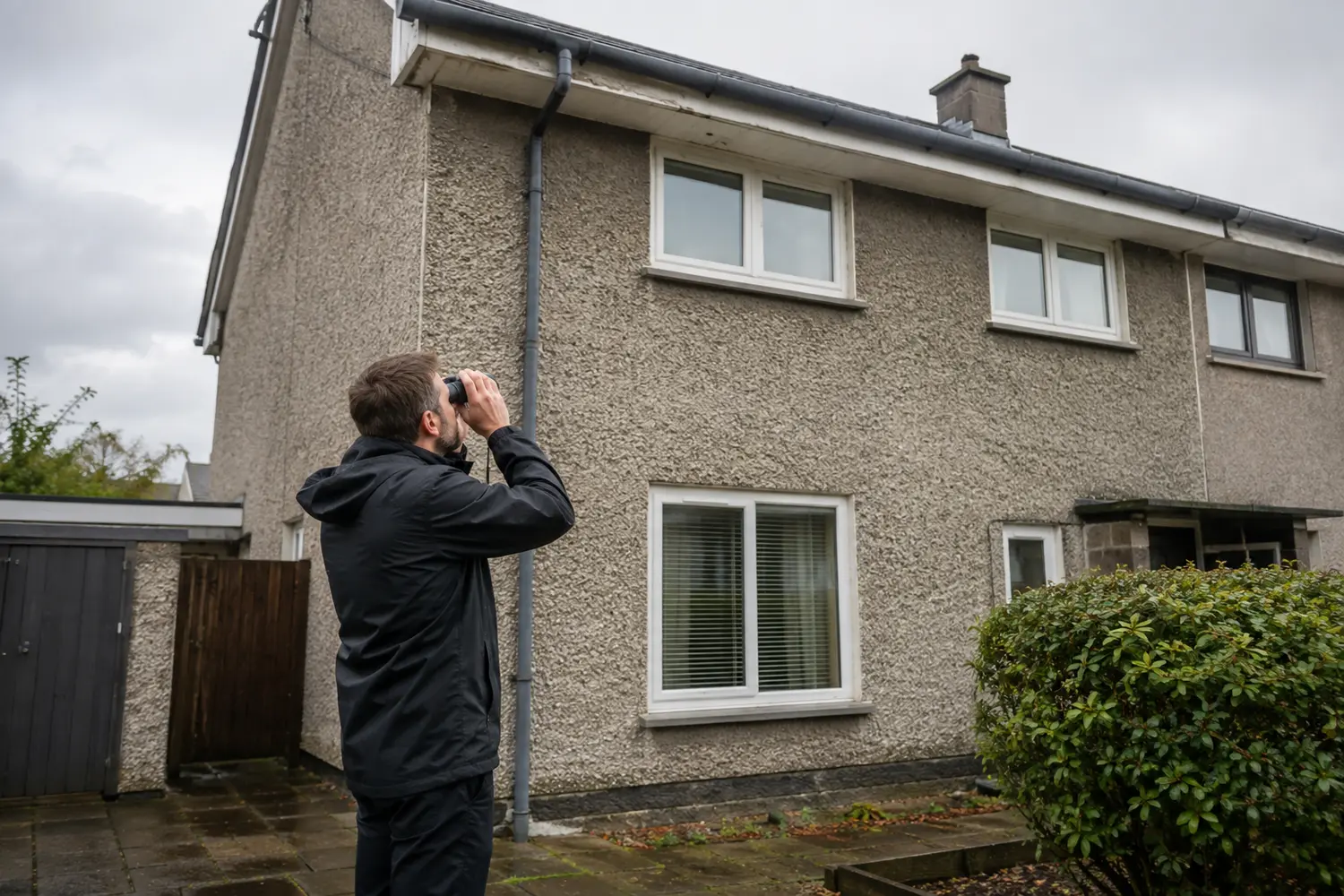
Check cracks, fixings and water damage
Weather, overflowing gutters and building movement can crack boards. Failed brackets may pull at old gutter sections. Do not pressure-wash or scrape moss from suspect products.
Photo the full elevation from a safe place. Note loose parts, access over conservatories and public paths. Urgent make-safe work still needs the correct asbestos controls.
Plan replacement as one joined-up project
The removal team and roofline installer should agree sequence, scaffolding, temporary weather protection and handover. This avoids drilling suspect material or leaving the building open to rain.
Confirm whether the price covers fascia, soffit, gutters, downpipes, disposal and making good. Ask what happens if a different board is found behind the visible layer.
Terraces and shared rooflines need extra planning
Roofline products may cross boundaries or connect to neighbouring gutters. Access may also require a shared path or scaffold. Agree boundaries before removing sections.
Do not state that a neighbour has asbestos without evidence. Share confirmed results and the work plan calmly. A coordinated job can reduce repeat disturbance later.
Frequently asked questions
Questions people ask next.
Are asbestos gutters dangerous when intact?+
Sound asbestos cement is generally lower risk than soft insulation, but it must not be cut, drilled or broken.
Can uPVC be fixed over an asbestos soffit?+
Fixings may disturb the old board. Identify the material and check the method before work.
Can I pressure-wash asbestos cement?+
No. High-pressure cleaning can damage the surface and spread contaminated water or debris.
Who removes the scaffold?+
Confirm scaffold and access responsibilities in the written quote.