AIB: Asbestos insulating board. A lighter board that can release fibres more easily than cement.
Encapsulation: Sealing sound asbestos so it can stay managed in place.
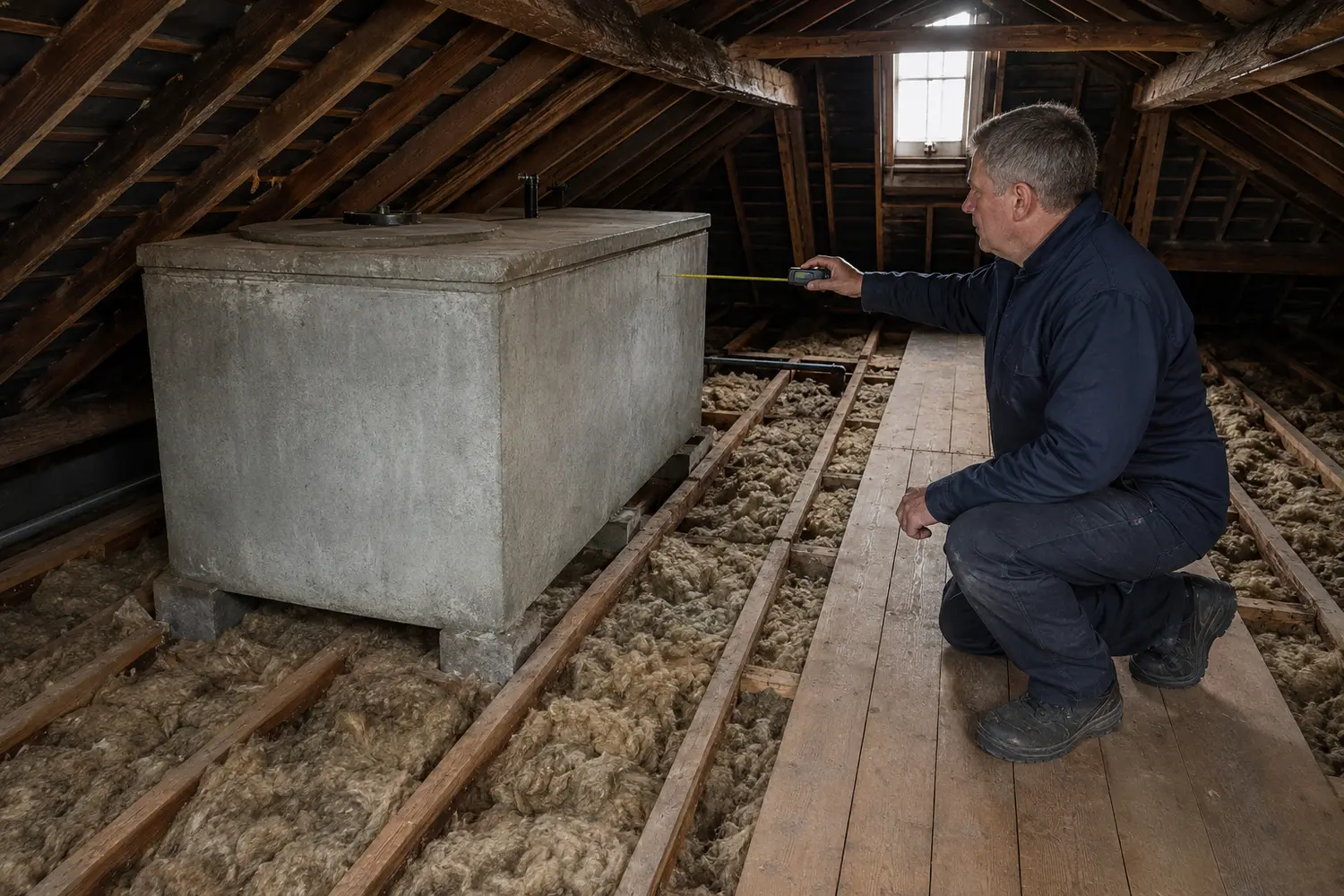
Heavy grey water tanks were used in some lofts and plant rooms. A similar appearance does not prove asbestos, but access and weight can make removal difficult even when the material is in good condition.
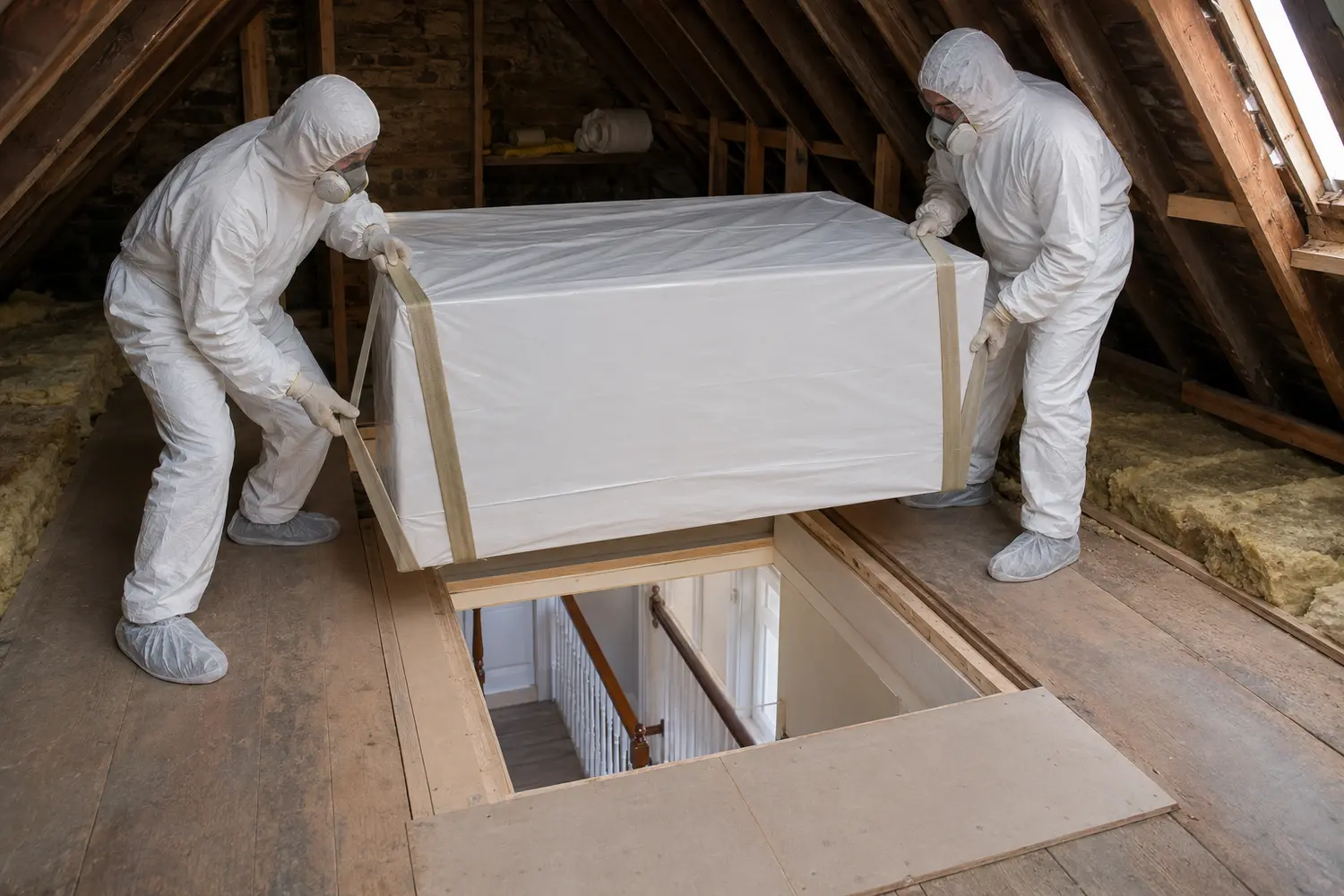
- Do not break the tank to fit it through the loft hatch.
- Confirm the material before plumbing or demolition work.
- Plan isolation, access, lifting and disposal together.
Stop. Do not touch, drill, break or clean the suspect material.
Keep back. Keep people and pets away. Do not sweep or use a household vacuum.
Get advice. Call a trained professional and explain what you found and what happened.
Heavy grey water tanks were used in some lofts and plant rooms. A similar appearance does not prove asbestos, but access and weight can make removal difficult even when the material is in good condition.
Do not drill, break or cut an old cement tank. Check records or arrange a sample. Removal should plan for water isolation, confined access, tank weight and legal asbestos waste disposal.
Where these tanks may still be found
Home tanks may sit in lofts above bathrooms or airing cupboards. Larger tanks can remain in old plant rooms, workshops, farms and public buildings.
Some are no longer connected but were left because they could not pass through the access opening. Their presence should be recorded even when they are dry.
- Lofts
- Plant rooms
- Farm and workshop buildings
- Redundant tanks behind new systems
Why colour and weight are not enough
Asbestos cement often looks grey and dense, but other cement products can look the same. Mould, paint and age make visual guesses less reliable.
A trained sampler can choose a safe point if records are missing. Do not scrape the rim or drill the wall to create your own sample.
Check whether the tank is live or redundant
A plumber should confirm water connections, isolation and drainage before removal. The team must prevent uncontrolled leaks that could damage ceilings or spread debris.
If the tank served drinking water, ask the plumbing professional about the replacement system. The asbestos contractor handles the tank material, not water-quality decisions.
Safe removal without breaking the tank
The plan should measure the tank, hatch, stairs and route outside. Controlled dismantling is not the same as smashing a tank. Some projects need a larger access opening or lifting equipment.
The supporting ceiling and loft boards also need checking. Fragile access and manual handling can be as important as the asbestos control.
Waste paperwork and final handover
The tank should go through a legal asbestos waste route. In Scotland, special-waste paperwork records the producer, carrier and receiving site where it applies.
Keep the sample result, removal record and waste note with the property documents. Tell the plumber when the area is ready for the new system.
Frequently asked questions
Questions people ask next.
Can I leave an unused tank in the loft?+
A sound redundant tank may sometimes remain, but it should be recorded, protected and considered during future work.
Can it be broken up?+
Do not smash or cut a suspect tank. Ask for a removal plan based on safe access.
Does the water contain asbestos fibres?+
Water-quality questions need advice from the relevant water or plumbing professional. Do not make assumptions from the tank alone.
Will the asbestos company disconnect it?+
Confirm the scope. Plumbing isolation and asbestos removal may be separate parts of the job.