Legacy asbestos: Asbestos products that remain from earlier building and industrial use.
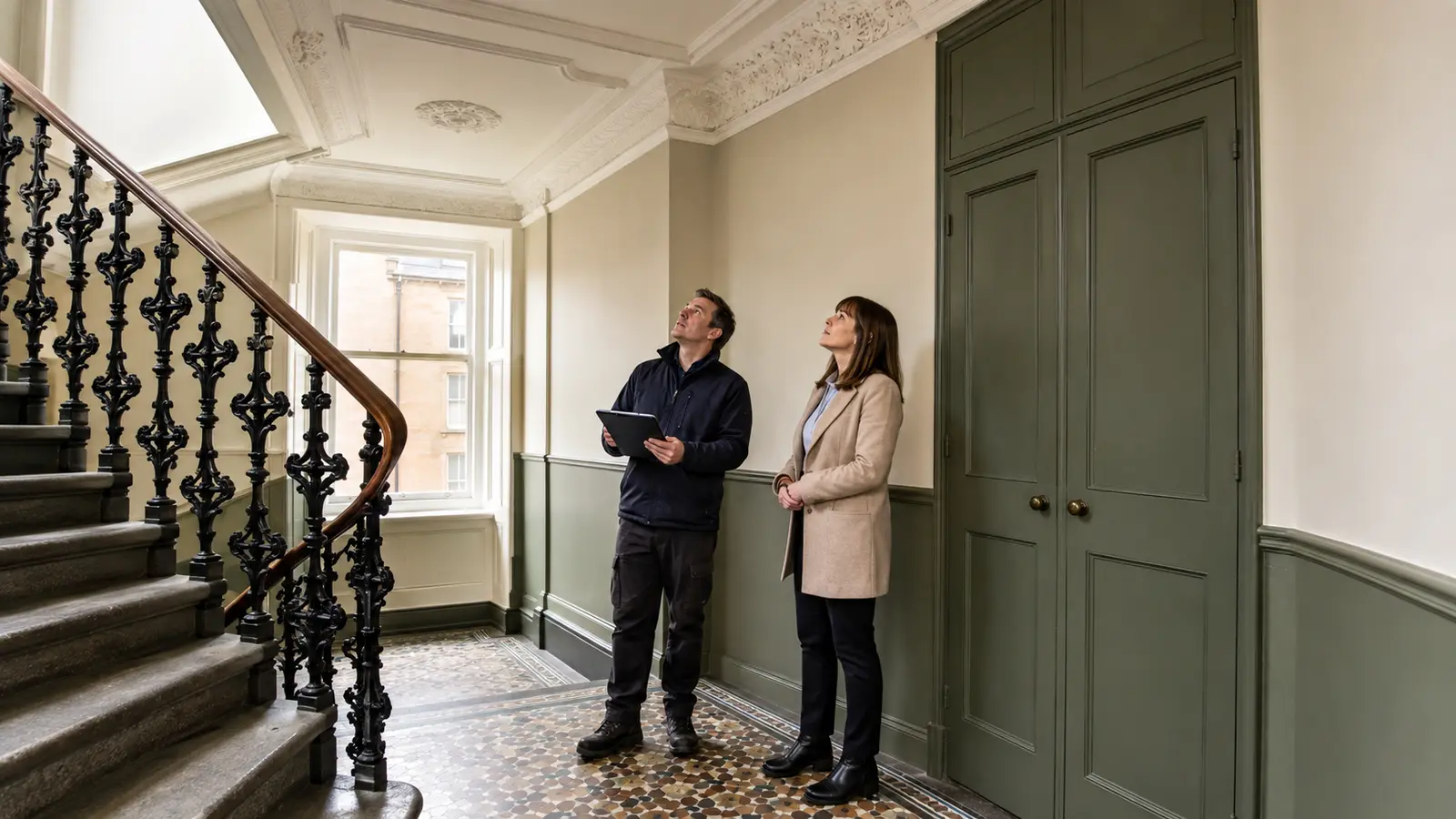
Refurbishment survey: A detailed survey before work opens hidden parts of a building.
Asbestos did not arrive as a recognised hazard. It was sold as a useful mineral that resisted heat, fire and wear. Scotland’s industrial strength helped spread it through products, workplaces and buildings before the full health cost was accepted.
- Scotland manufactured and used asbestos from the nineteenth century.
- Health warnings grew while industrial and building use continued.
- The 1999 ban stopped new use but left a large old in older property.
- If you find a suspect material at home, stop work and have it checked before anyone disturbs it.
Stop. Do not touch, drill, break or clean the suspect material.
Keep back. Keep people and pets away. Do not sweep or use a household vacuum.
Get advice. Call a trained professional and explain what you found and what happened.
Asbestos did not arrive as a recognised hazard. It was sold as a useful mineral that resisted heat, fire and wear. Scotland’s industrial strength helped spread it through products, workplaces and buildings before the full health cost was accepted.
The UK banned all main asbestos types by 1999, but the ban did not remove products already installed. Today’s rules focus on finding, managing and safely removing asbestos before it is disturbed.
1870s onward: manufacture grows with heavy industry
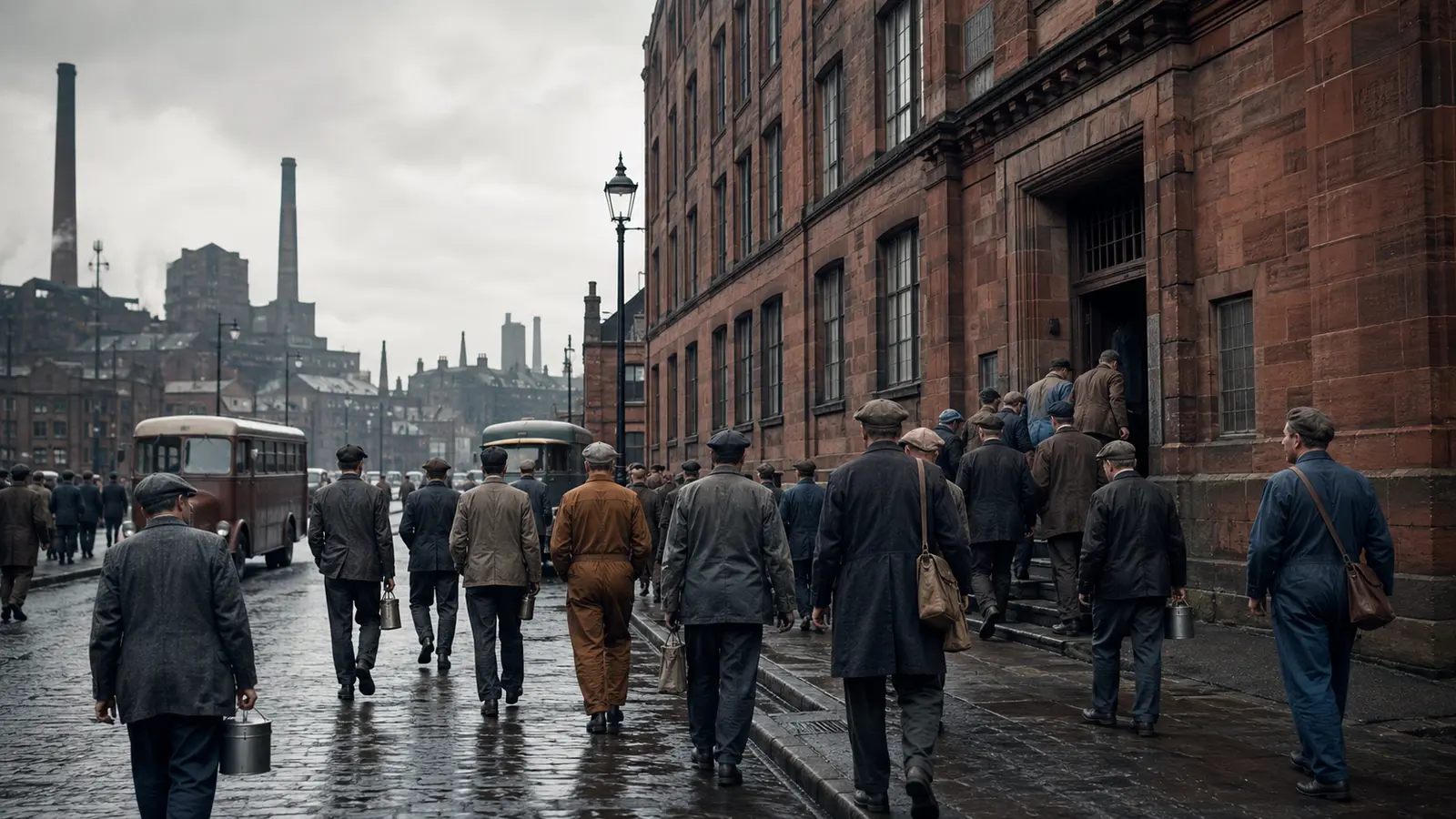
Historical sources record asbestos manufacturing in Glasgow during the 1870s. Demand came from steam engineering, shipbuilding and factories that needed heat-resistant packing and insulation.
Trade grew across Scotland. Products later moved from industrial equipment into construction and everyday buildings.
- Steam and shipbuilding
- Rail and engineering
- Factories and power systems
- Building products
Early health warnings did not end widespread use
Factory inspectors and doctors reported harm from asbestos dust during the early twentieth century. Regulation developed slowly and often focused on specific factory work.
Workers in shipbuilding, construction and maintenance could still encounter fibres. The long delay before illness appeared made the full pattern harder to see.
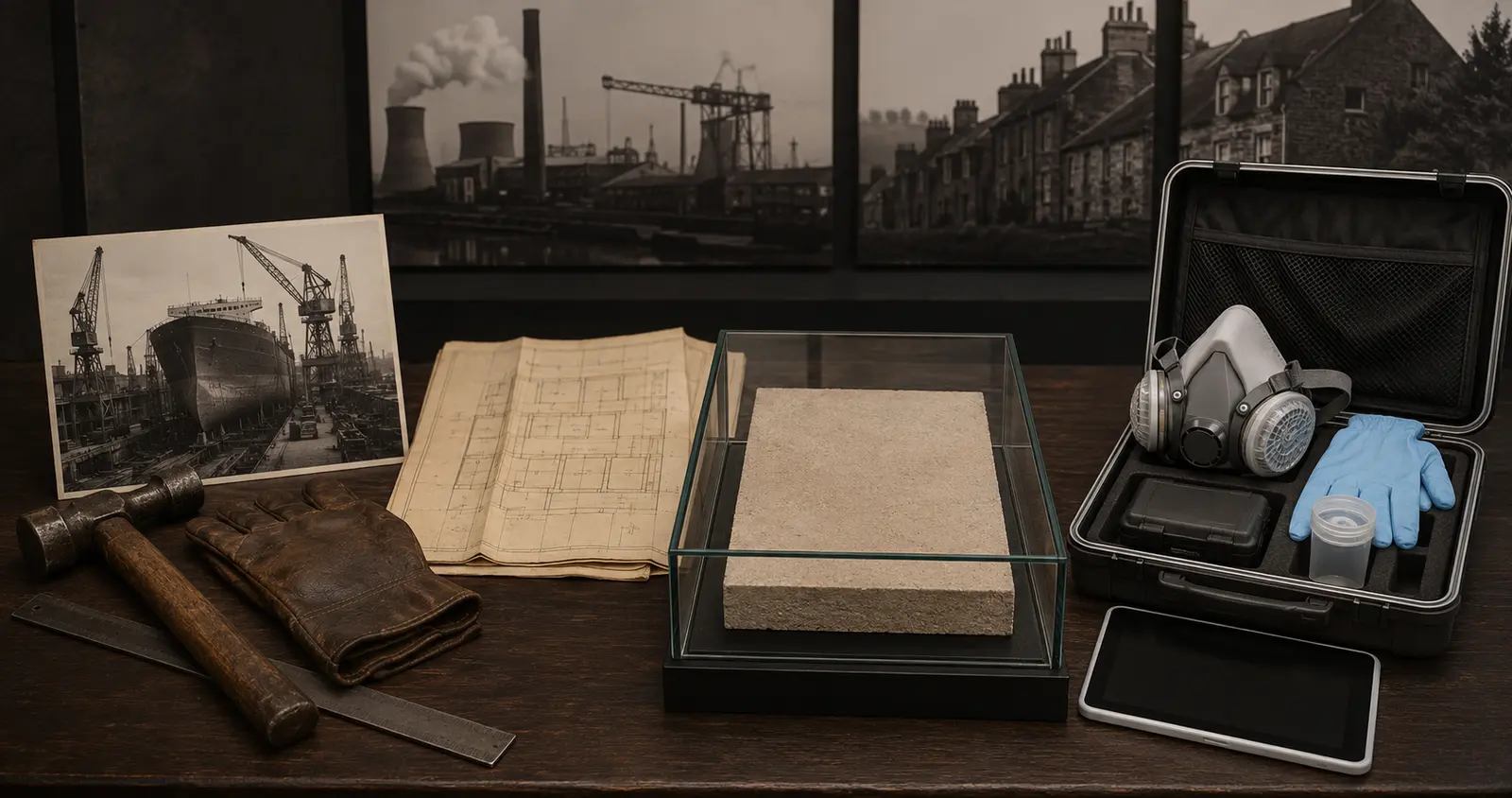
Mid-century building spread asbestos products widely
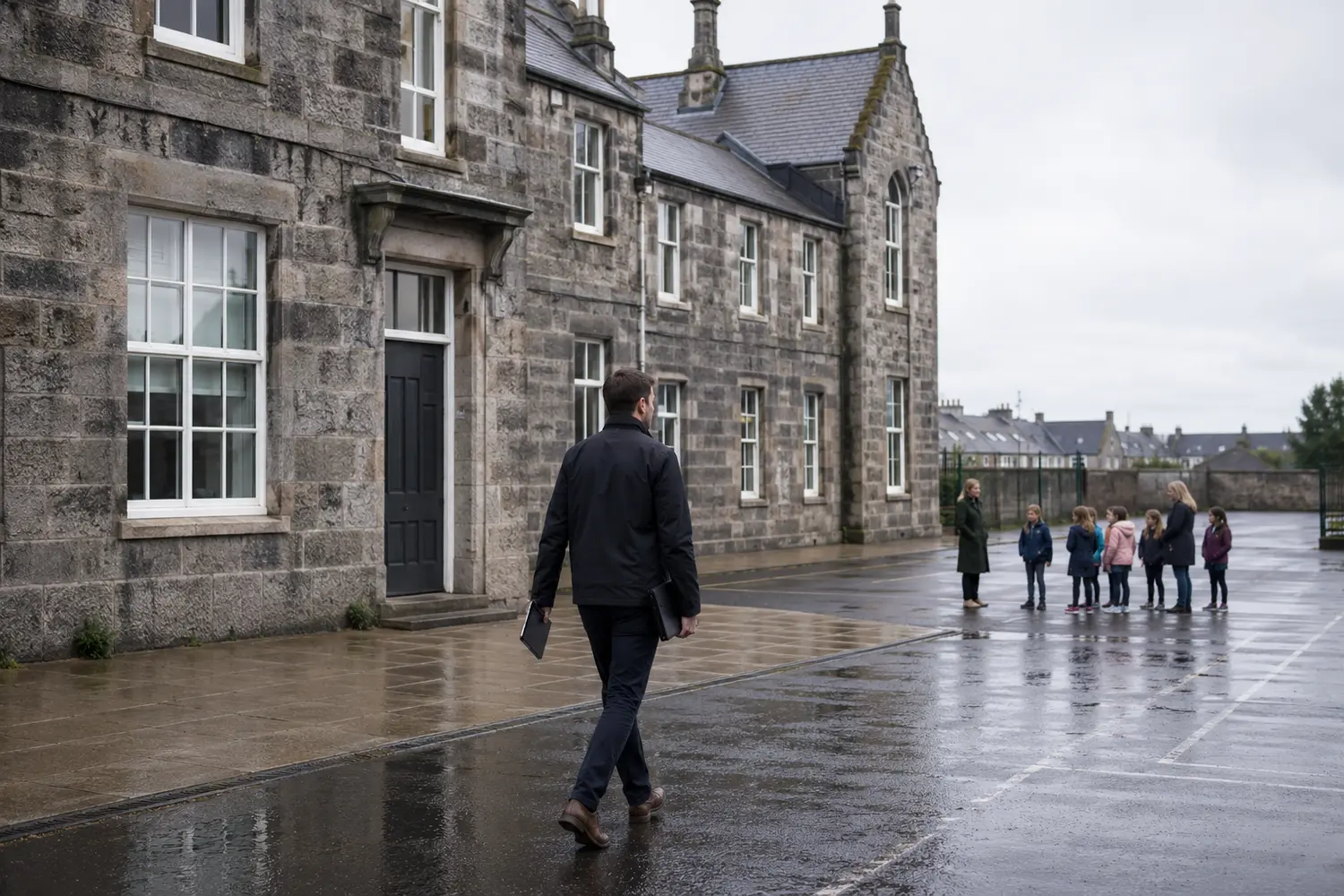
Schools, hospitals, offices, factories and homes used asbestos for insulation, fire protection and strength. Products included boards, sprayed coatings, lagging, cement, tiles and textured finishes.
Not every building used every product. Surveys must identify the actual material and condition instead of relying on a historical list.
The UK ban was completed in 1999
Controls tightened over time before the final ban on the main remaining asbestos type in 1999. Products already installed were not always removed.
This is why HSE uses 2000 as a practical building-age marker. Older stock, repairs and reused equipment can still require care.
The human cost is still felt by Scottish families
The story is not only about old products and laws. Workers in shipyards, factories, construction and maintenance breathed in asbestos fibres, often years before an illness appeared.
Clydebank support groups and Scottish archive collections keep those workers’ stories alive. The NHS explains the health conditions linked to asbestos. Anyone worried about past exposure should speak to a medical professional, not a removal company.
What to do if you find asbestos at home today
Stop drilling, sanding, scraping or breaking the material. Keep people away from damaged dust or debris. Do not sweep it up or use a household vacuum.
Send a photo to a trained asbestos company and explain the age of the home and what work you planned. A photo cannot confirm asbestos, but it can help decide whether a sample, survey or removal visit should come first.
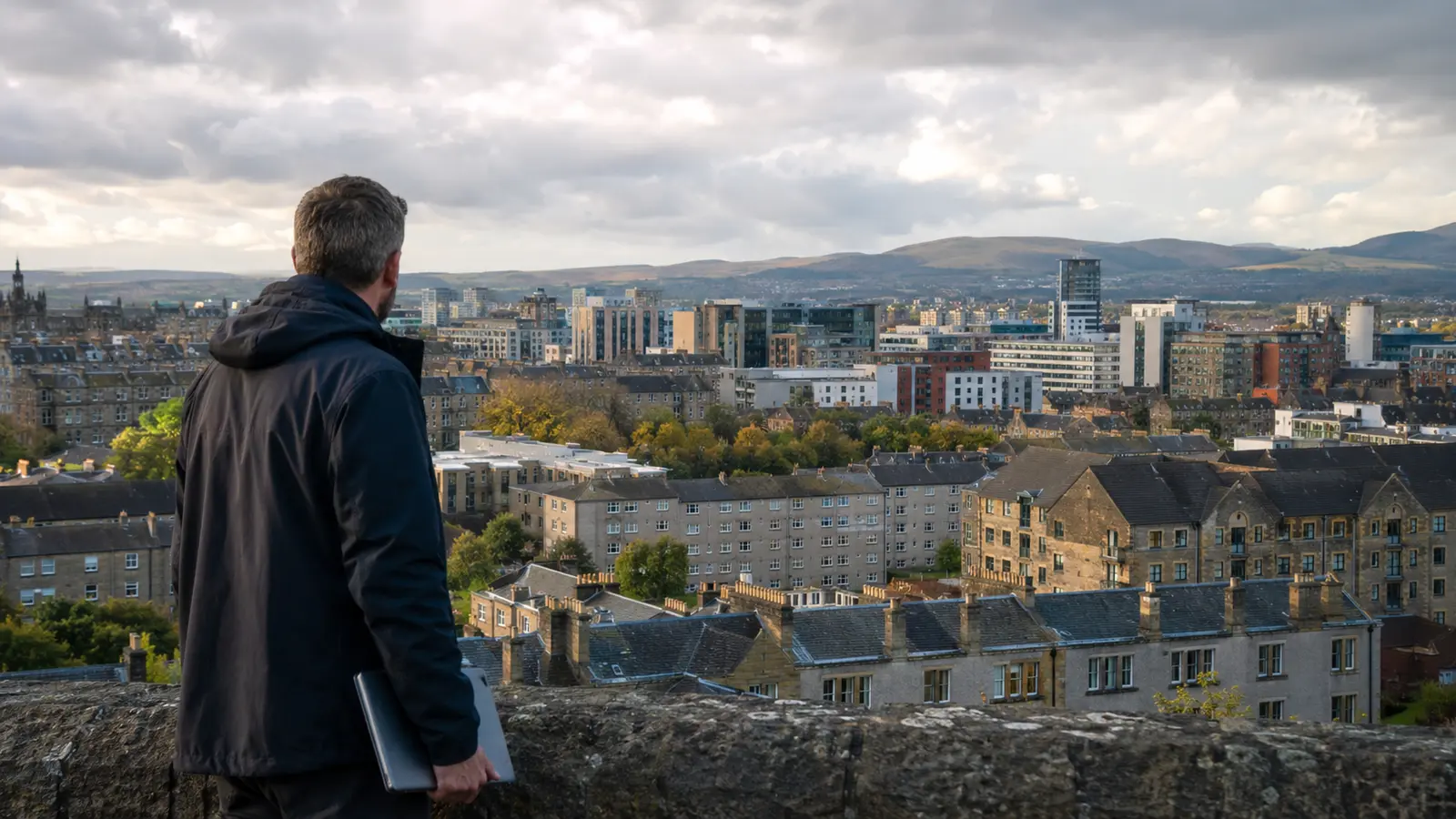
History explains why asbestos is still found in older Scottish property. It should lead to a careful check, not panic or DIY removal.
Frequently asked questions
Questions people ask next.
When was asbestos banned in the UK?+
The final ban covering chrysotile asbestos came into force in 1999.
Was installed asbestos removed after the ban?+
No. Much remained in place and must be managed or removed safely when needed.
Why does HSE use the year 2000?+
Buildings built or refurbished before 2000 may contain asbestos, so records and surveys need checking.
Is asbestos still legal to remove?+
Yes, under strict controls. Higher-risk work requires an HSE-licensed contractor.