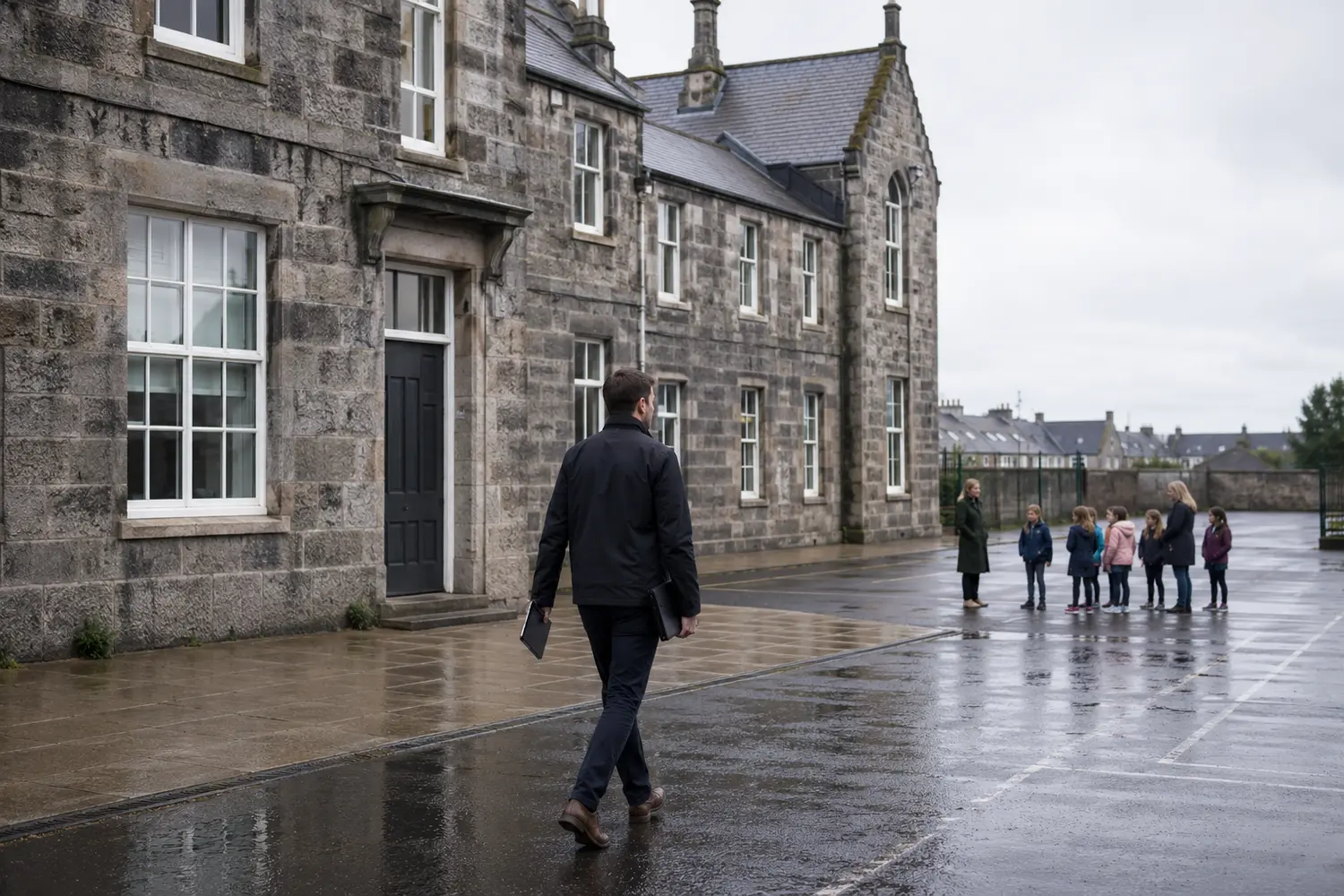
Legacy asbestos: Asbestos products that remain from earlier building and industrial use.
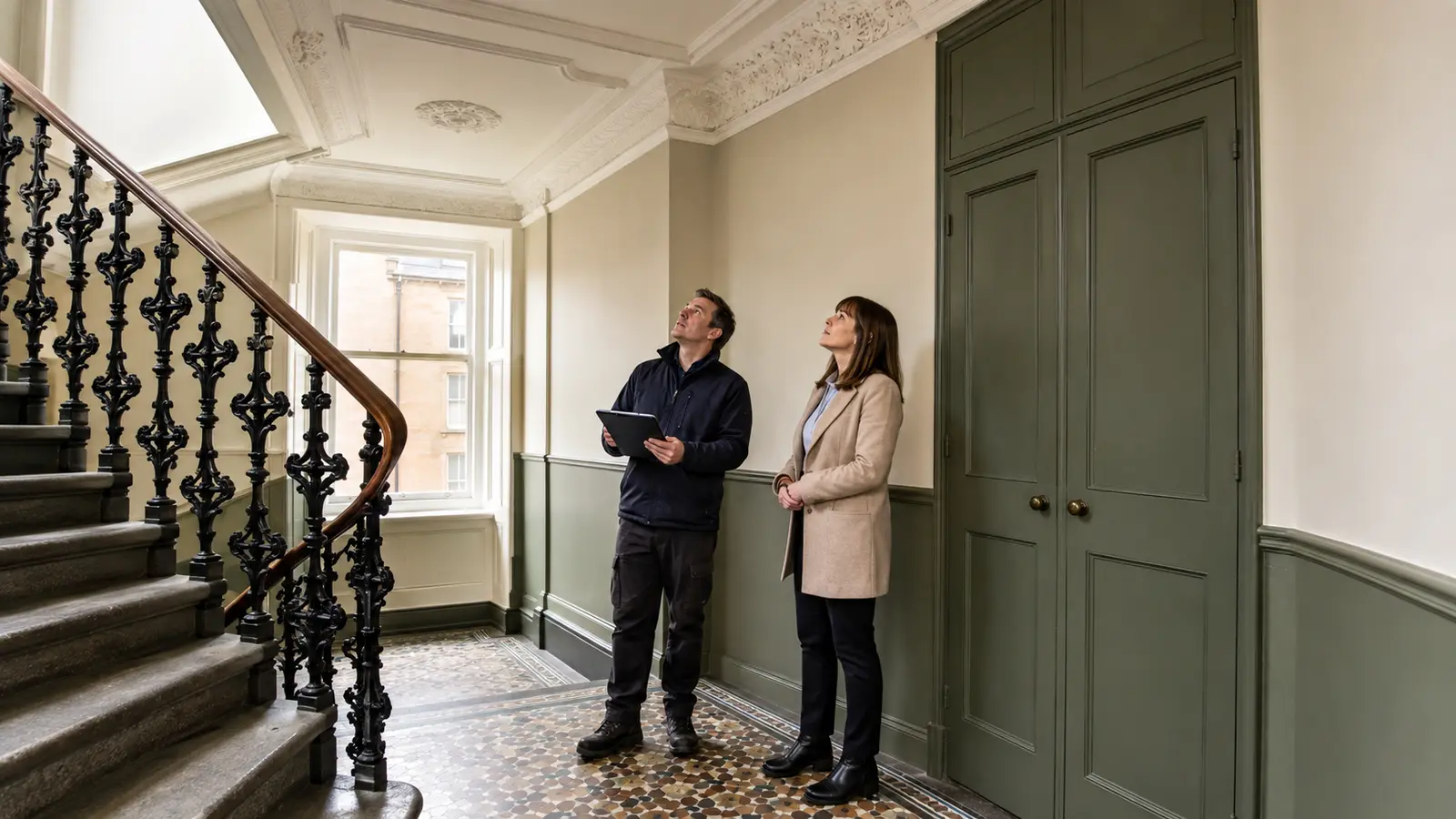
Refurbishment survey: A detailed survey before work opens hidden parts of a building.
Glasgow’s link with asbestos is older than most modern buildings. Nineteenth-century firms made insulation, packing and fire-resistant products for industry. The same useful qualities later placed asbestos inside factories, ships, public buildings and homes.
- Glasgow firms manufactured and sold asbestos products from the nineteenth century.
- Engineering, heating and shipbuilding created strong demand for heat-resistant materials.
- Modern surveys turn that history into practical evidence before work starts.
Stop. Do not touch, drill, break or clean the suspect material.
Keep back. Keep people and pets away. Do not sweep or use a household vacuum.
Get advice. Call a trained professional and explain what you found and what happened.
Glasgow’s link with asbestos is older than most modern buildings. Nineteenth-century firms made insulation, packing and fire-resistant products for industry. The same useful qualities later placed asbestos inside factories, ships, public buildings and homes.
Glasgow became an early centre for asbestos manufacture and use because of heavy industry, engineering and shipbuilding. Today’s risk comes from old products being damaged or disturbed, not from the history alone.
The early asbestos trade in Glasgow
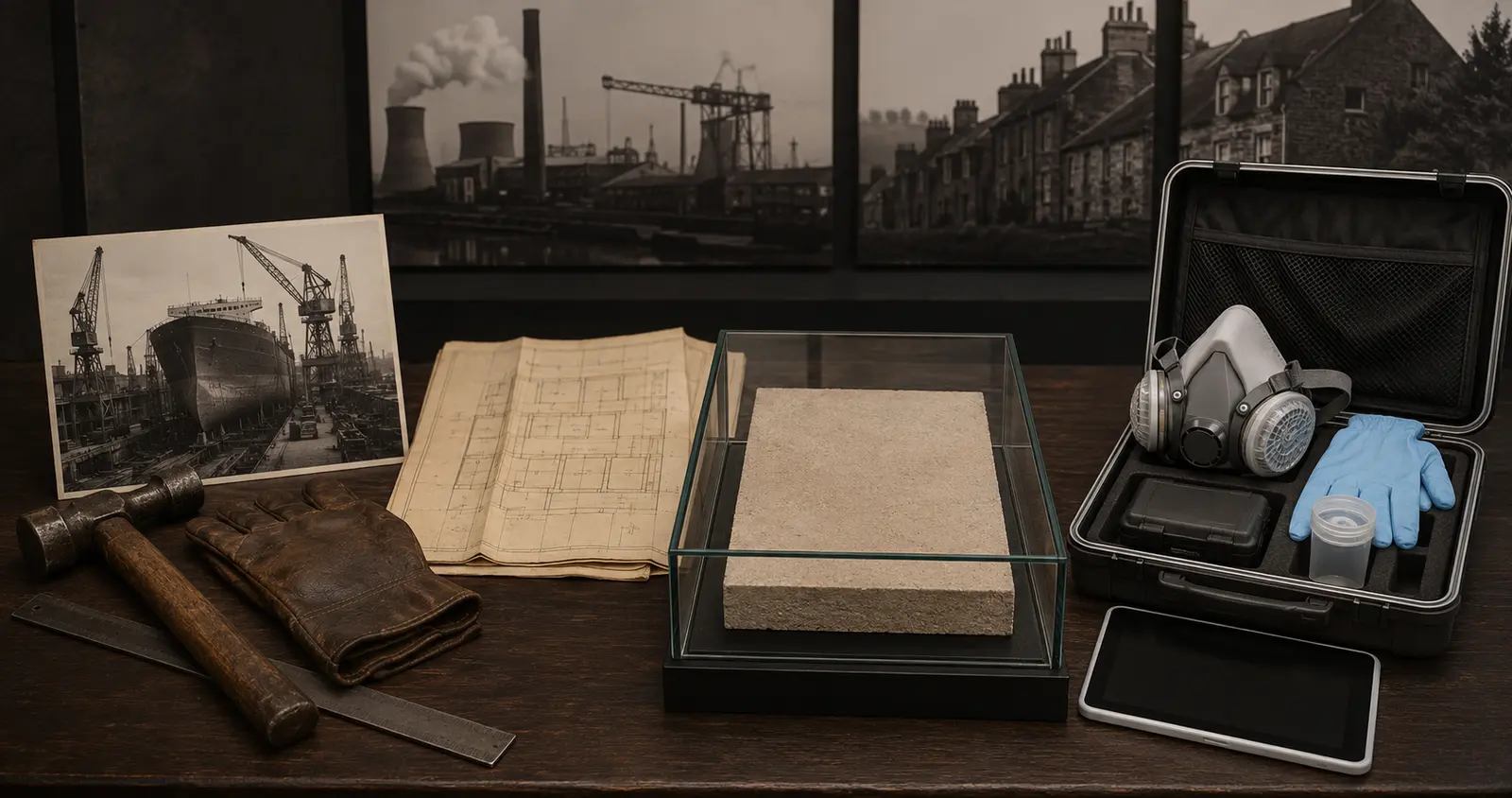
Historical research records asbestos companies in Glasgow during the late nineteenth century. Products included rope, packing, millboard and insulation for hot machinery and pipes.
At the time, fire and heat resistance were treated as major benefits. The health damage from breathing fibres was not controlled in the way it is today.
- Engine and boiler insulation
- Packing and rope
- Fire-protection boards
- Cement and building products
Why Glasgow’s industries used so much asbestos
Steam power, foundries, railways, shipyards and large public buildings all needed heat protection. Asbestos products could be fitted around pipes, boilers, engines and structural steel.
Building expansion then moved asbestos into schools, hospitals, offices, tenements and post-war housing. Products varied greatly, from strongly bound cement to soft insulation.
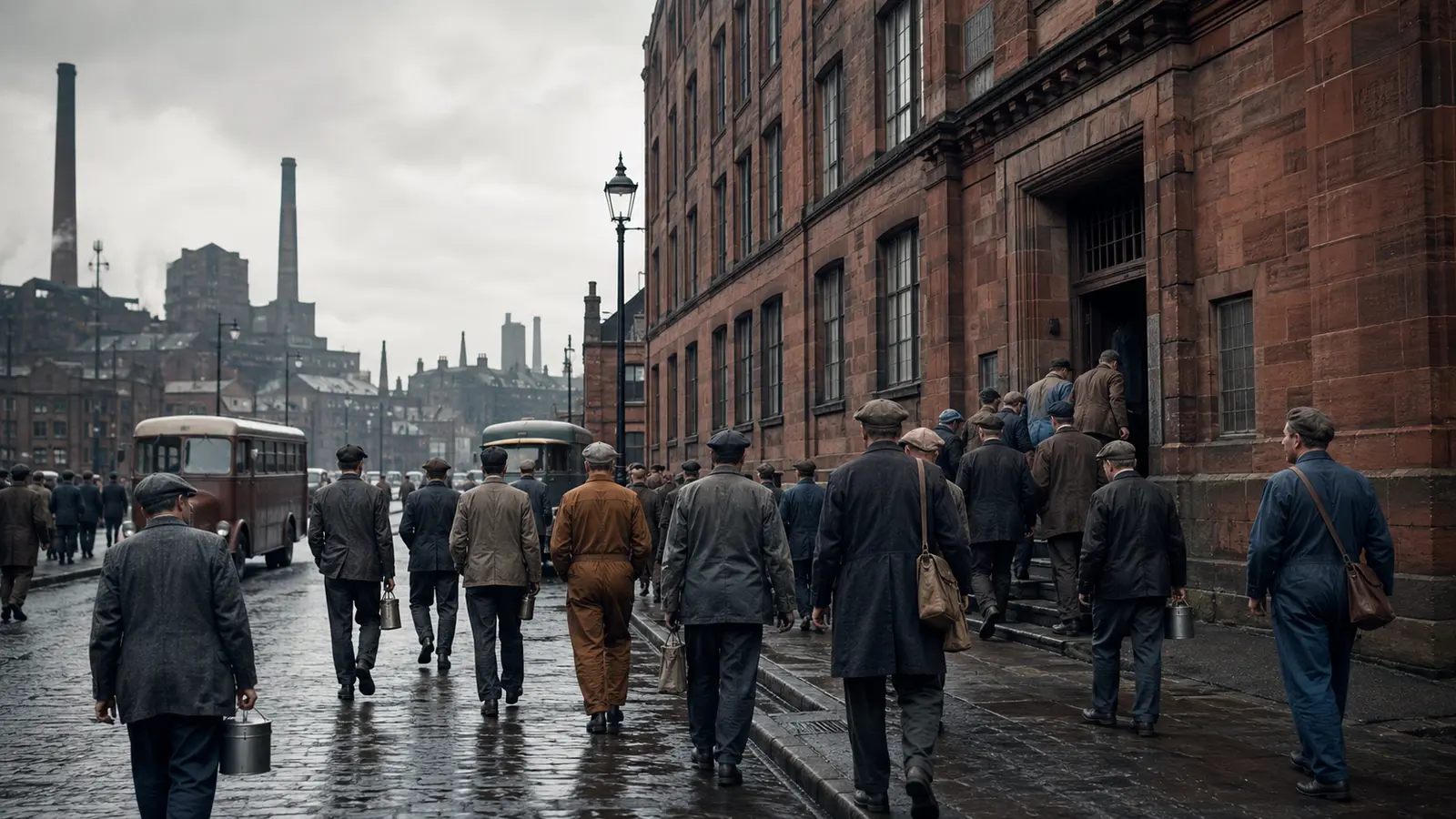
Archives preserve worker and campaign records
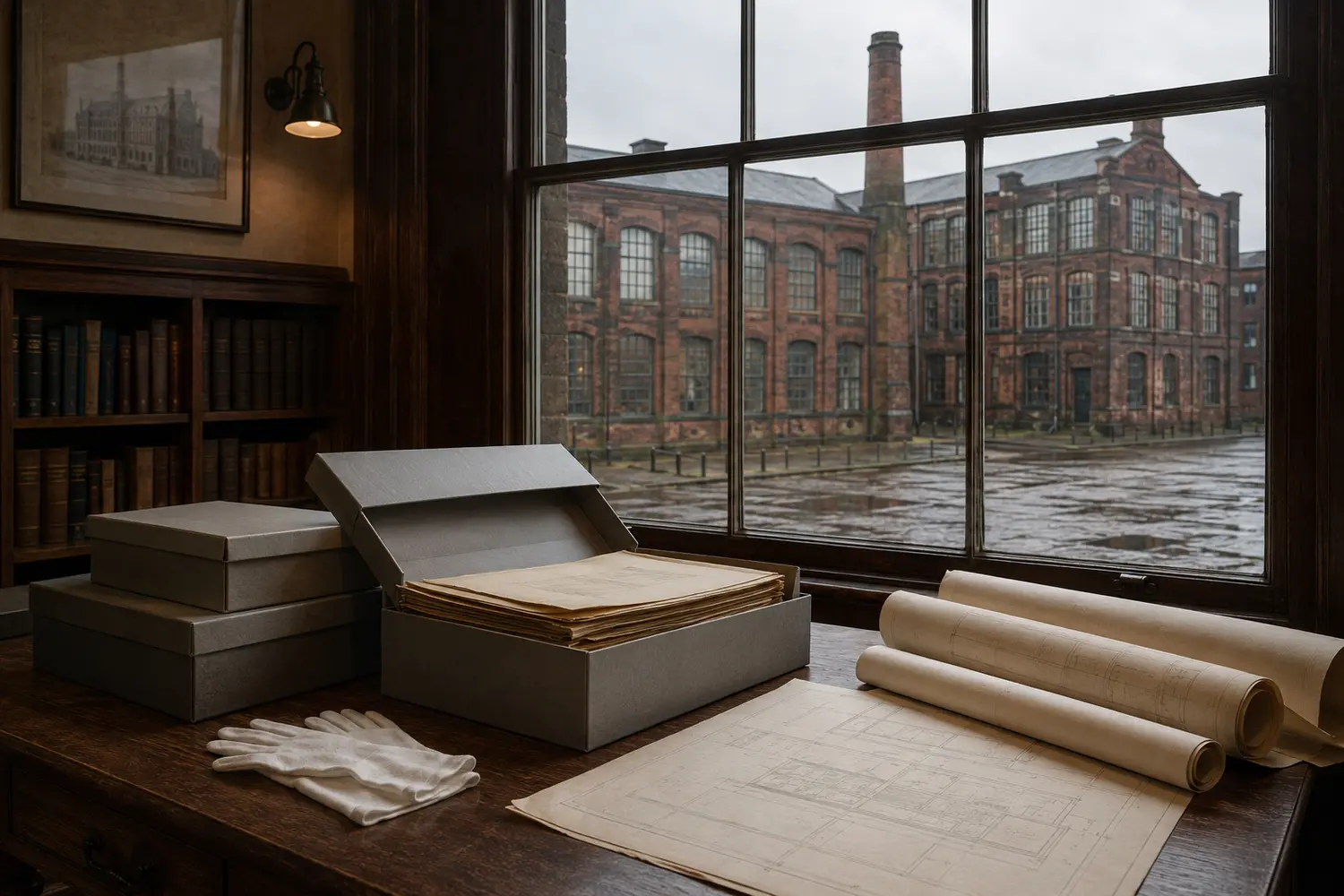
The University of Strathclyde holds major asbestos collections. They include research, campaign and company records that help explain how knowledge and public action changed over time.
These records should be treated with respect. They describe real workers and families, not marketing stories. Our article links readers to the archive rather than copying its documents.
What the history means for Glasgow buildings today
A building’s age and use guide a survey, but they do not confirm asbestos. A former workshop may have lagging and boards. A tenement may have later textured coatings, floor tiles, water tanks or service panels.
Surveyors combine records, construction knowledge, check and lab results. The aim is to identify the exact material before maintenance or refurbishment disturbs it.
The practical lesson is simple: check before work
HSE advises people to assume asbestos may be present in buildings built or refurbished before 2000 unless strong evidence shows otherwise. That principle matters across Glasgow’s old and altered building stock.
Do not turn local history into panic. Use it as a reason to plan a suitable survey and give the findings to every trade.
Frequently asked questions
Questions people ask next.
Does every old Glasgow building contain asbestos?+
No. Age and use are clues. Each building and material needs evidence.
Was asbestos only used in factories?+
No. It was also used in ships, schools, hospitals, offices and homes.
Can archive records identify my building?+
Sometimes records help, but they rarely replace a current survey and lab analysis.
What should I do before renovating?+
Arrange a refurbishment survey covering every area the work will disturb.