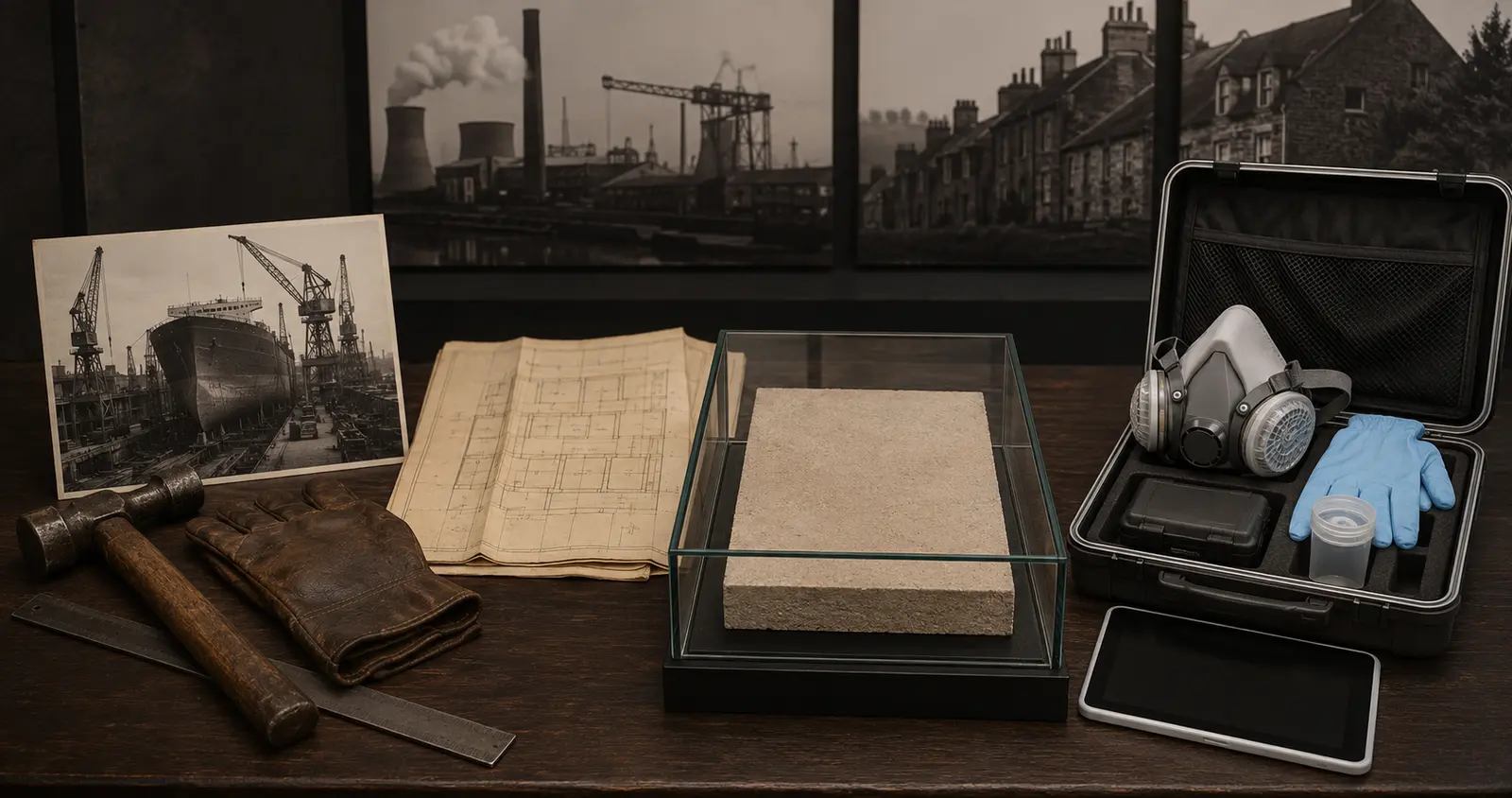
Legacy asbestos: Asbestos products that remain from earlier building and industrial use.
Refurbishment survey: A detailed survey before work opens hidden parts of a building.
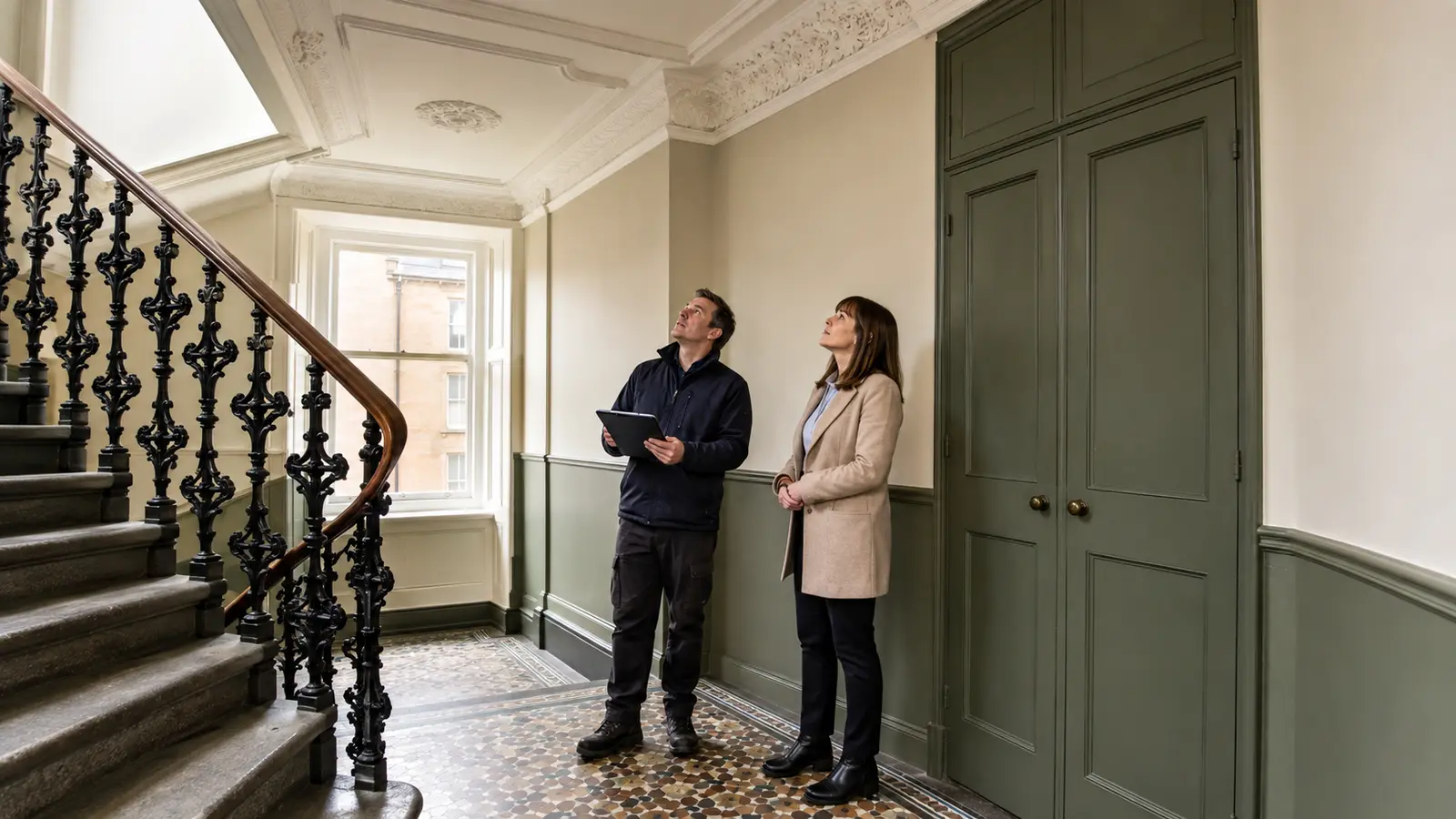
A sandstone tenement may be older than widespread asbestos building products, yet later heating, rewiring and decorative work can add suspect materials. Post-war homes may contain products installed during original construction.
- Later alterations can add asbestos to much older buildings.
- Post-war homes often used manufactured boards, tiles and cement products.
- Survey the parts you will disturb, not just the original structure.
Stop. Do not touch, drill, break or clean the suspect material.
Keep back. Keep people and pets away. Do not sweep or use a household vacuum.
Get advice. Call a trained professional and explain what you found and what happened.
A sandstone tenement may be older than widespread asbestos building products, yet later heating, rewiring and decorative work can add suspect materials. Post-war homes may contain products installed during original construction.
Do not judge asbestos risk from the age of the stone walls alone. Check later ceilings, floors, service cupboards, boilers, flues, soffits, tanks and garages before refurbishment.
Older tenements often contain much newer materials
Original stone, timber and plaster may sit beside twentieth-century textured coatings, floor tiles, service panels and boiler parts. Communal areas may also have fire-protection boards or later ceiling systems.
A building date is only the start. Ask when bathrooms, kitchens, heating and shared services were changed.
- Textured coatings
- Floor tiles and adhesive
- Service and heater panels
- Communal flues and risers
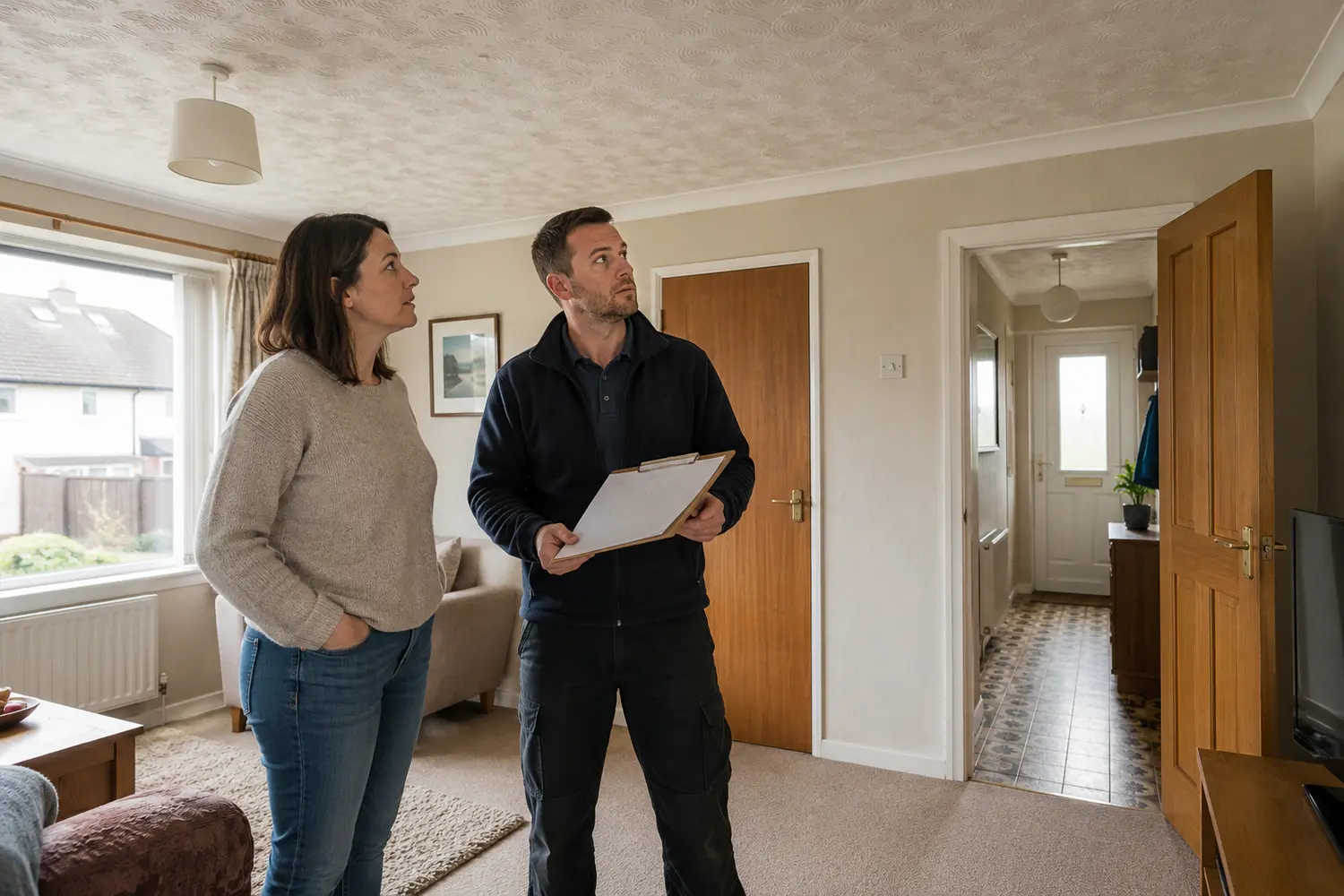
Post-war construction used factory-made products
Housing expansion relied on boards, cement sheets, tiles, insulation and standard components. Asbestos added heat resistance, fire protection and strength to many products.
System-built and traditionally built homes can both contain asbestos. The exact products vary by development and later maintenance.
Check garages, roofs and outside details
Corrugated garage roofs are a familiar example, but sheds, wall panels, flues, soffits, gutters, downpipes and water tanks may also be suspect.
Weathering does not identify asbestos. Avoid pressure washing and do not break a sheet to make disposal easier.
Modern upgrades can uncover hidden layers
Heat pumps, rewiring, insulation and open-plan alterations may pass through old materials. A neat modern finish can hide tiles, boards and coatings beneath it.
Give the surveyor service routes and opening locations. Include common areas when cables or pipes cross shared parts of a block.
Build a for your property plan instead of using stereotypes
Not every Glasgow tenement, Aberdeen flat or post-war estate contains the same products. Avoid copied checklists that claim certainty by postcode or house type.
Use age and construction as survey clues. Base decisions on current condition, records and lab evidence.
Frequently asked questions
Questions people ask next.
Can a Victorian tenement contain asbestos?+
Yes. Later twentieth-century repairs and upgrades may have introduced asbestos products.
Are post-war homes more likely to contain asbestos?+
Many products were widely used in that period, but each property still needs evidence.
Does a modern ceiling mean the old one is gone?+
No. New plasterboard or finishes may cover an earlier coating or panel.
Should I test before installing insulation?+
Survey every area that drilling, lifting or access work will disturb.