Dutyholder: The person or organisation responsible for building maintenance or repair.
Asbestos register: The live record of known or presumed asbestos in a building.
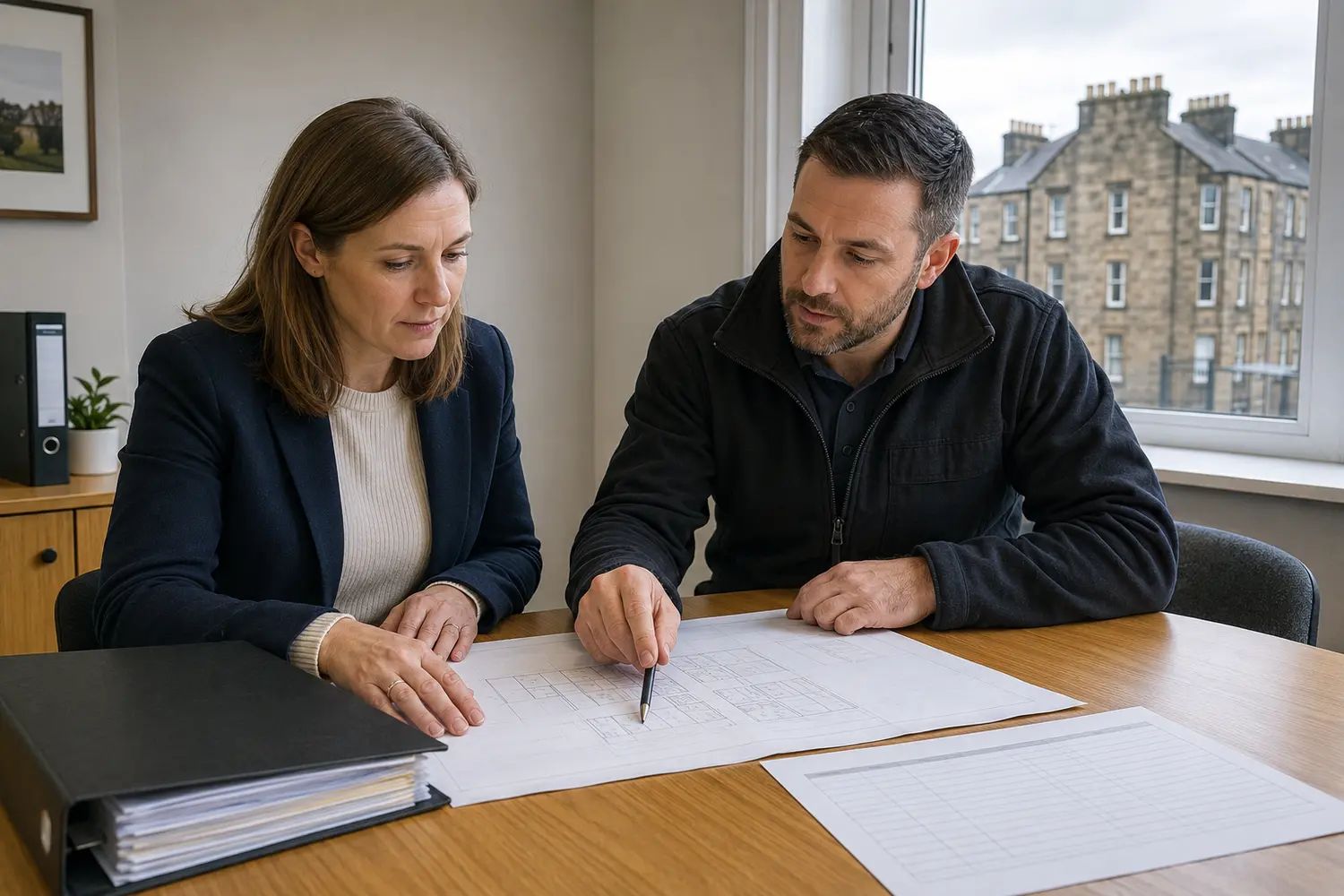
A tenement can have several owners, a factor, tenants and shared repair duties. Asbestos responsibility follows control and maintenance arrangements, not simply the nearest flat door.
- Define whether the material is inside a flat or in a common area.
- Check who controls maintenance under deeds, leases or factoring arrangements.
- Share survey information with every owner and contractor affected by the work.
Stop. Do not touch, drill, break or clean the suspect material.
Keep back. Keep people and pets away. Do not sweep or use a household vacuum.
Get advice. Call a trained professional and explain what you found and what happened.
A tenement can have several owners, a factor, tenants and shared repair duties. Asbestos responsibility follows control and maintenance arrangements, not simply the nearest flat door.
The person or company responsible for maintenance of shared areas may hold the duty to manage asbestos there. Check title deeds, factoring arrangements, leases and repair responsibilities before planning work.
Common parts that may contain asbestos
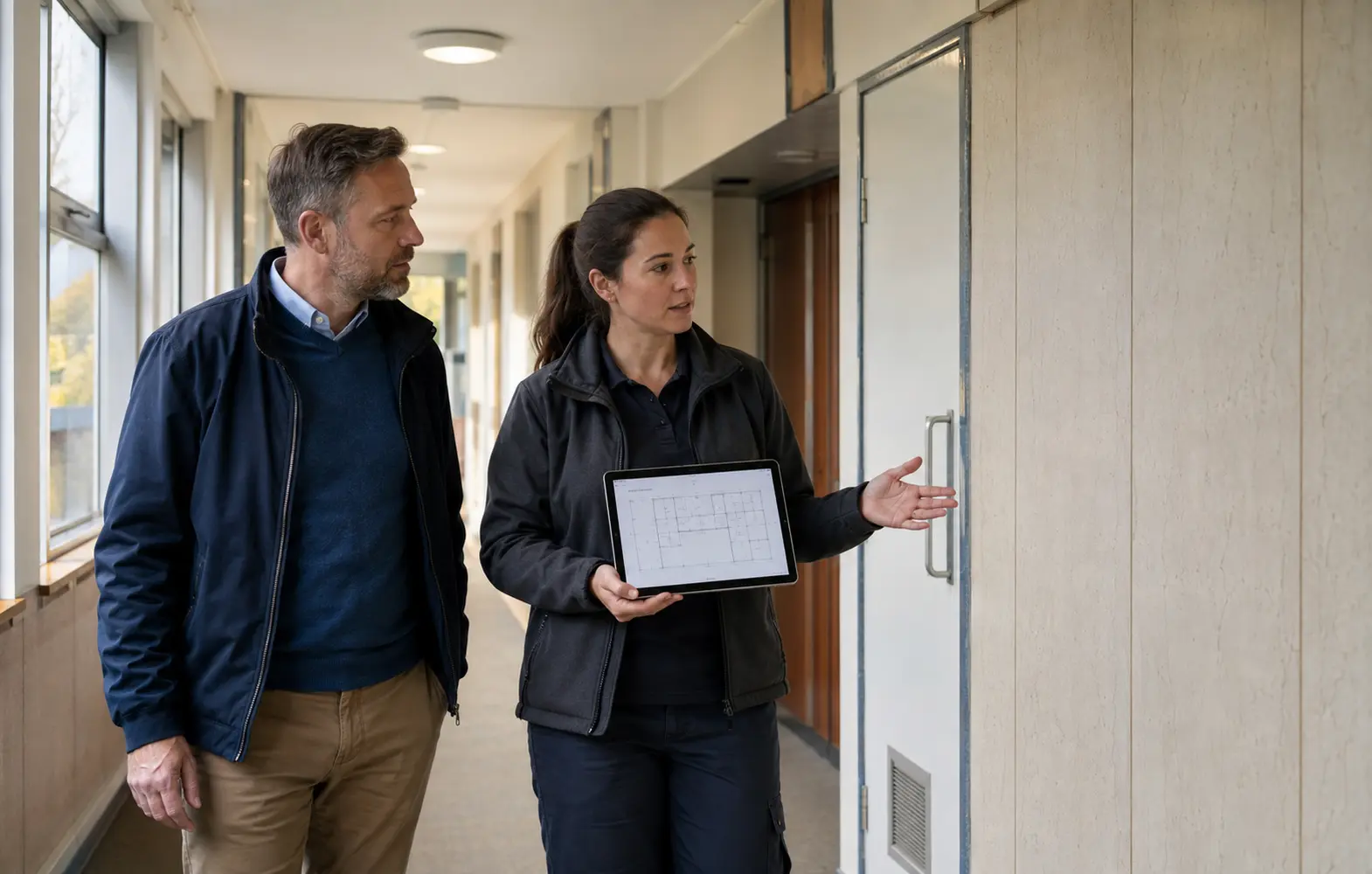
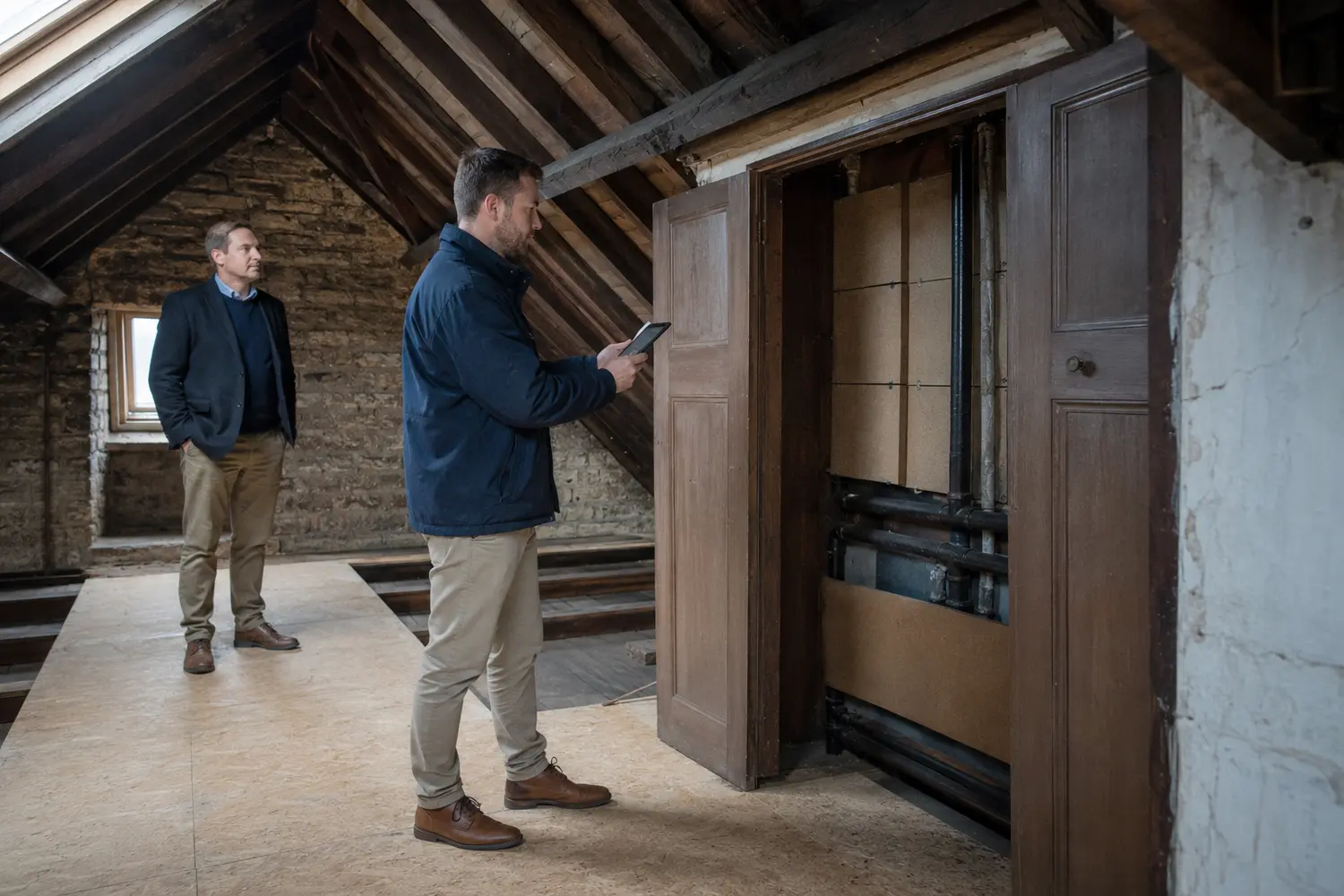
HSE lists areas such as foyers, corridors, stairs, lifts, roof spaces, yards, garages and outhouses. Scottish tenements may also have shared basements, service cupboards, risers and communal flues.
The boundary between common and private areas may not be obvious. A ceiling, pipe or duct may pass through several flats. Confirm ownership and access before commissioning work.
- Stairs and landings
- Lofts and roof spaces
- Basements and service cupboards
- Shared yards and outbuildings
Identify the person with maintenance control
A property factor may arrange maintenance without owning the building. Co-owners may keep decisions and costs. A business tenant may control part of a mixed-use block under a lease.
Read the relevant documents rather than assuming. Where control is shared, people must co-operate and exchange asbestos information.
Set a survey boundary that matches the repair
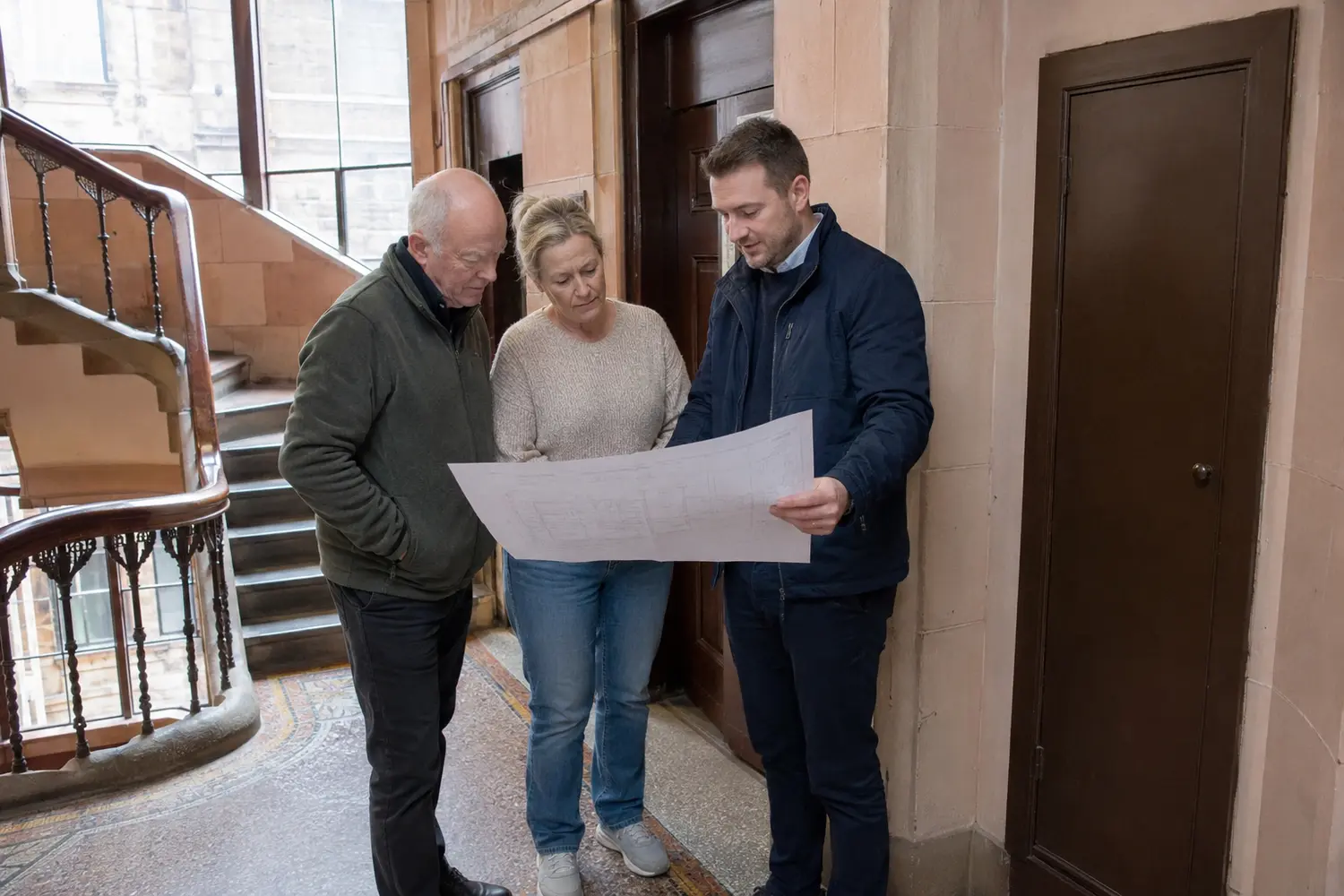
A roof repair may affect loft boards, soffits, flues and service routes. A stair upgrade may disturb floor tiles, panels and electrical cupboards. Tell the surveyor the complete work area.
Give owners and residents clear notice of access and findings. Avoid publishing alarming claims before samples confirm the material.
Respond quickly to damage in a shared space
Stop access where practical and do not ask a cleaner or caretaker to sweep debris. Contact the responsible person and an asbestos professional. Record when damage was found and who may have passed through.
Emergency work should protect residents while avoiding unnecessary spread. Explain temporary routes, closures and next steps in simple notices.
Frequently asked questions
Questions people ask next.
Does the factor own the asbestos duty?+
Not always. The duty follows control and maintenance arrangements. Check the factor agreement, deeds and leases.
Does the duty cover inside my flat?+
The formal duty to manage applies to common parts, not individual home flats in the same way. Other safety duties still apply to work and repairs.
Can one owner arrange removal?+
Shared ownership and access may require agreement. Check legal responsibilities before commissioning non-emergency work.
What if a shop sits below the flats?+
Mixed-use buildings can have several dutyholders. Map who controls each area and make sure they co-operate.