Dutyholder: The person or organisation responsible for building maintenance or repair.
Asbestos register: The live record of known or presumed asbestos in a building.
Building work can enter areas that a normal management survey could not inspect. A report prepared for everyday use may not protect a strip-out or demolition team.
- Match the survey boundary to the exact work boundary.
- Allow controlled access to hidden floors, walls and ceilings.
- Remove relevant asbestos before major structural work starts.
Stop. Do not touch, drill, break or clean the suspect material.
Keep back. Keep people and pets away. Do not sweep or use a household vacuum.
Get advice. Call a trained professional and explain what you found and what happened.
Building work can enter areas that a normal management survey could not inspect. A report prepared for everyday use may not protect a strip-out or demolition team.
Before major refurbishment or demolition in a pre-2000 building, arrange a survey that covers every part the work will disturb. HSE says asbestos-containing materials should be removed, as far as reasonably practicable, before major work begins.
Why a management survey may not be enough
A management survey supports normal use and routine maintenance. It may presume hidden materials or exclude locked and inaccessible spaces. Refurbishment work needs evidence from the areas being opened.
Read the limitations and plans, not only the summary. A recent report can still be unsuitable if it did not cover the new project scope.
- Under floor finishes
- Inside partitions
- Above suspended ceilings
- Behind service panels and cladding

Give the surveyor a clear project scope
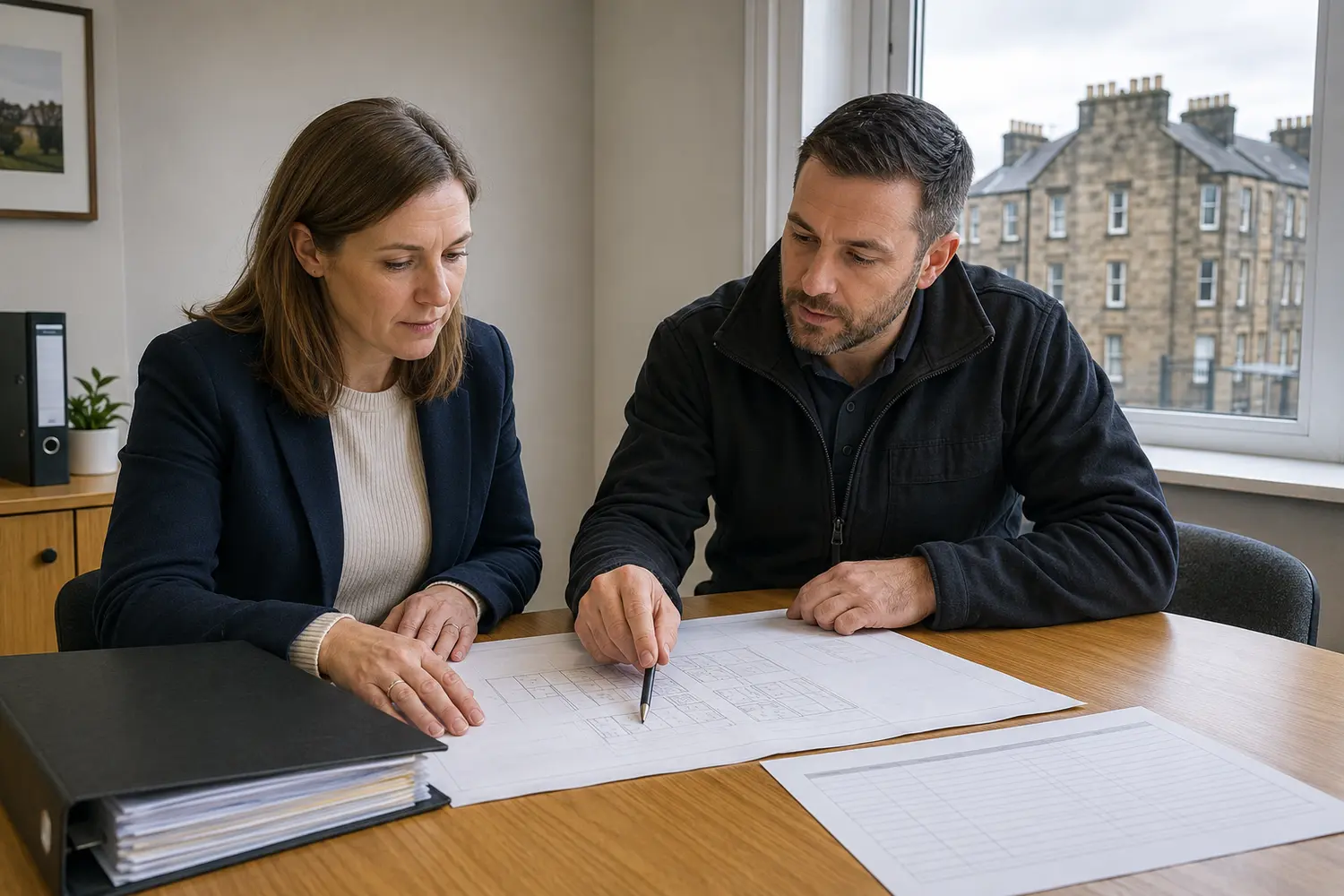
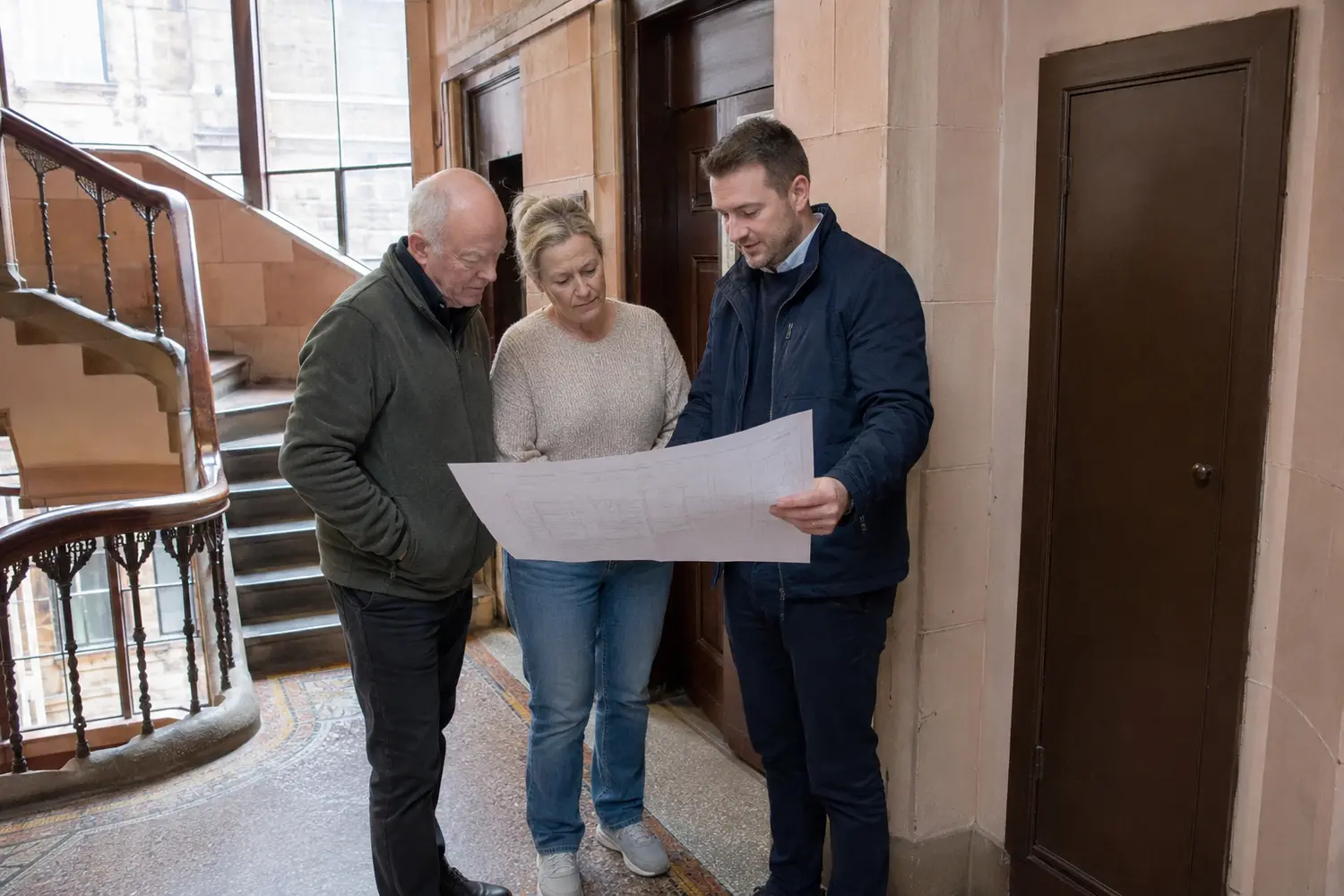
Give drawings, work descriptions and service routes. Include temporary works and access holes, not just the final design. Explain which structures will remain.
For phased work, define each phase and shared route. Do not let contractors move beyond the surveyed boundary without a formal review.

Prepare the area for detailed check
Refurbishment and demolition surveys are destructive. Areas often need to be vacant and protected while hidden layers are opened. Agree how damaged finishes will be left.
The survey team must also control any asbestos they discover during the check. Access should be planned, not improvised during the visit.
Turn the survey into the removal and build plan
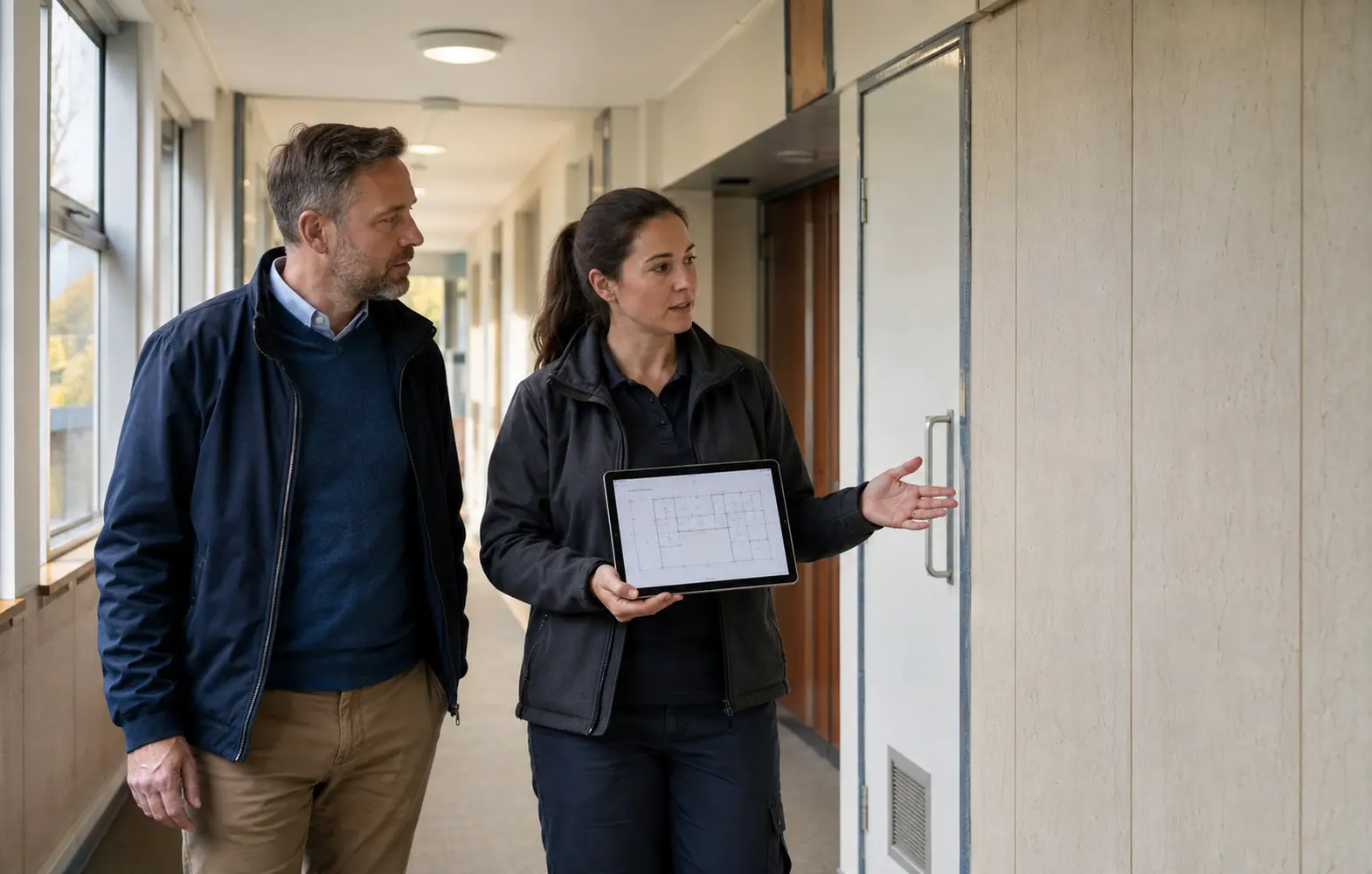
Map each asbestos item against the work package. Decide what must be removed, what can remain protected and who controls each interface.
Give the full report to designers and contractors. Allow time for notices, licensed removal, final safety check and waste before the main timeline reaches that area.
Keep a stop-work plan for unexpected finds
No survey can remove all uncertainty, especially in complex or altered buildings. Workers should know how to stop, secure the area and report a new suspect material.
Update the survey and register when new evidence appears. Do not quietly remove an unexpected item without records.
What to send when requesting a survey quote
A useful enquiry begins with the intended works, rather than simply asking for an asbestos certificate. The surveyor needs enough detail to propose the right check boundary and access arrangements.
- Property address, use and approximate age.
- Plans or a marked-up description of affected rooms and services.
- What will be stripped out, drilled, demolished or retained.
- Existing reports and their inaccessible-area notes.
- People using the building, keys, permissions and site-contact details.
- The intended building timeline and reporting rules.
Check the deliverables before accepting a price
Ask how the findings will be located in the report and how sample results, exclusions and recommendations will be recorded. A cheaper scope that leaves the planned work area unexplored may not answer the project question.
Agree who is responsible for access, service isolation and making good after detailed check. If your building plans change, review the survey boundary before the new work begins.
Frequently asked questions
Questions people ask next.
Is a homebuyer survey enough?+
No. A general property survey is not a refurbishment asbestos survey.
Can work begin while samples are pending?+
Do not disturb the sampled or related suspect materials until the results and work plan are clear.
Does every room need opening?+
The survey should inspect every area the planned work will disturb. Unaffected areas may sit outside the scope.
Who should receive the report?+
Designers, principal contractors, trades and anyone controlling the work need the relevant information.
Does the survey include removal or building repairs?+
Not always. Agree sampling, reporting, detailed access and making-good responsibilities, then get a separate removal scope where needed.
Can a refurbishment survey be limited to part of the property?+
It can cover a defined work area, but that boundary must include the building fabric and services the project will disturb.