Dutyholder: The person or organisation responsible for building maintenance or repair.
Asbestos register: The live record of known or presumed asbestos in a building.
An asbestos register should answer a practical question before a tool starts: is there known or presumed asbestos where this person will work? A long report alone may not give that answer quickly.
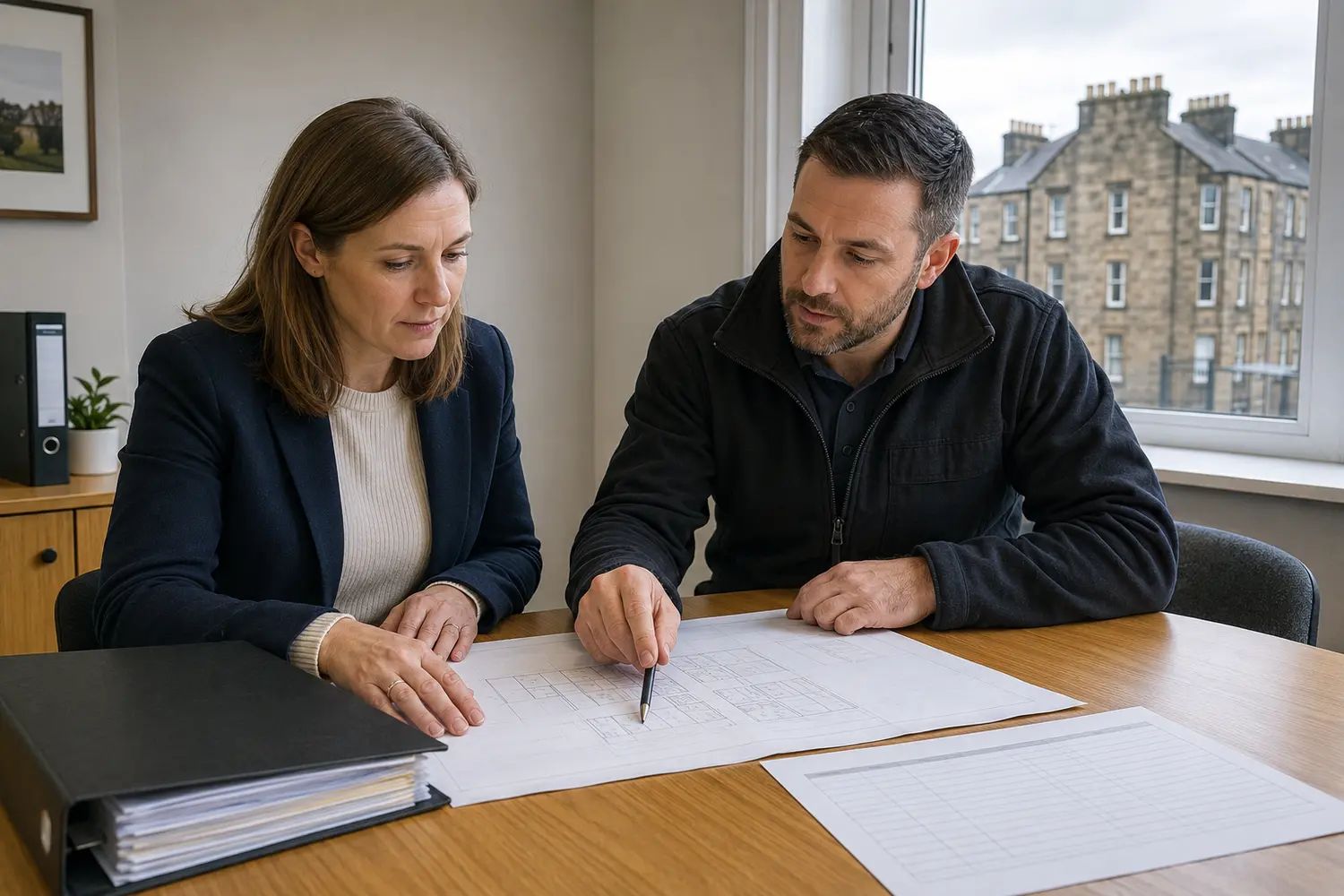
- Use exact locations and clear plans, not vague room names.
- Record presumed materials as well as confirmed results.
- Update the register after every change, repair or removal.
Stop. Do not touch, drill, break or clean the suspect material.
Keep back. Keep people and pets away. Do not sweep or use a household vacuum.
Get advice. Call a trained professional and explain what you found and what happened.
An asbestos register should answer a practical question before a tool starts: is there known or presumed asbestos where this person will work? A long report alone may not give that answer quickly.
Record each known or presumed material, exact location, amount, product type, condition, risk, photos, action and review date. Make the register available to people who may disturb it.
The core information for each material
Name the building, floor, room and exact position. Add product type, amount, condition and whether asbestos is confirmed or presumed. Link sample numbers to lab results.
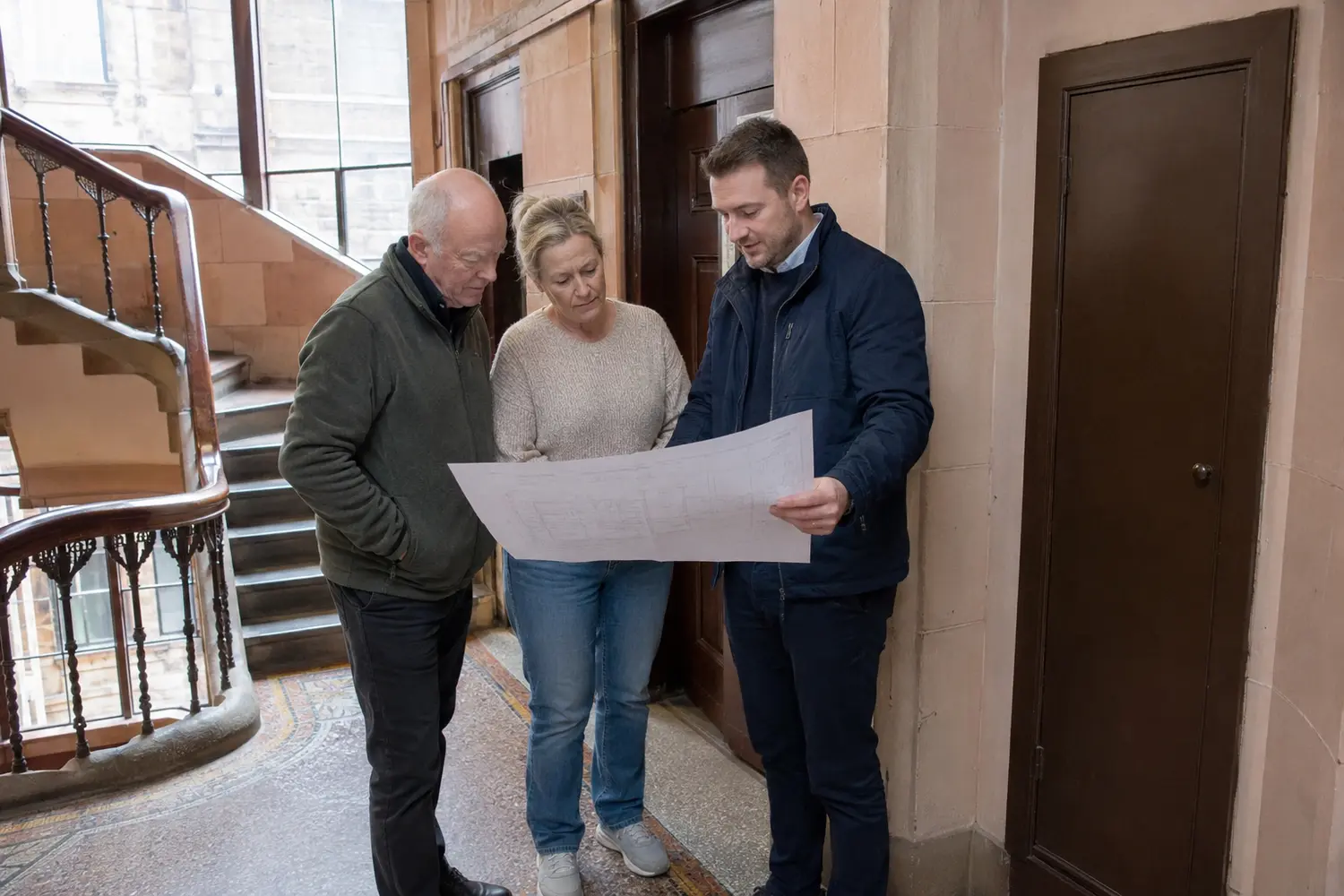
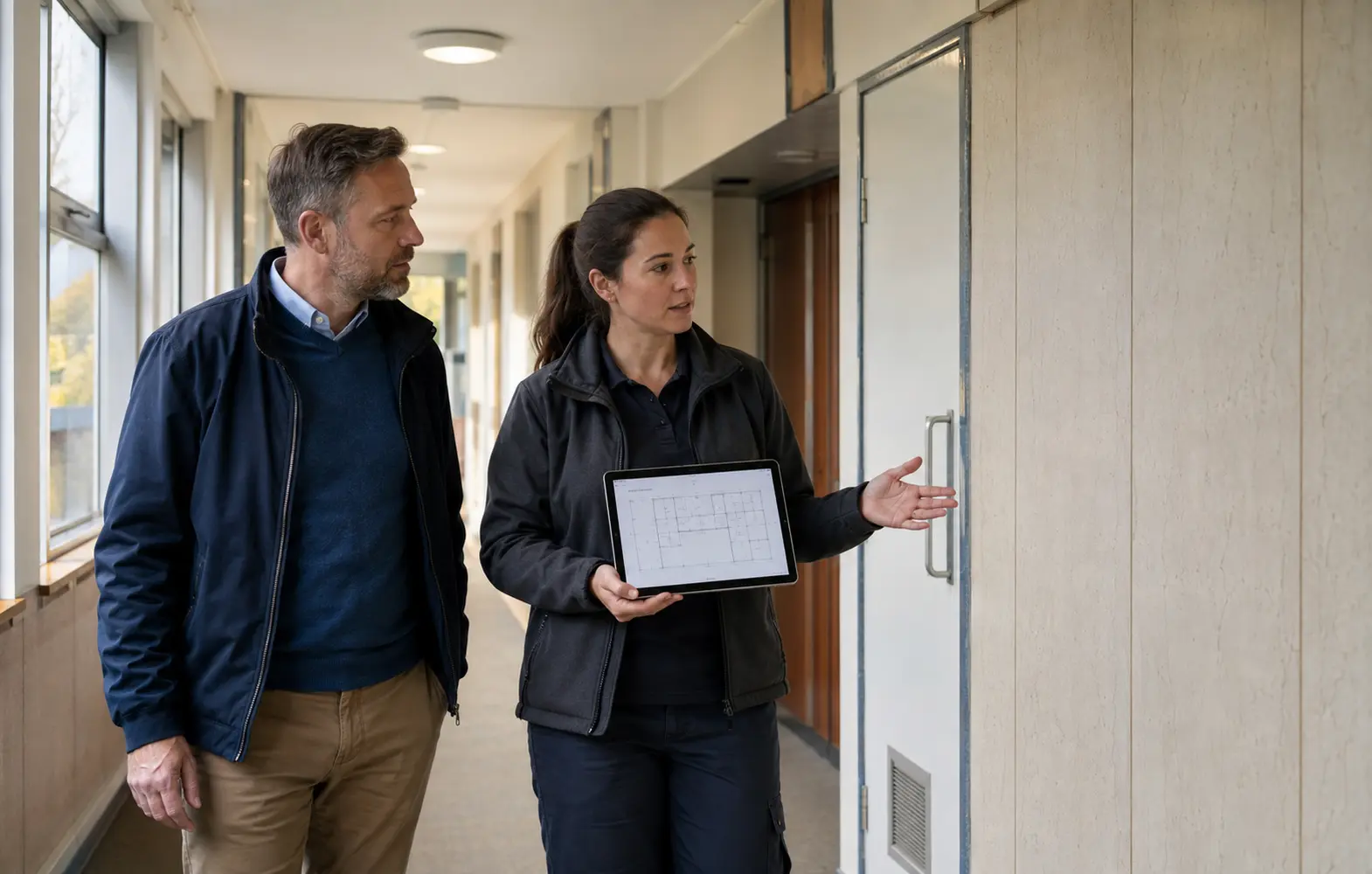
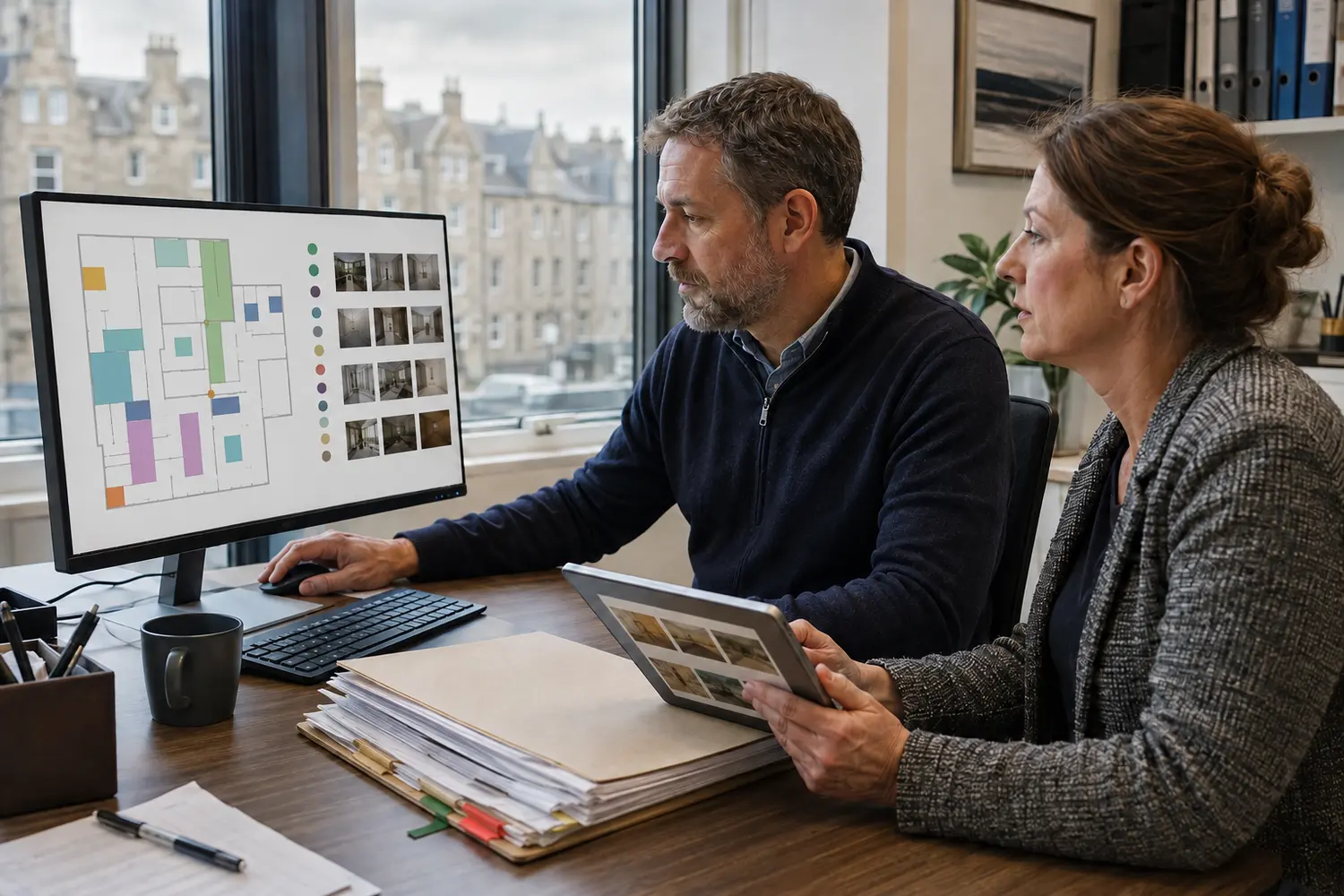
Include clear photos and a marked plan where useful. Avoid labels such as ‘ceiling asbestos’ when the room contains several ceilings or layers.
- Exact location
- Material and amount
- Condition and risk
- Action and review date
Record useful negative results without creating false confidence
A negative sample applies to the sampled material. It may not clear a different-looking board, repair or hidden layer. Keep the sample location and description precise.
Do not remove unknown materials from the register simply because a nearby item tested negative. Update only when the evidence matches the exact product.
Connect every risk to a clear action
Actions may include regular checks, labels, restricted access, repair, encapsulation or removal. Give each action an owner and due date.
Flag damaged or high-risk materials prominently. The register should connect to the wider management plan and permit-to-work process.
Make it available where work is controlled
Store the register where staff and contractors can get it before starting. Digital systems are useful only when people have access, training and reliable building plans.
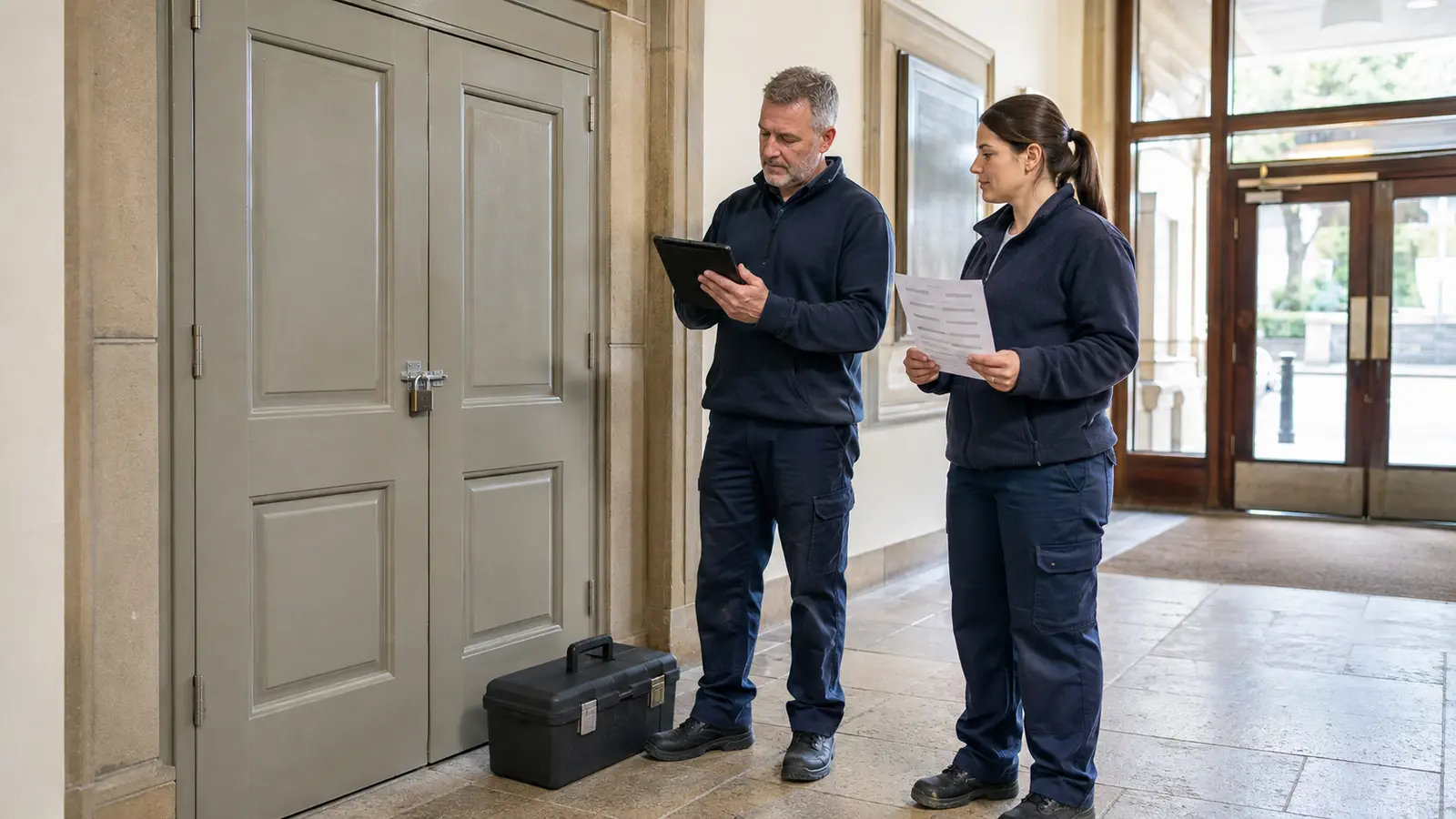
Ask contractors to confirm they checked the information. If their task enters an unsurveyed area, stop and arrange the right survey.
Update the register and keep an audit trail
Add new surveys, condition checks and incident records. Mark materials removed, but keep the historic evidence and waste paperwork.
Review after refurbishment, leaks, fire, vandalism or changes in building use. An accurate register is a live record, not a finished document.
Frequently asked questions
Questions people ask next.
Is an asbestos survey the same as a register?+
A survey supplies evidence. The register is the current record used to manage materials and inform work.
Should presumed asbestos be listed?+
Yes. Clearly mark whether each item is presumed or confirmed.
Can the register be digital?+
Yes, if workers can access and understand it before work starts.
Should removed materials stay in the record?+
Mark them removed and keep the supporting evidence and waste trail.