Dutyholder: The person or organisation responsible for building maintenance or repair.
Asbestos register: The live record of known or presumed asbestos in a building.
Finding asbestos in a rented property does not always mean it must be removed. The key questions are who controls the area, what condition the material is in and whether work may disturb it.
- Find out who controls maintenance for each part of the building.
- Keep surveys, registers and plans current where duties apply.
- Give asbestos information to anyone who may disturb the material.
Stop. Do not touch, drill, break or clean the suspect material.
Keep back. Keep people and pets away. Do not sweep or use a household vacuum.
Get advice. Call a trained professional and explain what you found and what happened.
Finding asbestos in a rented property does not always mean it must be removed. The key questions are who controls the area, what condition the material is in and whether work may disturb it.
Landlords and other people responsible for maintenance must manage asbestos risks within the areas they control. The formal duty to manage covers business buildings building and common parts of multi-people using the building home buildings.
Where the formal duty to manage applies
HSE states that the duty covers business buildings building. It also covers common parts of multi-people using the building home buildings, such as stairs, lifts, corridors, roof spaces and shared outbuildings.
The duty does not apply to the inside of every private home in the same way. However, landlords still have responsibilities for safe maintenance, repair and building work. Contracts and control of the property matter.
- Shared stairs and corridors
- Communal roof spaces
- Plant and boiler rooms
- Shared garages, yards and stores
Find, check and record suspect materials
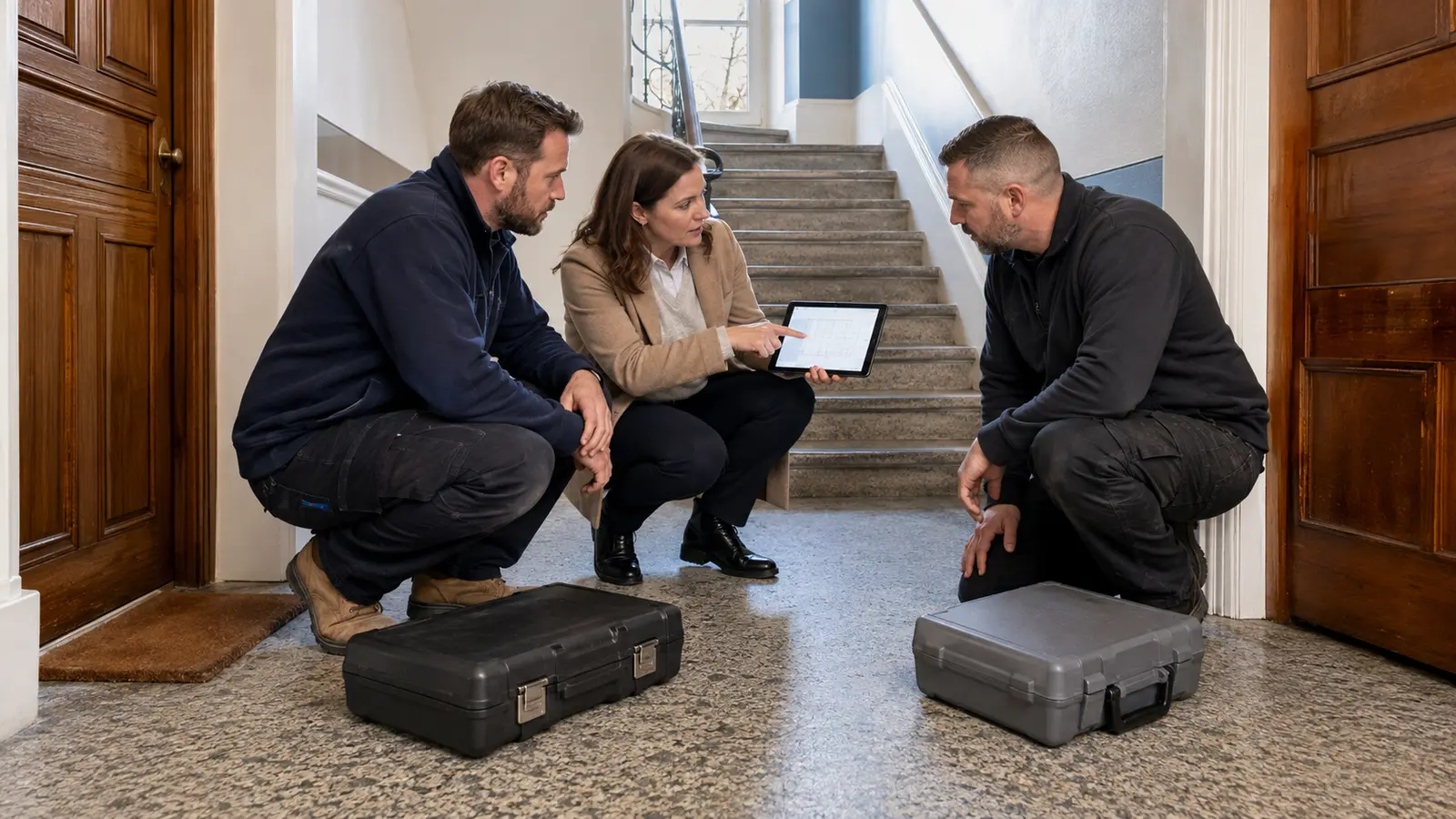
For buildings built or refurbished before 2000, gather plans, earlier surveys and maintenance records. Arrange a suitable survey where information is missing. Record location, amount and condition.
The register should be easy to use. A file hidden in an office does not protect a contractor arriving to drill a wall. Give the relevant information before work starts.

What to do when a tenant reports damage
Ask the tenant not to touch or clean the area. Arrange a prompt check. Keep people away if debris or damage may release fibres.
Explain the next step and expected timescale. Do not dismiss the concern or state that the material is safe from a photo. Share confirmed results and any access restrictions in plain language.
Check asbestos before repairs and improvements
Routine management information may not be enough for detailed work. A kitchen replacement, rewiring project or bathroom strip-out may need a refurbishment survey for the full work area.
Give the report to every trade and check that the work plan matches it. If the scope changes, stop and extend the survey before opening an uninspected area.
Keep the plan active, not just filed away
HSE says management plans should be reviewed at least every 12 months or sooner when needed. Material condition should also be monitored. Update the plan after damage, repair or removal.
Name who is responsible, how contractors get the register and what happens in an emergency. This turns a report into a working safety system.
Frequently asked questions
Questions people ask next.
Must every landlord remove all asbestos?+
No. Sound material may sometimes be managed in place. Damaged material and planned work need a risk-based decision.
Does a landlord need a survey for every flat?+
The legal position depends on the area and work. Common parts and detailed work need particular care. Get trained advice for the building.
Should tenants receive the asbestos register?+
Give people the information they need to avoid disturbance. Contractors must receive relevant information before work.
Who pays for removal?+
Payment depends on ownership, leases, contracts and the work. Get legal advice where responsibility is unclear.