Exposure: Contact with asbestos fibres, often by breathing them in.
Class-H vacuum: Specialist equipment designed for hazardous fine dust.
Dust after building work is not proof of asbestos. Yet cleaning first can remove the evidence and spread fibres. Pause before using a brush, cloth or household vacuum.
- Do not sweep, dust or use a household vacuum.
- Keep doors closed and stop people walking through the area.
- Get the material and affected rooms checked before cleaning.
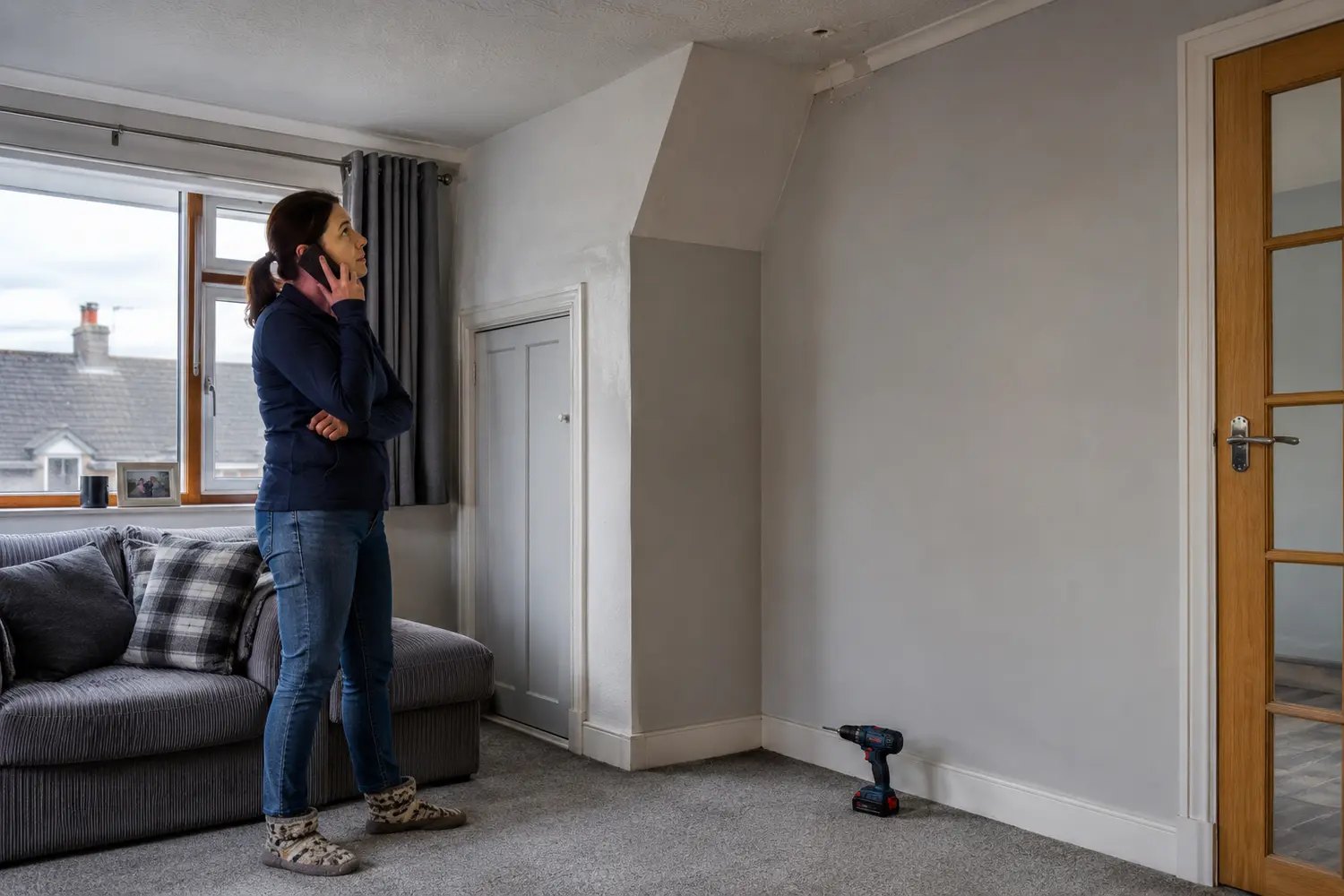
Stop. Do not touch, drill, break or clean the suspect material.
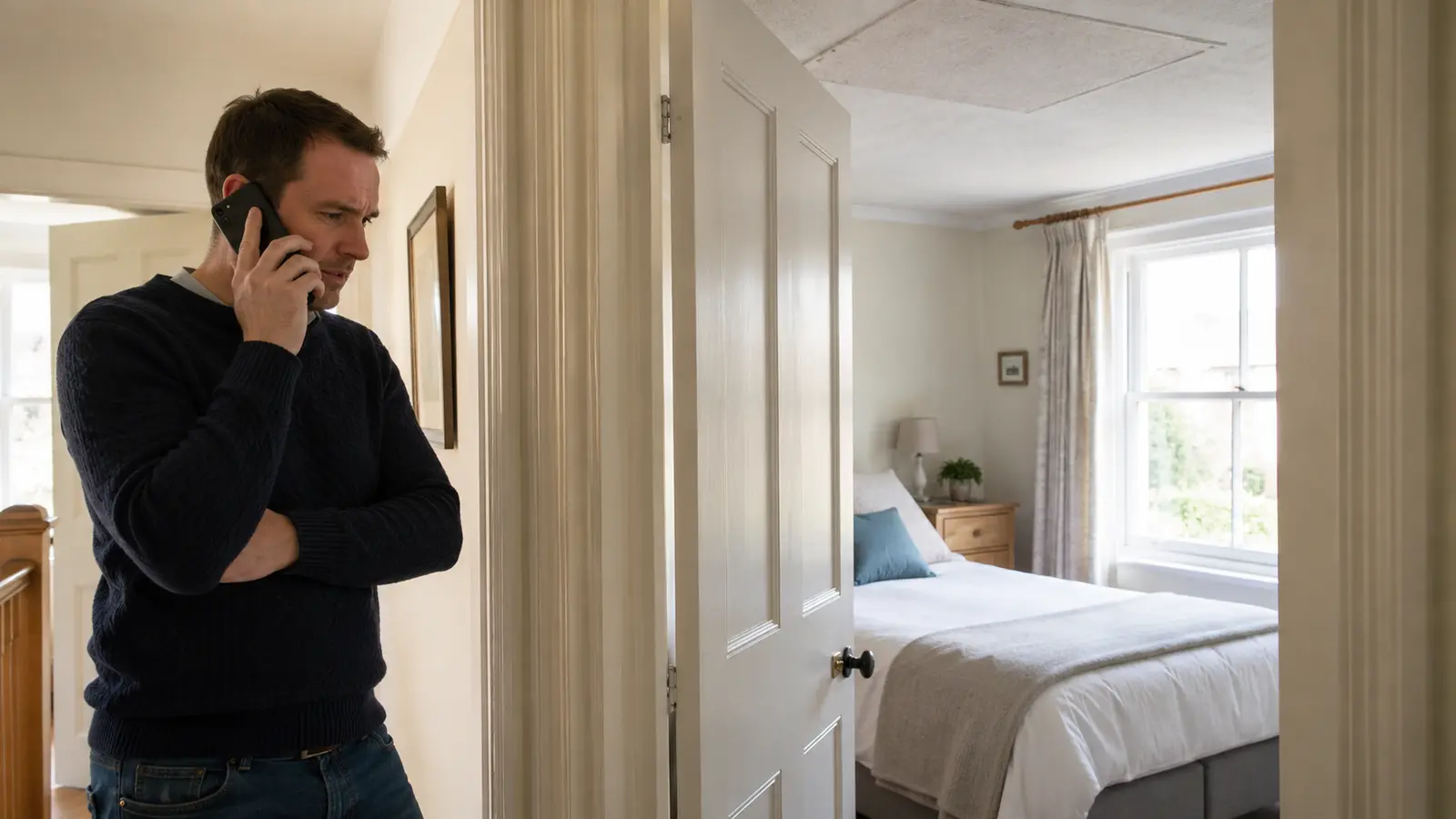
Keep back. Keep people and pets away. Do not sweep or use a household vacuum.
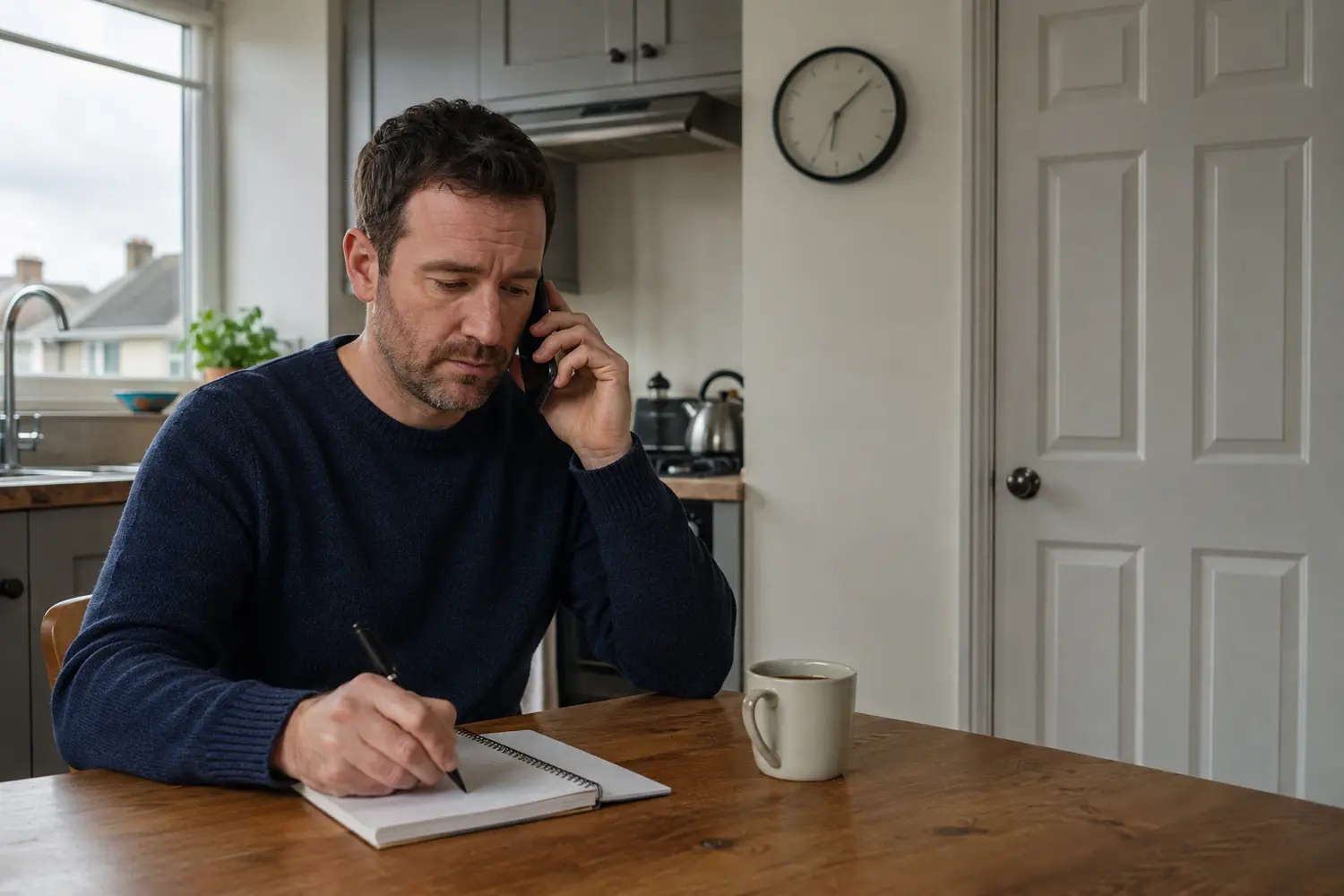
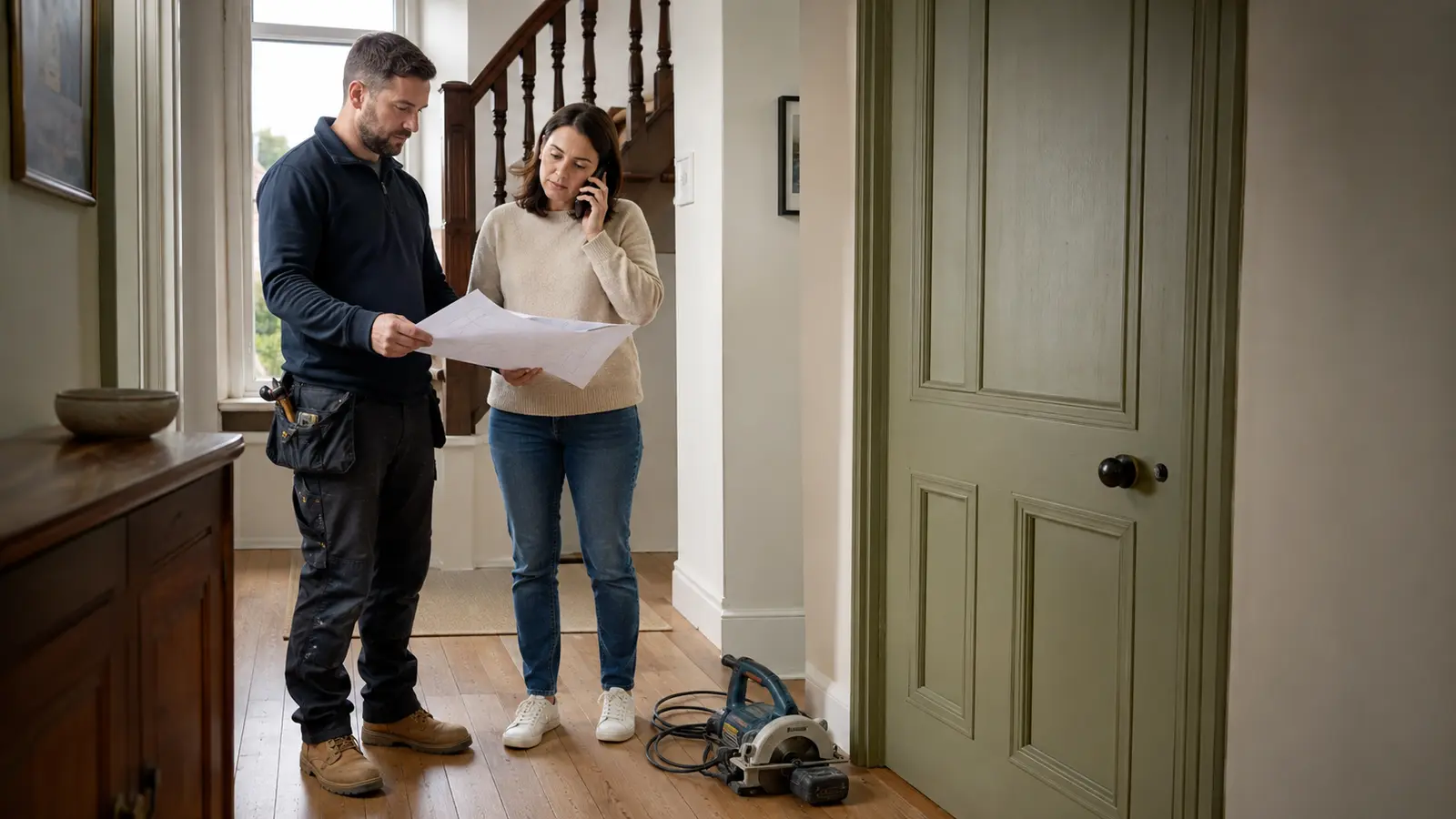
Get advice. Call a trained professional and explain what you found and what happened.
Dust after building work is not proof of asbestos. Yet cleaning first can remove the evidence and spread fibres. Pause before using a brush, cloth or household vacuum.
Do not sweep or use a normal vacuum. Keep people out, close the area where practical and call a trained professional. They can identify the material, judge the spread and plan the right clean.
Stop dust moving through the property
Keep children, visitors and pets away. Avoid walking through debris. Do not carry dusty tools or clothing into other rooms. Turn off work that may move air through the affected area and wait for professional advice.
Do not shake fabrics or brush shoes outdoors. That can move material to another place. Tell the adviser which rooms people entered and whether heating, fans or building work were running.
- No sweeping
- No household vacuum
- No dry dusting
- No further building work
First confirm where the dust came from
Ordinary plaster, timber and cement dust can look similar to dust from asbestos materials. The source may be more useful than the dust itself. A broken board, drilled coating or damaged pipe insulation gives the assessor a clear place to start.
Photos, plans and earlier surveys can help. If the source is unknown, the professional may need samples from the material or debris. Do not disturb it to create a better photo.
Why ordinary cleaning is not suitable
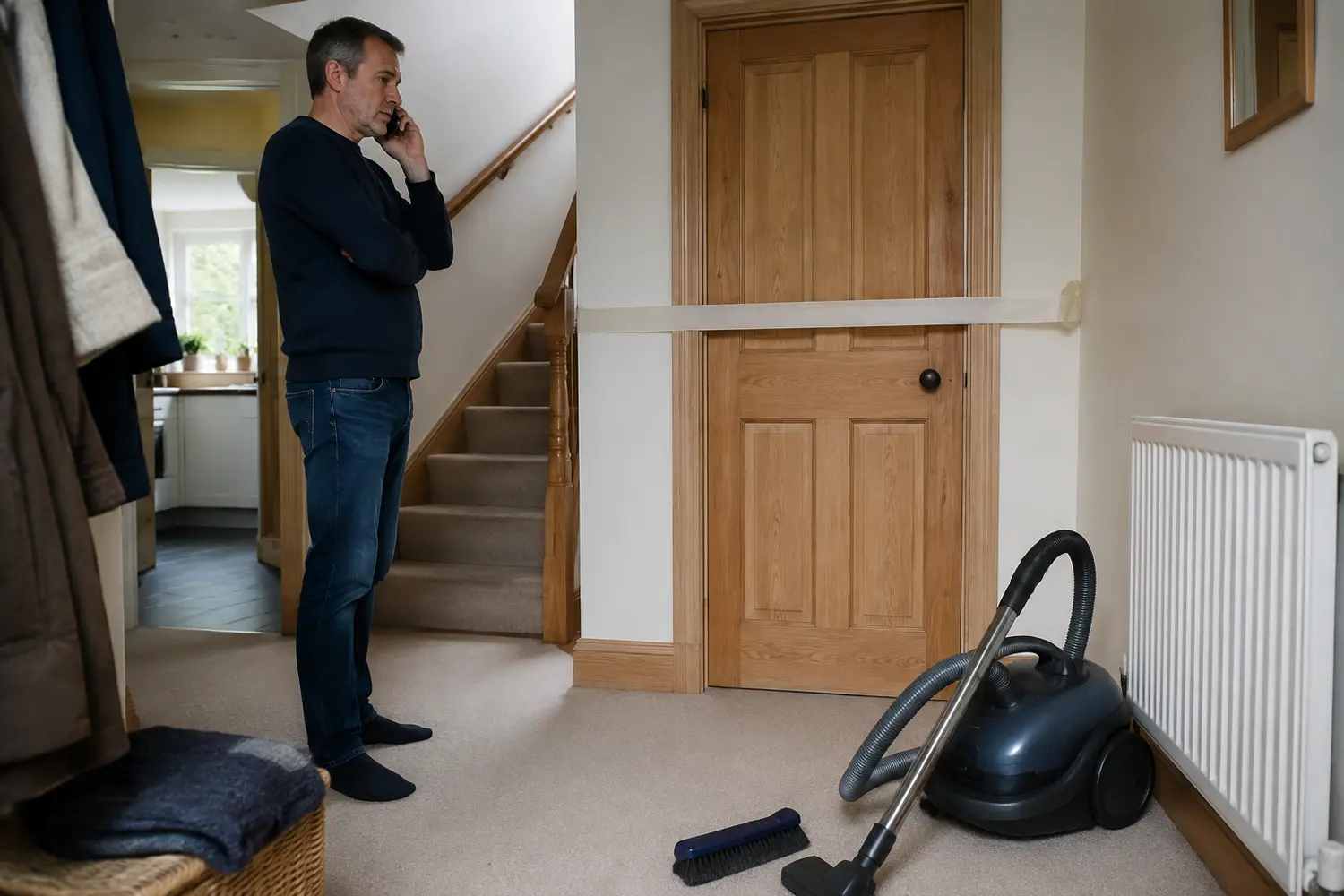
A household vacuum is not designed for asbestos work. Fine material may pass through or escape when the bag is changed. Dry brushing can lift settled dust back into the air.
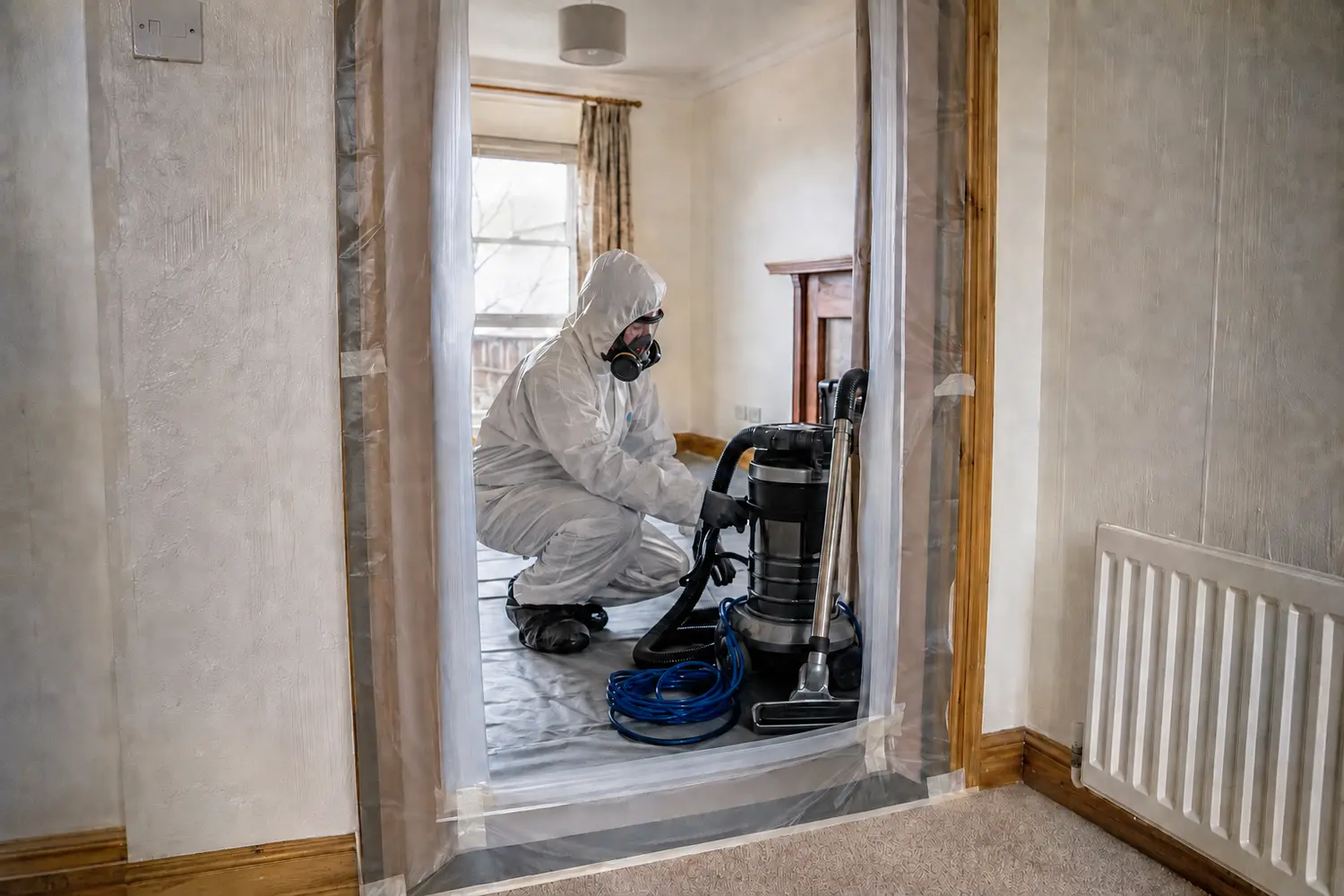
Specialist cleaning uses a written plan, controlled access, suitable protective equipment and class-H vacuum equipment where required. The team works from clean areas towards contaminated areas and records the waste route.
How professionals decide how far to clean
The plan considers doors, stairs, soft furnishings, tools and walking routes. It also considers how much material was disturbed and whether it was soft insulation, board, cement or a textured coating.
A single small area may need a focused response. Dust carried through several rooms may need a wider clean. Air testing may support some decisions, but it does not replace a proper check and source check.
Ask for a clear handover before using the room
The contractor should explain what was found, which rooms were treated and what checks were completed. Keep sample results, photos, waste records and final safety check paperwork where it applies.
If asbestos remains elsewhere, update the property record and tell future trades. The aim is not only to clean this event. It is also to prevent the next one.
Frequently asked questions
Questions people ask next.
Can I wipe a small amount with a wet cloth?+
Do not clean unknown dust until the material and work have been checked. The right method depends on the incident.
Can I wash dusty clothes?+
Keep suspect clothing separate and ask the professional for incident-specific advice before handling or washing it.
Do I always need an air test?+
No. Air testing may help in some cases, but the source, material, visible spread and cleaning method must also be checked.
Can I stay elsewhere?+
If a living area may be contaminated, keep it unused and ask the professional whether temporary alternative accommodation is sensible.