Exposure: Contact with asbestos fibres, often by breathing them in.
Class-H vacuum: Specialist equipment designed for hazardous fine dust.
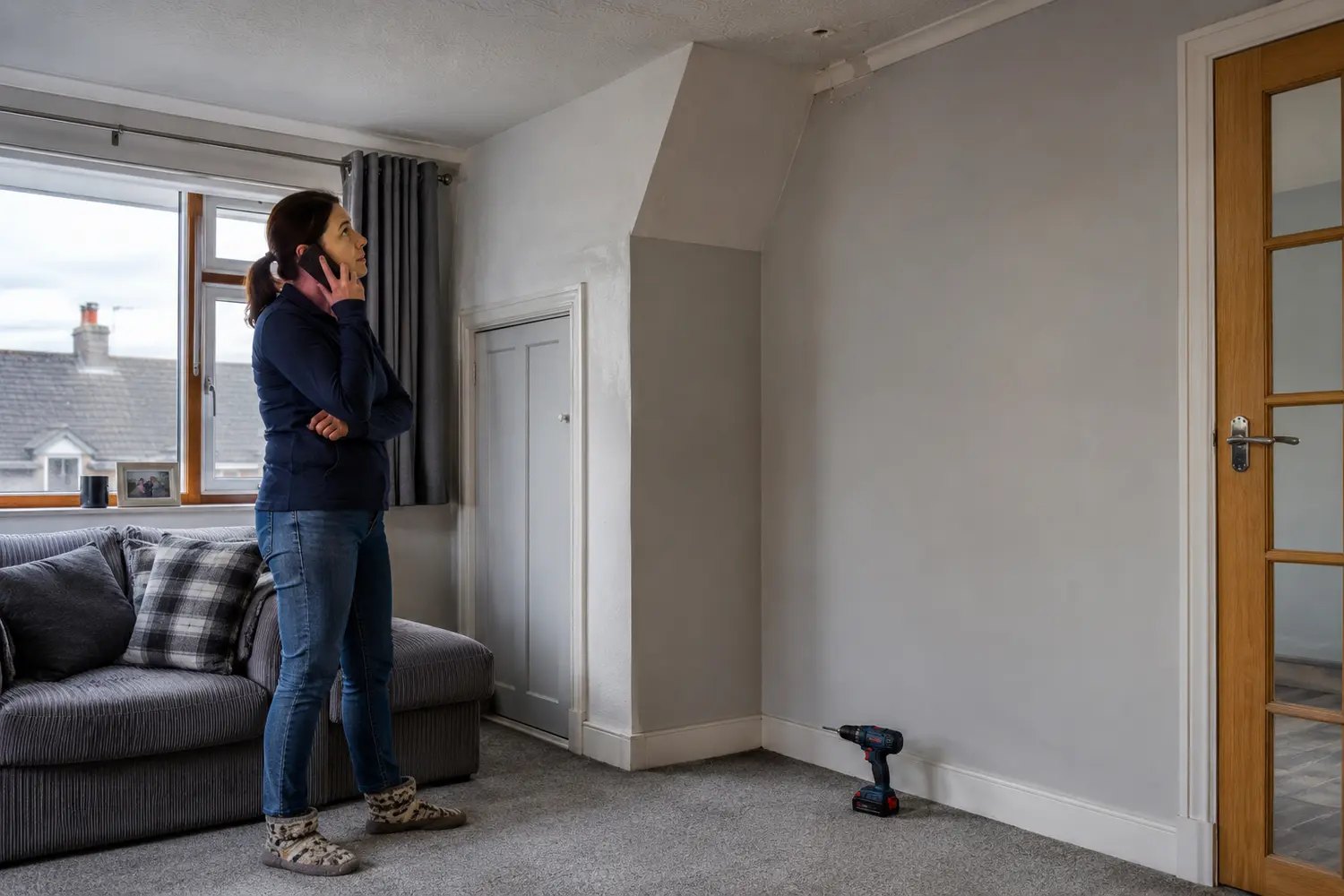
People often ask this late at night after drilling, scraping or a ceiling failure. You do not need to guess. Keep the room unused until someone has checked what happened.
- Keep the room unused and stop people entering.
- Do not make the bed, sweep or move dusty items.
- Ask a professional what checks are needed before re-entry.
Stop. Do not touch, drill, break or clean the suspect material.
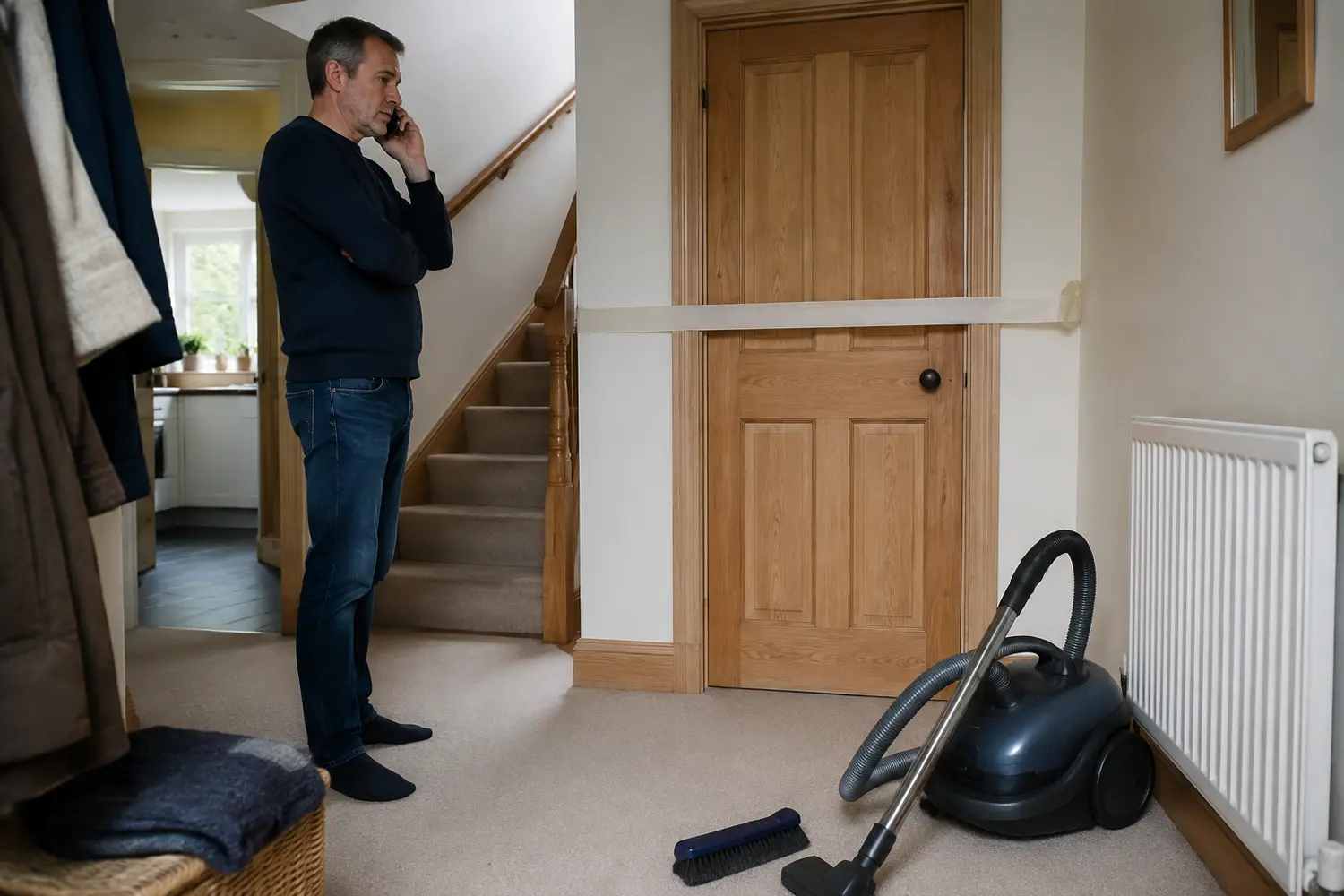
Keep back. Keep people and pets away. Do not sweep or use a household vacuum.
Get advice. Call a trained professional and explain what you found and what happened.
People often ask this late at night after drilling, scraping or a ceiling failure. You do not need to guess. Keep the room unused until someone has checked what happened.
Do not sleep in or keep using a room where suspect asbestos was recently disturbed. Close it off where practical. Avoid cleaning. Arrange prompt professional advice about testing, cleaning and safe re-entry.
Why the room should stay unused for now
The main concern is not the bed. It is whether fibres were released and where dust settled. Walking, changing bedding or cleaning may disturb settled material and carry it elsewhere.
Keeping the area still gives the assessor a clearer picture. It also prevents repeat exposure while the material is unknown. Use another room if you can and keep the door closed.
- Do not enter to collect non-essential items
- Keep pets out
- Do not shake bedding
- Do not run a household vacuum
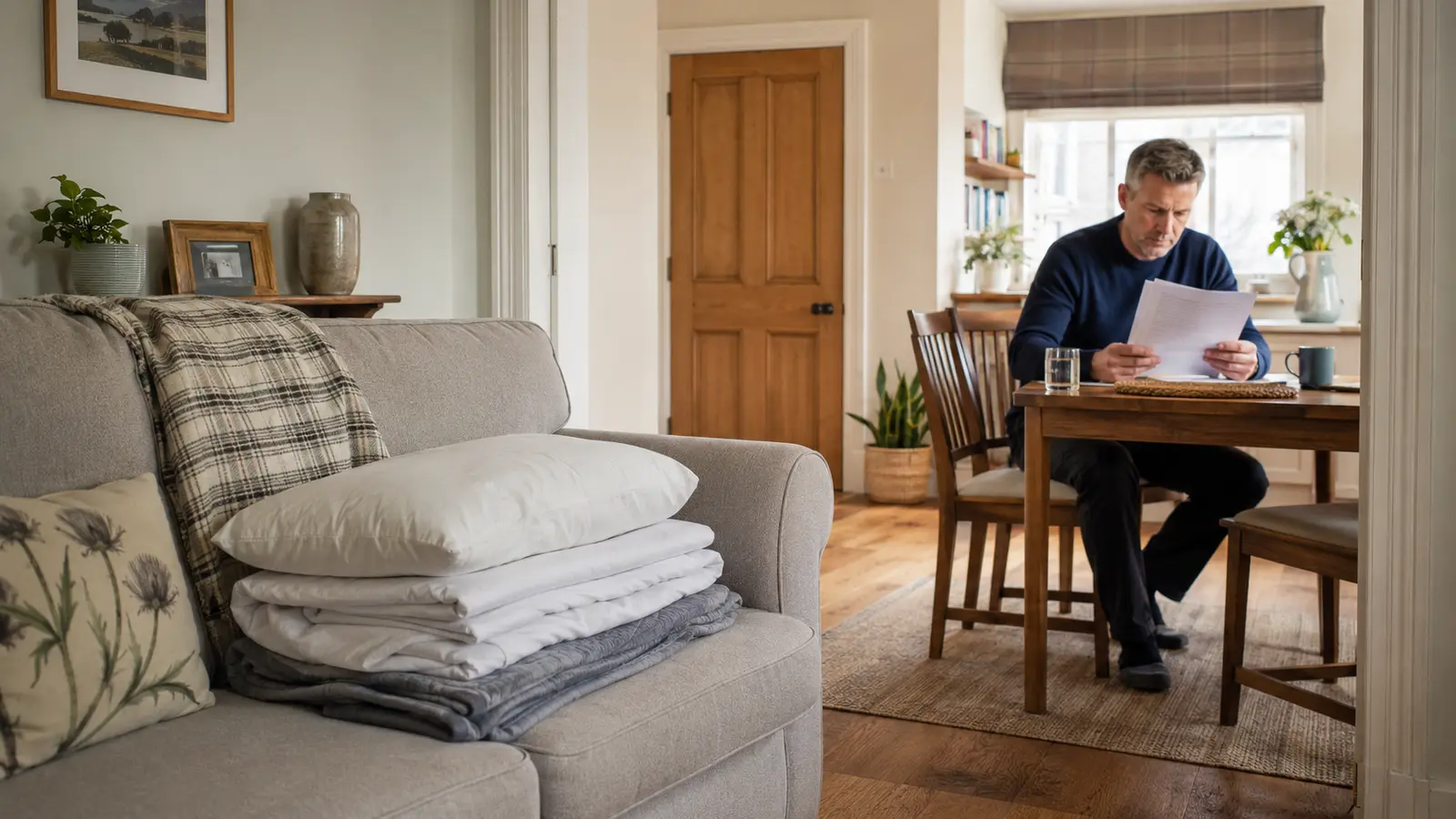
The questions that decide the next step
The adviser will ask what was disturbed, how, for how long and whether visible debris remains. Cutting a board in a small room needs a different response from one small scrape on an intact coating.
Property age, earlier surveys and the exact surface all help. Give honest details. The aim is not to blame anyone. It is to choose a safe and proportionate response.
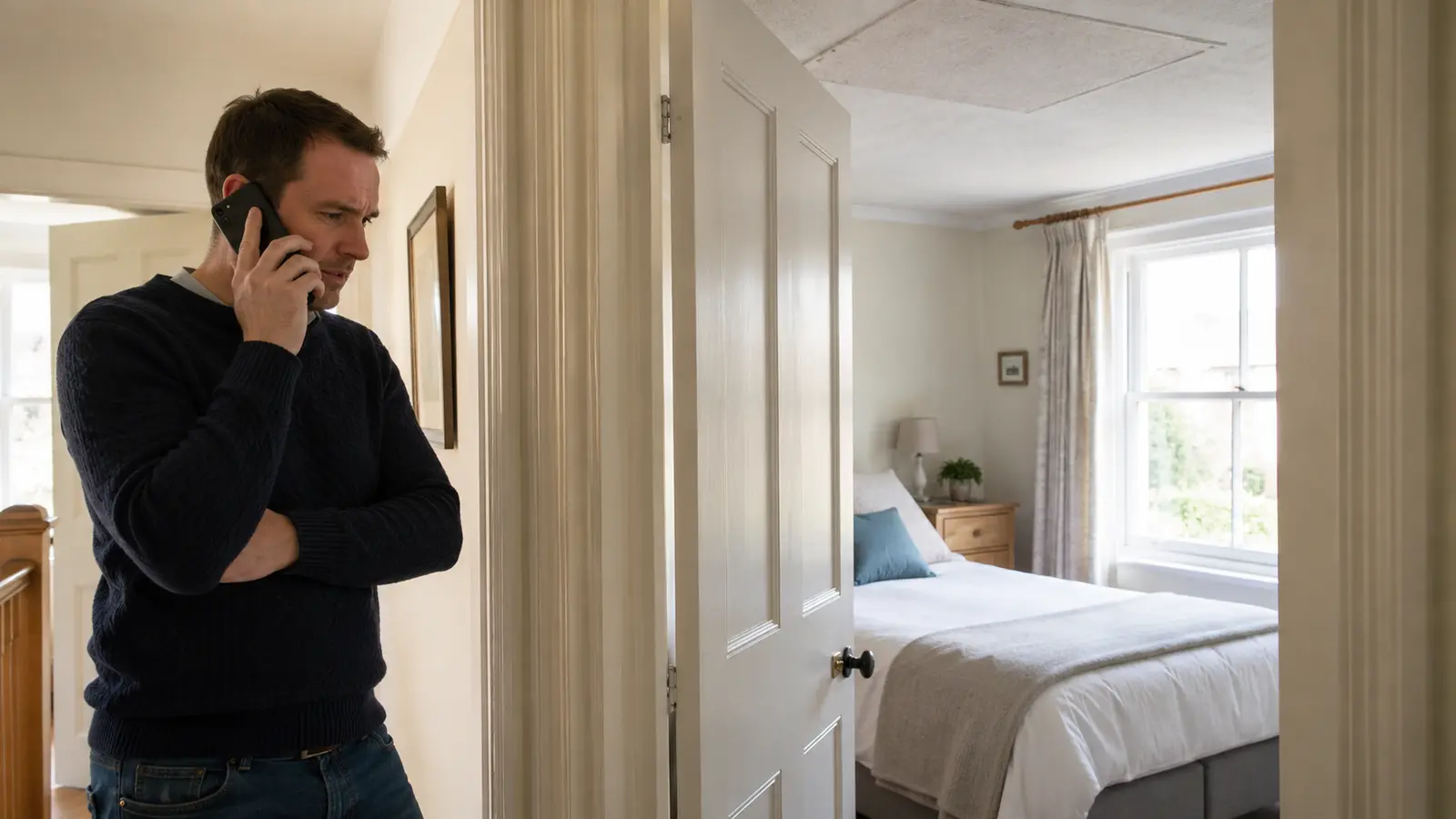
Testing the material and checking the room
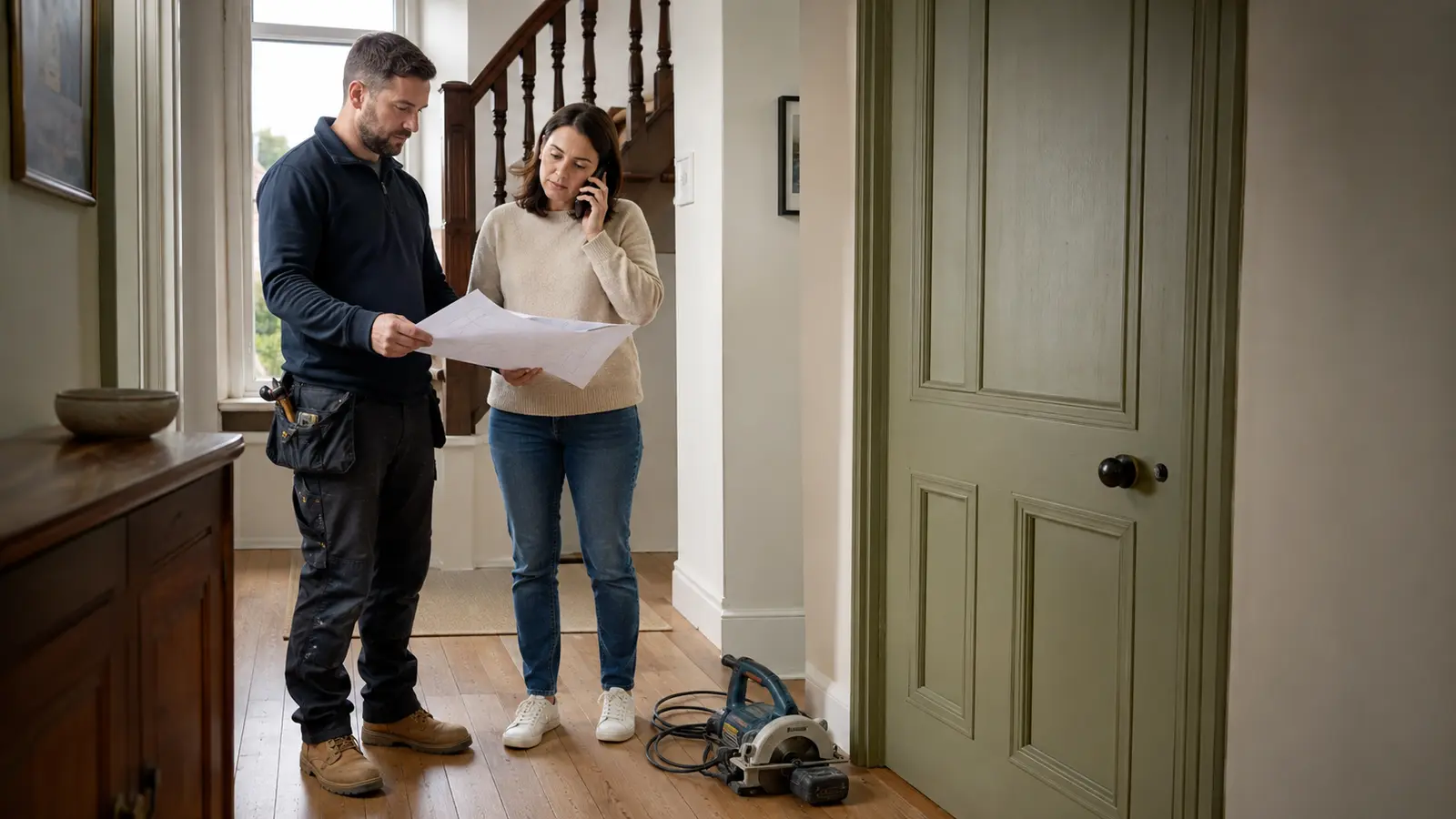
A trained person may sample the suspect surface or use an earlier report. They will check debris, nearby surfaces, soft furnishings and routes out of the room.
Air testing alone cannot tell the full story after dust has settled. It may form part of the plan, but visual checks, source identification and suitable cleaning remain important.
What should happen before you return
The source should be made safe. Any needed specialist clean should be completed. Higher-risk licensed work may need an independent four-stage final safety check before the sealed work area is handed back.
Ask for a plain explanation of what was done. Keep the test result and handover records. If asbestos remains, make sure it is labelled in the property information for future work.
Get health advice from the right place
An asbestos contractor can check the building. They cannot diagnose illness. Asbestos-related diseases take years to develop and do not normally cause immediate symptoms.
Contact NHS 111 or your GP if you need personal medical advice. Tell them what happened and when. For urgent symptoms, use normal emergency health services.
Frequently asked questions
Questions people ask next.
How long should the room stay closed?+
Until the source and spread have been checked and any required cleaning or checks are complete.
Should I remove the bedding?+
Leave it in place unless a professional tells you how it should be handled.
Can an air test prove the room is safe?+
Air testing can help in some cases. It should be used with source identification, visual checks and the cleaning record.
Can children use the next room?+
Keep people away from any area that may be affected and ask the assessor to define the safe boundary.