Exposure: Contact with asbestos fibres, often by breathing them in.
Class-H vacuum: Specialist equipment designed for hazardous fine dust.
A drill hole can turn a quiet DIY job into a frightening moment. Do not keep drilling to inspect the material. The safest response is to stop, keep the area still and get advice based on what was drilled.
- Stop work and do not make another hole.
- Keep the room still and prevent people entering.
- Arrange professional advice, testing and cleaning if needed.
Stop. Do not touch, drill, break or clean the suspect material.
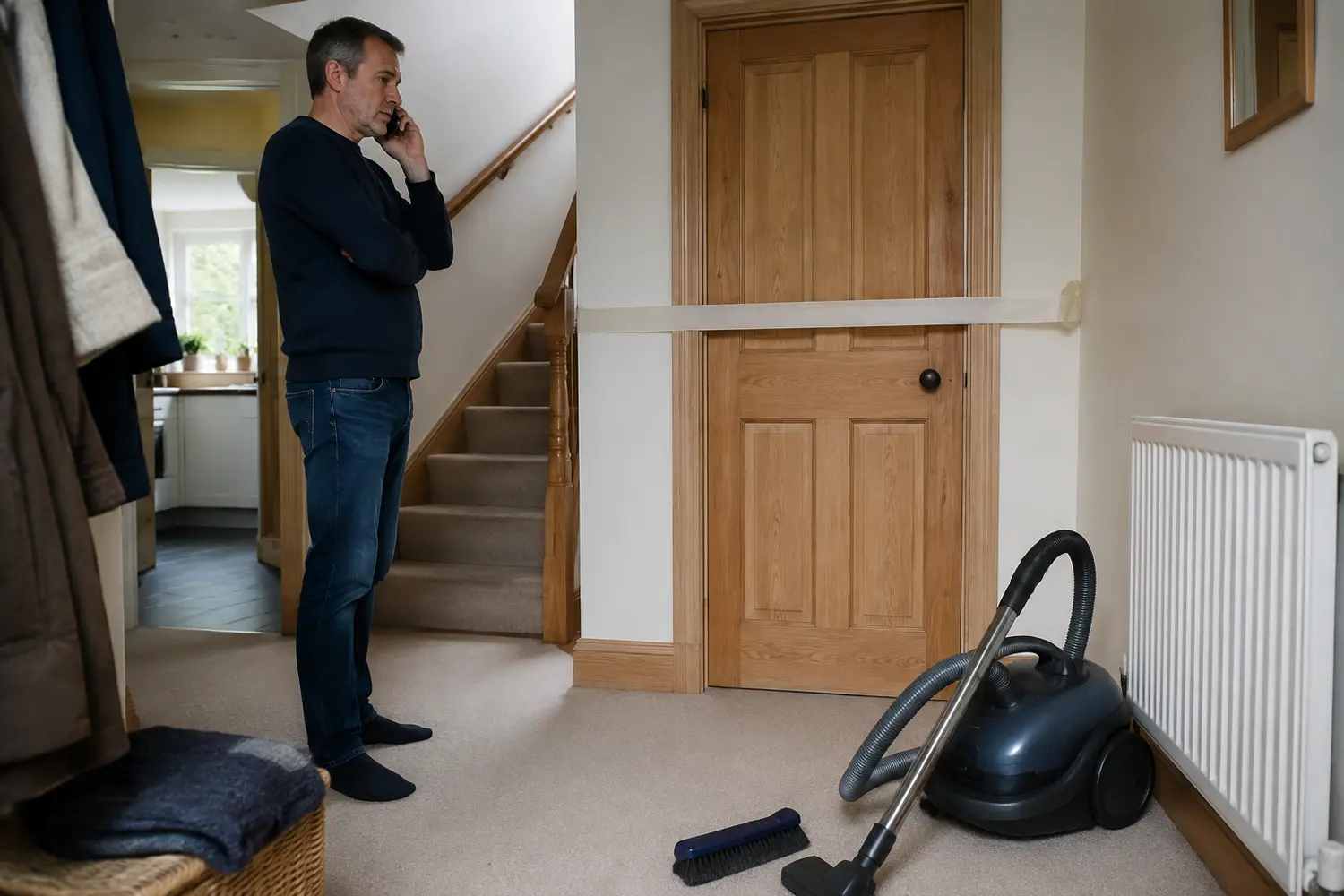
Keep back. Keep people and pets away. Do not sweep or use a household vacuum.
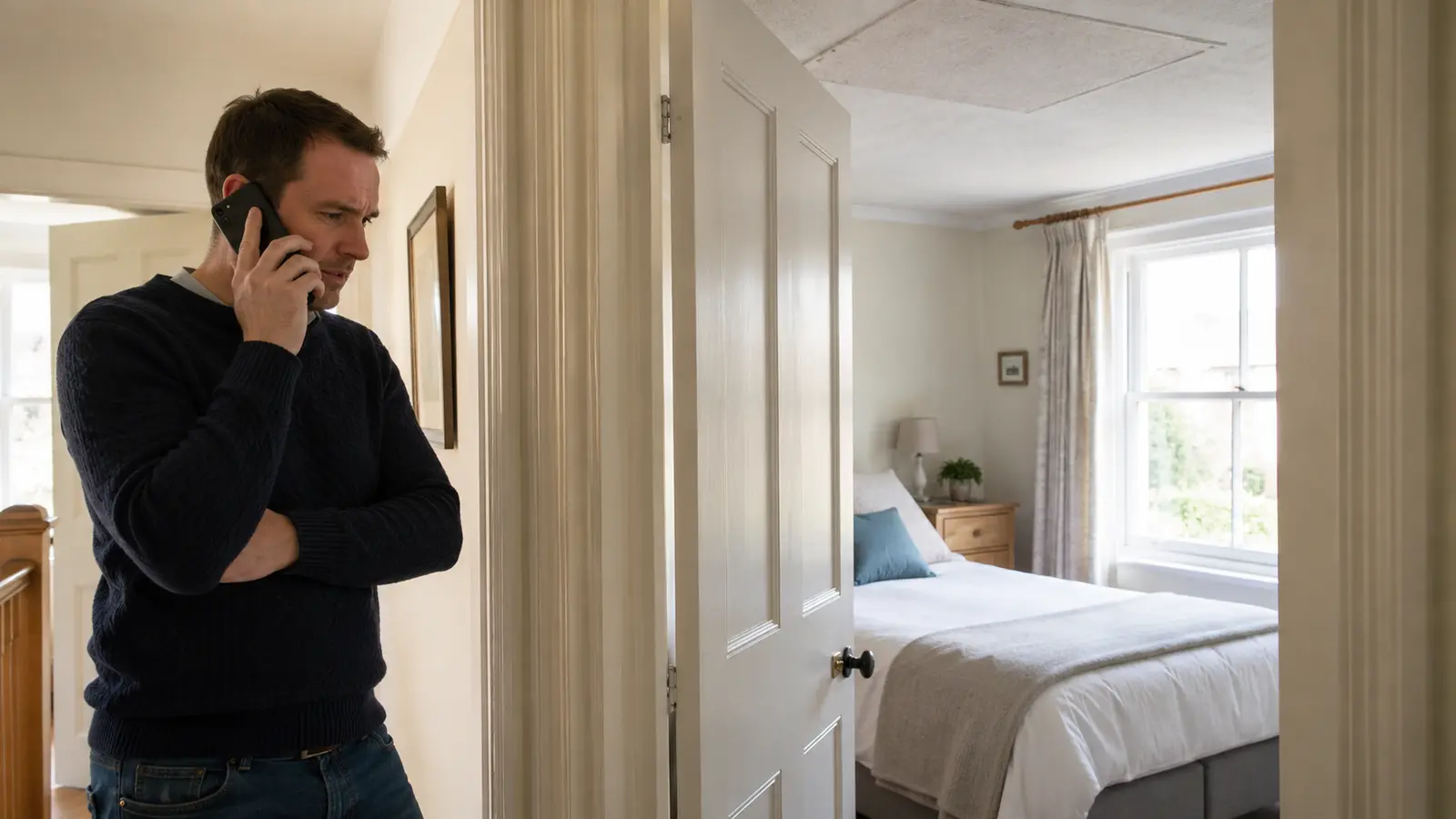
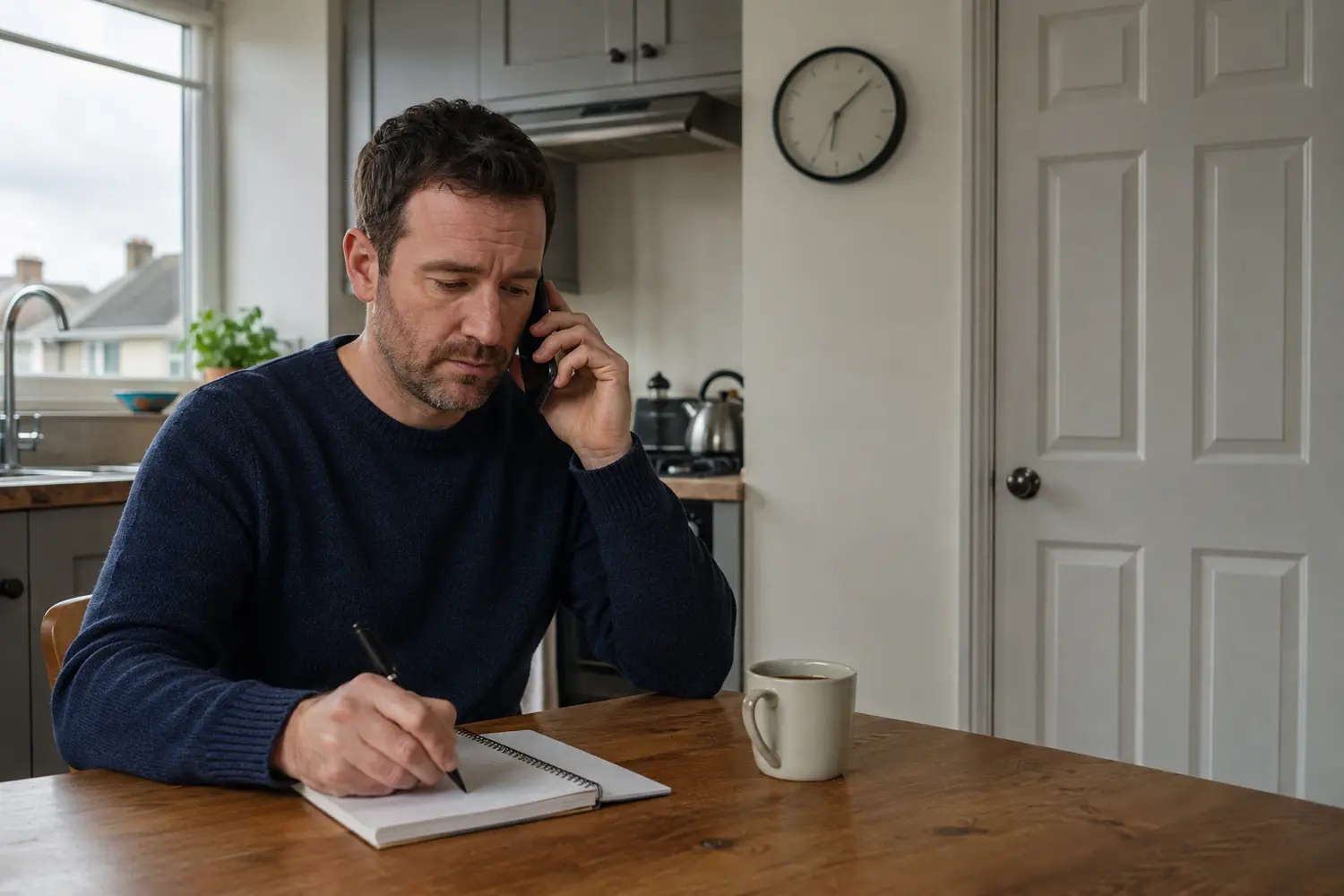
Get advice. Call a trained professional and explain what you found and what happened.
A drill hole can turn a quiet DIY job into a frightening moment. Do not keep drilling to inspect the material. The safest response is to stop, keep the area still and get advice based on what was drilled.
Stop the drill and leave the material alone. Keep people and pets away. Do not sweep, dust or use a normal vacuum. Call a trained asbestos professional and explain the property age, material, room and work completed.
What to do in the first few minutes
Switch the tool off and put it down. Do not pull at the hole or wipe the surface. Ask everyone to leave the immediate area calmly. Close the door if you can do so without walking through debris.
Avoid actions that move air or dust. Do not sweep, use a household vacuum, sand the edge or take your own sample. HSE guidance for unexpected disturbance starts with one clear instruction: stop work.
- Stop drilling
- Leave debris alone
- Keep people and pets away
- Call for advice
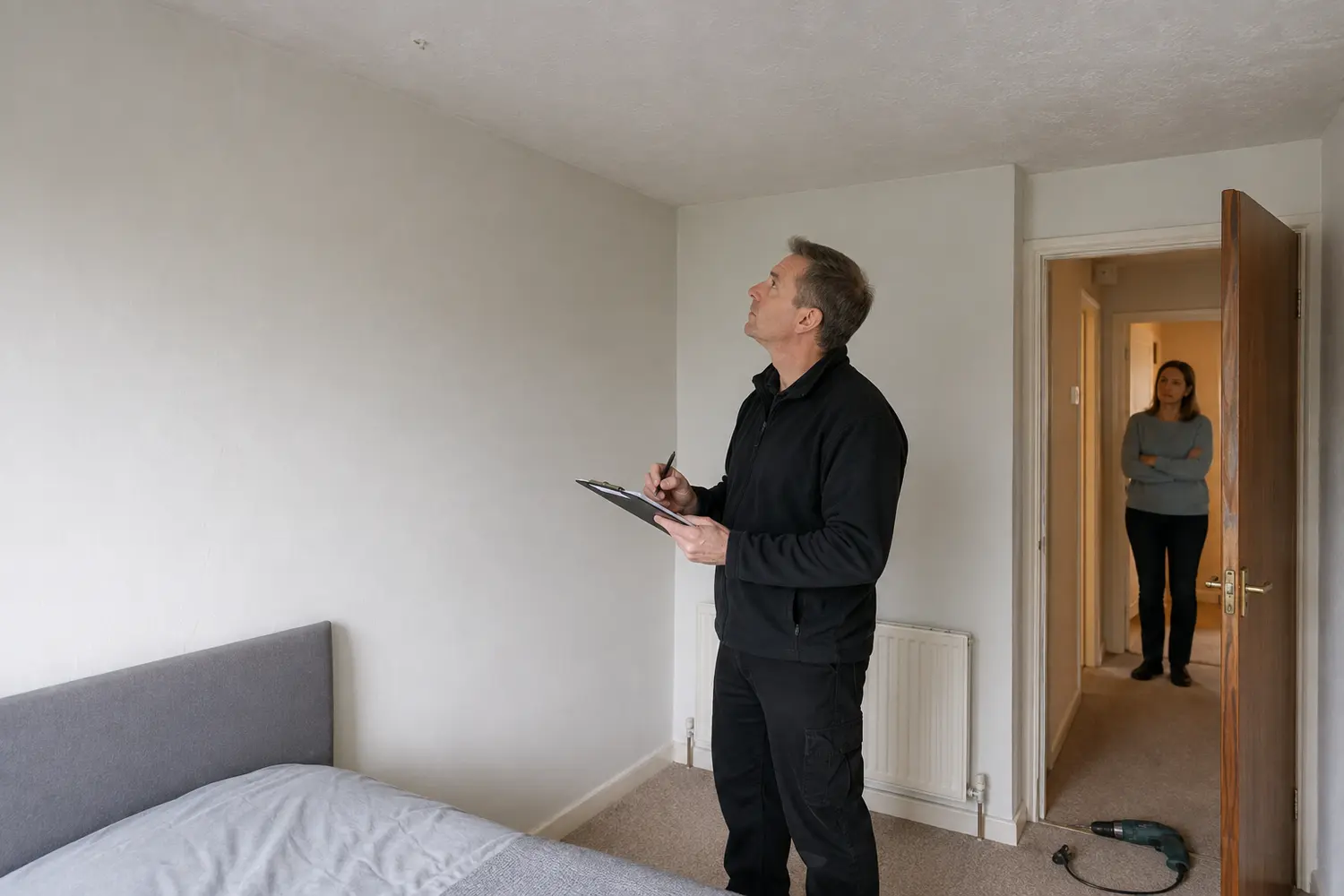
The material and task change the response
A small hole through a textured coating is not the same as cutting asbestos insulating board. Cement, AIB, sprayed coatings and pipe insulation release fibres in different ways. The tool, hole size and time spent drilling also matter.
Do not try to identify the product from dust colour. Note the property age, room, surface and number of holes. Take a photo from a safe distance. This gives the professional a useful starting point without causing more disturbance.
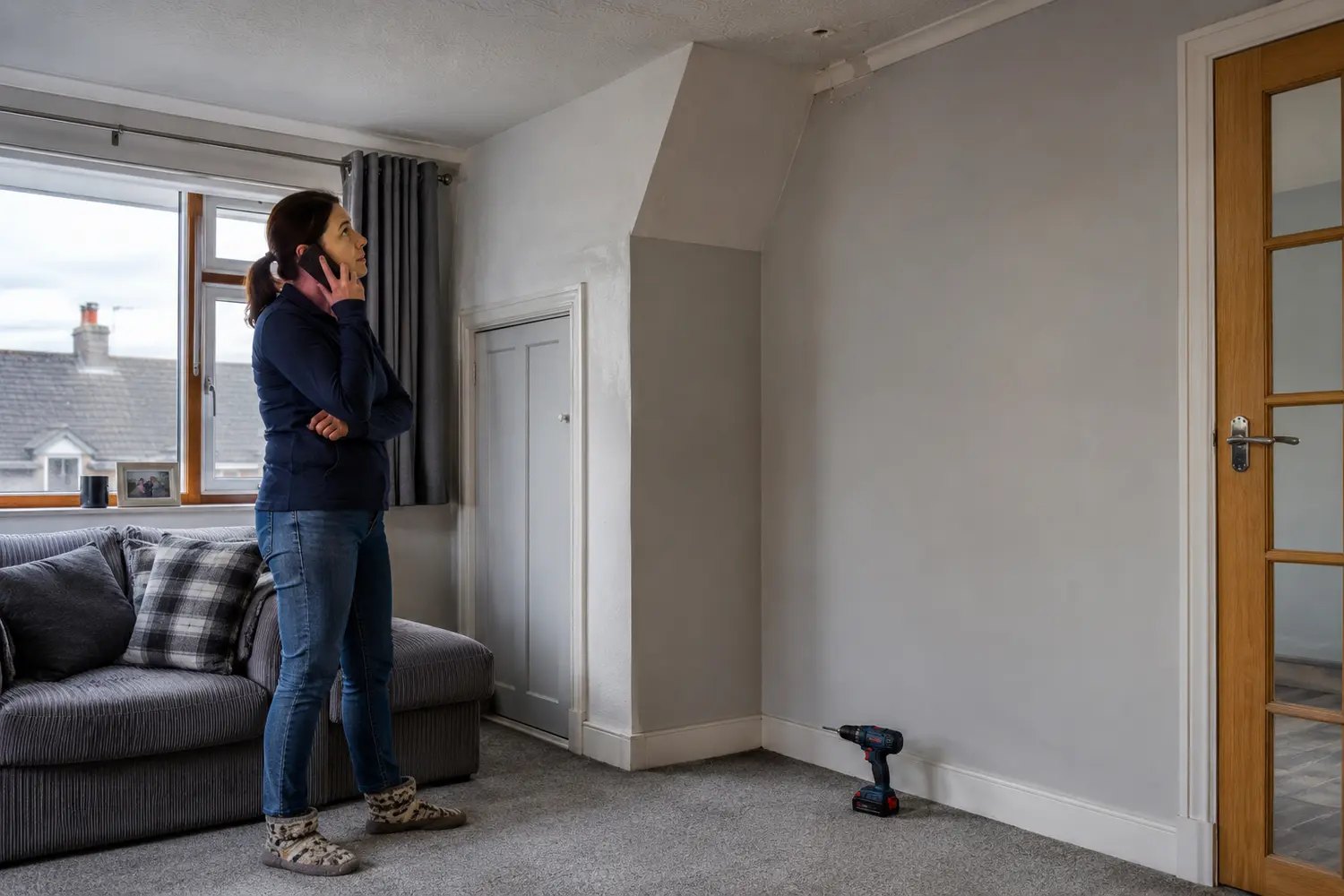
When testing or specialist cleaning may be needed
If the material is unknown, a trained person may arrange a controlled sample. The result should identify the exact sample point. A negative result from another room does not clear the drilled surface.
Cleaning depends on the material and spread. Minor controlled work may use methods set out by HSE. A wider release may need a sealed work area, specialist cleaning and independent checks before the room is used again.
What to do if you are worried about exposure
Asbestos-related illness does not cause instant symptoms. NHS guidance explains that mesothelioma is usually linked to asbestos exposure and may take many years to develop. A website cannot measure your personal risk.
If you remain worried, speak to your GP or NHS 111 and describe what happened. Seek medical help for symptoms in the usual way. The practical job now is to prevent any further exposure and make the room safe.
Do not restart work until the question is answered
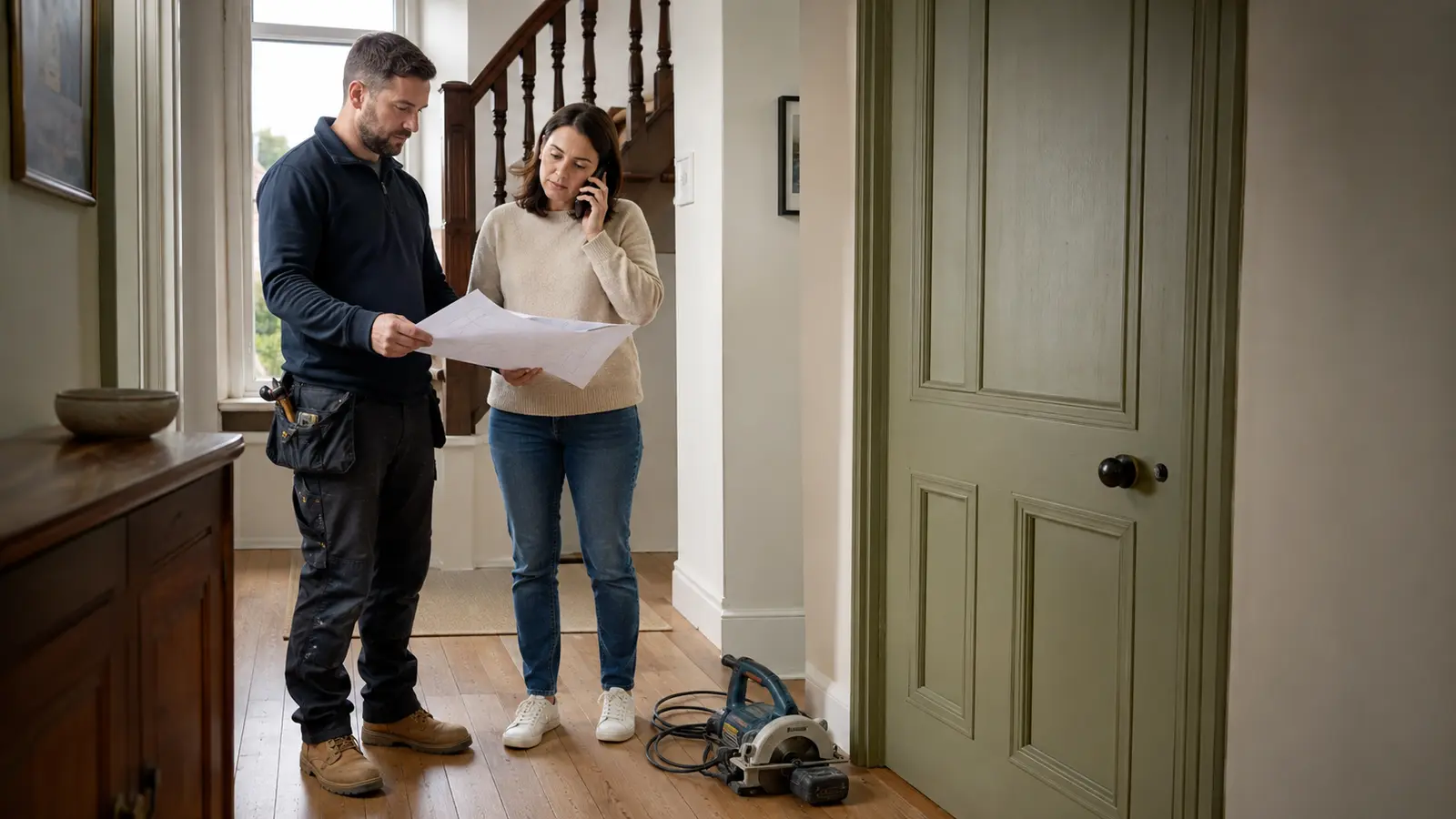
Keep the result and any cleaning record with the property paperwork. Give them to the electrician, joiner or other trade before work restarts. Mark any asbestos that will remain in place.
If the project affects more walls, ceilings or hidden spaces, one sample may not be enough. A refurbishment survey checks the full work area before drilling, cutting or removal starts again.
Frequently asked questions
Questions people ask next.
Should I open the windows?+
Do not create airflow without professional advice. Keep the area still and stop people entering.
Can I use a normal vacuum?+
No. Household vacuums can spread fine fibres. Specialist asbestos work uses suitable class-H equipment and controlled methods.
Will one hole make me ill?+
A website cannot check personal risk. Stop further exposure and speak to the NHS or your GP if you are worried.
Should I send a piece for testing?+
Do not break off your own sample. Ask a trained sampler to take and record it safely.